I walk to the cemetery on Saturdays now. Pappa in the older section, then Lars beside him, then Paul a few rows over, now Mamma in the spot she chose herself in 2019 ("next to your father, I have already been beside him for sixty years, why should the cemetery be different"). I stand at each headstone and I report. I report on the kids. On the great-grandchildren. On the soup at Damiano. On the lake. The reporting is the visit. The visit is the love.
Anna drove up Saturday with the kids. They cleaned my kitchen without asking. They folded my laundry. Anna said: "Mom, we're going to do this every other weekend until it stops feeling necessary." I let her. I did not protest. The protest had been used up on Mamma's death. I do not have any protest left. I let my children take care of me. It is a strange thing. It is also, I think, the right thing for this season.
Peter is calling more. The crisis has shaken him. He hears the math: Pappa, then Mamma, then me, eventually. He calls daily now. He sounds steady — not great, not happy, but steady. The grief made him show up. The grief unlocked the part of him that had gone silent. I do not say this to him. I just take the calls. I will take any number of calls. I have been waiting for these calls for years.
Mamma is in hospice now. The home is good. The staff is kind. I visit daily. I bring food — though she eats less and less, the smell of the food is still received. I bring limpa bread. I bring her own meatballs (the recipe she taught me, returned to her by my hands). She holds my hand. She says the names: Pappa. Lars. Erik. Linda. Karin. Astrid. The names are the prayer. The prayer is what is left when the words go.
Thanksgiving is approaching. The brining starts on Tuesday. The pies start on Wednesday. The kitchen begins its annual reorganization for the bird — turkey out of the freezer to the cooler in the garage, fridge cleared for the brine cooler, the big roasting pan brought up from the basement, the carving knife sharpened, the gravy boat located (last seen on the top shelf of the pantry, where it lives all year except this one week). The kids are all coming. The house is going to be full. I am ready.
I cooked Beef stew this week. The Saturday stew. The bowl that warms two hands.
Thursday at Damiano. I brought a tray of pepparkakor — the second batch from the Christmas freezer, brought back to crispness in a low oven. They were eaten in fifteen minutes. The cookies are not the soup. The cookies are the extra. The extra is the message: you are worth the effort of cookies. Most of the world does not give the people who come to Damiano the message that they are worth the effort of cookies. The cookies are doing political work.
I dreamed about Paul last night. The dream was specific: we were at the lake, in the canoe, fishing for trout. He was teaching me the right way to cast (he was always trying to teach me; I never quite got the rhythm; I caught fish anyway, by accident, with embarrassing regularity). In the dream he was patient and present and entirely himself. I woke up at 4 AM. I made coffee. I sat in the kitchen. The dream was a visit. I have learned to receive the visits without reaching for them. They come when they come.
It is enough. Paul is not here. Mamma is not here. Pappa is not here. Erik is not here. They are all here in the kitchen, in the smell, in the taste, in the wooden spoon and the bread pans and the marble slab. The dead are not where the body went. The dead are in the kitchen. It is enough.
The beef stew I made that Saturday was gone by Sunday evening — eaten standing at the stove, eaten in the chair by the window, eaten in the small quiet way you eat when the house holds too much silence. I did not have it in me to write out the stew this time, but I wanted to give you something that carries the same weight, the same warmth, the same sense of beef doing the work the words cannot. This flat iron steak salad is what I turned to when the week asked for something substantial but the afternoon was short — the meat seared, the greens waiting, the whole thing coming together faster than grief but tasting, somehow, just as honest.
Flat Iron Steak Salad
Prep Time: 15 min | Cook Time: 12 min | Total Time: 27 min | Servings: 4
Ingredients
- 1 1/2 lbs flat iron steak
- 1 tsp kosher salt
- 1/2 tsp freshly ground black pepper
- 1/2 tsp garlic powder
- 1 tbsp olive oil
- 6 cups mixed salad greens (romaine, arugula, or spring mix)
- 1 cup cherry tomatoes, halved
- 1/2 red onion, thinly sliced
- 1 cup cucumber, sliced into half-moons
- 1/2 cup crumbled blue cheese or feta
- 1/4 cup pepperoncini peppers, sliced
- 3 tbsp red wine vinegar
- 2 tbsp olive oil (for dressing)
- 1 tsp Dijon mustard
- 1 tsp honey
- Salt and pepper to taste
Instructions
- Season the steak. Pat the flat iron steak dry with paper towels. Rub all over with salt, black pepper, and garlic powder. Let rest at room temperature for 10 minutes while you prepare the salad components.
- Make the dressing. In a small bowl or jar, whisk together the red wine vinegar, 2 tbsp olive oil, Dijon mustard, and honey until emulsified. Season with salt and pepper. Set aside.
- Sear the steak. Heat 1 tbsp olive oil in a cast iron skillet or heavy pan over medium-high heat until shimmering. Add the steak and cook 5–6 minutes per side for medium-rare, or until an instant-read thermometer reads 130°F. Adjust time for your preferred doneness.
- Rest and slice. Transfer the steak to a cutting board and let rest for 5 minutes. Slice thinly against the grain.
- Assemble the salad. Spread the greens across a large platter or divide among four bowls. Top with cherry tomatoes, red onion, cucumber, pepperoncini, and crumbled cheese.
- Finish and serve. Arrange the steak slices over the top. Drizzle with the dressing and serve immediately while the steak is still warm.
Nutrition (per serving)
Calories: 420 | Protein: 38g | Fat: 26g | Carbs: 9g | Fiber: 2g | Sodium: 680mg
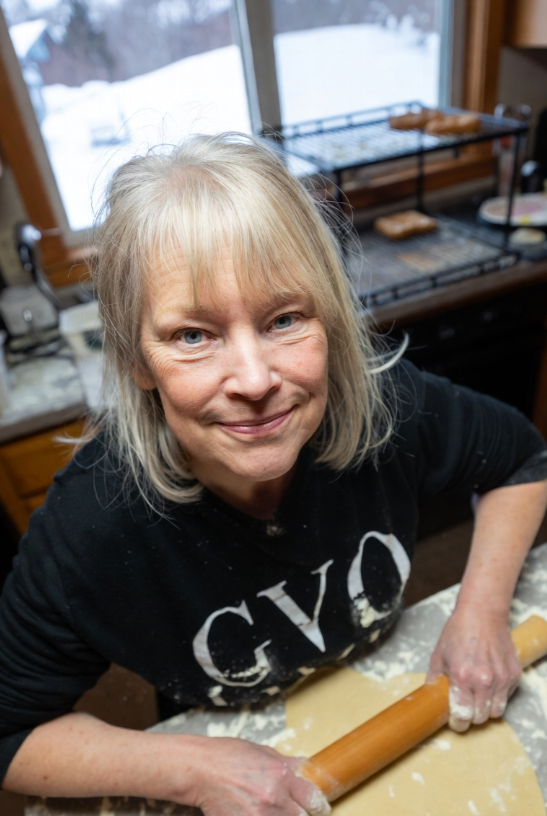
About the cook who shared this
Linda Johansson
Week 451 of Linda’s 30-year story
· Duluth, Minnesota
Linda is a sixty-three-year-old retired nurse from Duluth, Minnesota, living alone in the house where she raised her children and said goodbye to her husband. She lost Paul to ALS in 2020 after two years of watching the kindest man she'd ever known lose everything but his dignity. She cooks Scandinavian comfort food and Minnesota hotdish and the pot roast Paul loved, and she sets two places at the table out of habit because it makes her feel less alone. Every recipe she writes is a person she's loved.
