
 By
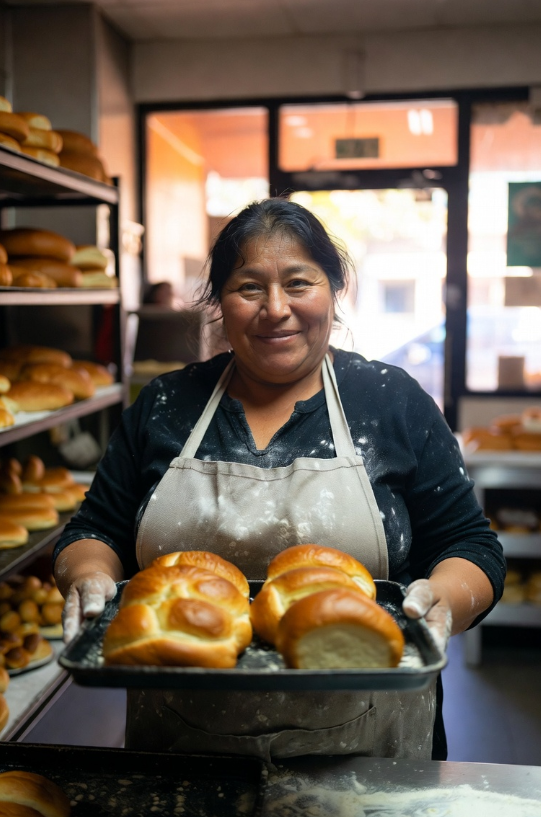
Summer schedule begins again. Luis Jr. splits his time between the bakery and the sporting goods store. He is saving money with the discipline of a boy who has a plan he hasn't shared yet, depositing every paycheck into a savings account he opened himself (I went with him; you need a parent for that at sixteen, and the banker looked at me and looked at Luis Jr. and saw two people with the same stubbornness and said, "This account will grow"). Sofia is at the bakery every morning, 7 AM, in the professional apron I haven't given her yet because her birthday isn't until July, but she wears the old apron with GRACIELA written on it (Graciela got a new one; the hand-me-down is now Sofia's) and she doesn't care about the wrong name because the apron is a uniform and the uniform is belonging.
Diego started his STEM camp at UTEP. He comes home every afternoon buzzing with information — circuits, coding, robotics, the structural properties of different materials. He told me over dinner that balsa wood has a better strength-to-weight ratio than most metals, and I nodded as if I understood what a strength-to-weight ratio was, and he saw through my nodding because Diego sees through everything, and he said, "It means it's strong for how light it is, Mamá," and I said, "Like your abuela," and he thought about it and said, "Yeah. Exactly like Abuela."
Isabella left for Tucson. The volunteer program at the hospital. We found the money — Carmen's two hundred, three hundred from the bakery account (I skipped my own paycheck for a week), and Isabella was on a bus to Tucson at 7 AM on Monday with a suitcase and three nursing textbooks and the quiet, terrifying independence of a fourteen-year-old who is exactly where she is supposed to be. I did not cry at the bus station. I cried in the van. Luis held my hand. The hand-holding is getting more frequent as the children leave, one by one, for the places they are going, and I think the hand-holding is Luis's way of saying: they're leaving, but I'm not.
Camila is at Carmen's again. Carmen's grandchildren are her best friends and her subjects — she organizes them into games with rules she invents and enforces with the authority of a very small dictator. Carmen calls me at noon with updates: "Camila directed a play in the backyard." "Camila started a business selling lemonade to the neighbors." "Camila told me my cooking needs more salt." She is five in October and she has opinions about seasoning and I don't know whether to be proud or offended. I choose both.
I made ceviche this week — shrimp ceviche, the El Paso version, with lime juice and tomato and onion and cilantro and cucumber, served cold in tostada cups. Ceviche is summer food. It is the food of heat and lime and the particular joy of eating something cold when the world is hot. Rosa didn't make ceviche — she was landlocked, a desert woman, a woman of beef and flour, not fish and lime — but I make it because I live on a border and the border gives me access to ingredients and traditions and recipes that Rosa never had, and using that access is not a betrayal of Rosa but an expansion of her.
I made this the same week Isabella left for Tucson and the house got a little quieter and the summer heat settled in like it meant to stay—and there is no better answer to that particular combination than something cold and bright and sharp with lime. Ceviche is fast, which matters when you are a woman managing a bakery schedule and a STEM camp pickup and a five-year-old who has opinions about seasoning (Camila, if you’re reading this someday: you were right about the salt). This is the recipe I reach for when the week has been full and I need dinner to feel like a reward.
El Paso Shrimp Ceviche in Tostada Cups
Prep Time: 20 minutes | Cook Time: 0 minutes | Chill Time: 20 minutes | Total Time: 40 minutes | Servings: 6
Ingredients
- 1 1/2 lbs medium shrimp, peeled, deveined, and cooked (or raw, cut into 1/2-inch pieces — see note)
- 3/4 cup fresh lime juice (about 6–7 limes)
- 1/4 cup fresh lemon juice (about 2 lemons)
- 1 cup roma tomatoes, seeded and finely diced (about 3 tomatoes)
- 1/2 cup white or red onion, finely diced
- 1 cup English cucumber, peeled, seeded, and diced
- 1 jalapeño or serrano pepper, seeded and minced
- 1/2 cup fresh cilantro, roughly chopped
- 1 teaspoon kosher salt, plus more to taste
- 1/4 teaspoon black pepper
- 1 avocado, diced (optional, add just before serving)
- 12 tostada shells, for serving
- Hot sauce, for serving
Instructions
- Prep the shrimp. If using raw shrimp, place them in a bowl and cover completely with the lime and lemon juice. Stir, cover, and refrigerate for 15–20 minutes, until the shrimp turn pink and opaque throughout — the acid “cooks” them. If using pre-cooked shrimp, cut into bite-sized pieces and proceed directly to the next step.
- Combine the vegetables. In a large bowl, combine the diced tomato, onion, cucumber, jalapeño, and cilantro. Add the salt and black pepper and toss to combine.
- Add the shrimp. Add the shrimp to the vegetable mixture along with all of the lime and lemon juice from the bowl. Stir everything together gently to combine.
- Chill. Cover the bowl and refrigerate for at least 15 minutes to let the flavors come together. The ceviche can be made up to 4 hours ahead; the longer it sits, the more the flavors develop.
- Finish and taste. Before serving, taste and adjust salt, lime, and heat to your preference. Fold in the diced avocado if using.
- Serve. Spoon the ceviche into tostada shells using a slotted spoon to drain excess liquid. Serve immediately with hot sauce on the side.
Note: For food safety, using pre-cooked shrimp is the most reliable option, especially when serving children. If you prefer raw shrimp cured in citrus, use the freshest shrimp available and ensure it reaches full opacity with no translucent center before serving.
Nutrition (per serving)
Calories: 280 | Protein: 22g | Fat: 9g | Carbs: 26g | Fiber: 4g | Sodium: 520mg