
 By
By August. The pandemic summer. Not the worst of it — the acute crisis has softened into chronic management — but not the end of it either. Alaska's COVID numbers are lower than the Lower 48, the benefit of geographic isolation, of a state where the nearest neighbor is three hundred miles away and the natural social distance is measured in mountain ranges. But lower is not zero, and the ER still sees COVID patients, and the PPE is still on, and the exhaustion is still building, layer by layer, shift by shift, the fatigue that doesn't have a bottom.
The light is beginning its retreat. August in Anchorage is the beginning of the goodbye — not dark yet, not even close, but the days are shortening by five minutes each day, and I track the loss the way a nurse tracks a patient's declining vitals: carefully, with the knowledge that the trend matters more than the number. The trend is downward. The light is leaving. The darkness is coming.
I'm settling into pandemic solitude. Not the acute loneliness of the breakup, not the raw isolation of early COVID — something more nuanced, more permanent, the solitude of a woman who lives alone during a time when alone is the default and the default has become comfortable in the way that any position becomes comfortable if you hold it long enough. The comfort is not joy. The comfort is adaptation.
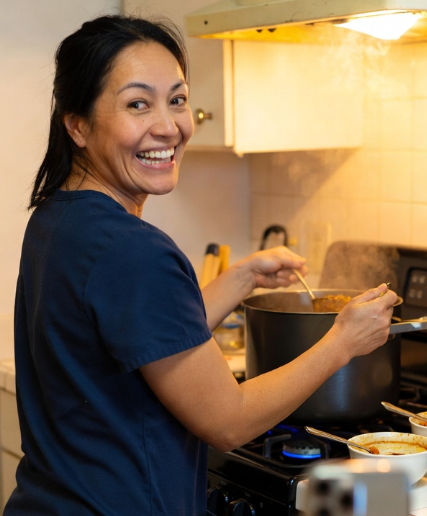
I made mechado — the beef stew, the reliable stew, the stew that doesn't need anything from me except time and heat and the willingness to wait. The beef braised for two hours. The tomatoes softened. The potatoes absorbed the sauce. I ate it at the table with rice and the eating was quiet and the quiet was okay. August in Alaska, in a pandemic, alone. The mechado was warm. The warm was enough.
Mechado was what I made that night, but adobo is its sibling — the other Filipino braise I reach for when the shift has been long and the light is going and I need something that will take care of itself while I sit with the quiet. The vinegar and soy do what braising liquids always do: they soften things, they deepen things, they turn time into flavor. You don’t have to watch it. You just have to let it go.
Filipino Chicken Adobo
Prep Time: 10 min | Cook Time: 45 min | Total Time: 55 min | Servings: 4
Ingredients
- 2 lbs bone-in, skin-on chicken thighs and drumsticks
- 1/2 cup soy sauce
- 1/2 cup white cane vinegar or apple cider vinegar
- 1 cup water
- 1 head garlic, cloves crushed and peeled
- 3 bay leaves
- 1 tsp whole black peppercorns
- 1 tbsp neutral oil
- Steamed white rice, for serving
Instructions
- Marinate the chicken. In a large bowl or zip-top bag, combine the chicken, soy sauce, vinegar, garlic, bay leaves, and peppercorns. Marinate for at least 30 minutes at room temperature, or up to overnight in the refrigerator.
- Sear. Heat the oil in a large heavy-bottomed pot or Dutch oven over medium-high heat. Remove the chicken from the marinade (reserve the marinade) and sear skin-side down for 4–5 minutes until golden. Flip and sear 2 minutes more. Work in batches if needed.
- Braise. Return all the chicken to the pot. Pour in the reserved marinade and add 1 cup of water. Bring to a boil, then reduce heat to low, cover, and simmer for 30 minutes.
- Reduce the sauce. Uncover the pot and increase heat to medium. Simmer uncovered for 10–15 minutes, turning the chicken occasionally, until the sauce reduces and clings to the chicken and the skin re-crisps slightly.
- Serve. Discard the bay leaves. Serve over steamed white rice with the braising sauce spooned generously over the top.
Nutrition (per serving)
Calories: 390 | Protein: 34g | Fat: 22g | Carbs: 7g | Fiber: 0g | Sodium: 1180mg