
 By
By The week after a wedding is the week the house gets quiet again and the quiet is louder than the music was. Travis and Jolene left for Gatlinburg — honeymoon, three days, which is what you get when the groom works landscaping and April is the busiest month. Connie cleaned up the last of the reception supplies and put the leftover table linens in a box and sat on the couch and said "Well." I said "Well." We sat there. Two people in a house that raised three children and just sent the first one into his own life, properly, legally, with cake and witnesses and a woman from Richmond who laughs at his jokes.
Betty made it home to Evarts safe. Dale drove her back Sunday morning. She called Monday night to say the stack cake was good but next time she'd use more cinnamon in the filling, which is Betty's way of saying it was perfect but perfection is not a reason to stop improving. She also said Jolene is "good people," which from Betty is a background check, a character reference, and a blessing rolled into two words.
I spent the week on the cookbook proposal. Fifty pages by June. I sat at the kitchen table with Betty's recipe box — the wooden one Earl made her in 1972, dovetail joints, no nails — and sorted through the cards. Some are in Betty's handwriting, which is small and precise and looks like a schoolteacher's because she was, briefly, before she married Earl. Some are in my handwriting from the last five years of this blog, converting "a good bit" into tablespoons and "cook it till it's done" into actual temperatures. The translation is imperfect. Betty's cooking resists measurement the way poetry resists paraphrase. But the attempt matters. The attempt is the whole point.
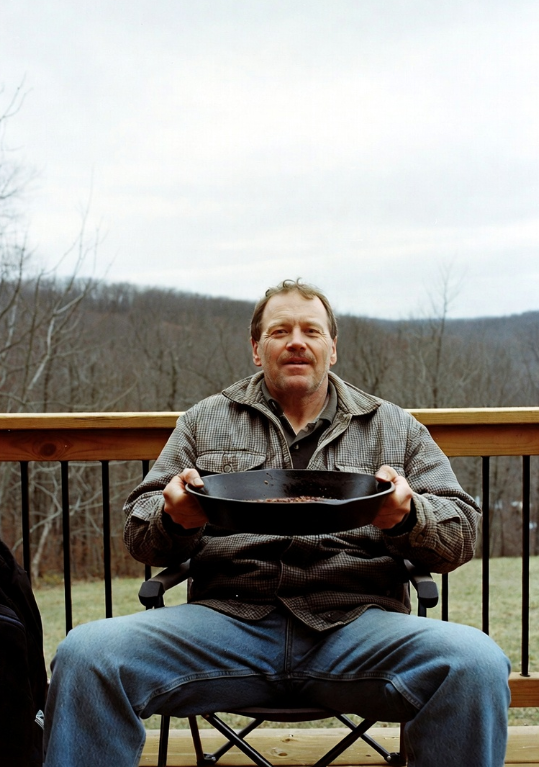
This week's recipe for the proposal: Betty's fried potatoes. Not a complicated dish. Sliced thin, fried in bacon grease in cast iron, seasoned with salt and pepper and nothing else. The secret is patience — low heat, don't crowd the pan, let the edges crisp before you turn them. Betty made these every morning of my childhood. Earl ate them with eggs and black coffee before the mines. I ate them with ketchup, which Betty tolerated but did not endorse. The potatoes are in the cookbook because they're the first thing I remember eating and the last thing I'd want to forget. They're the starting line. Everything I know about feeding people started with a potato in a skillet and a woman who had the patience to let it crisp.
The fried potatoes are going in the proposal as the first entry — the starting line, like I said. But you can’t write about Betty’s mornings without writing about the eggs that always came with them. Earl had both, every day, before the mines. I’ve been testing variations all week at that kitchen table, the recipe box open beside me, and this version — bright with peppers, pulled off the heat just shy of done — is the one that felt like it belonged in the same chapter. Not Betty’s recipe, exactly. But the same philosophy: cast iron, patience, nothing wasted.
Fiesta Scrambled Eggs
Prep Time: 10 minutes | Cook Time: 10 minutes | Total Time: 20 minutes | Servings: 4
Ingredients
- 6 large eggs
- 2 tablespoons whole milk
- 1/2 red bell pepper, small dice
- 1/2 green bell pepper, small dice
- 1/4 cup white onion, small dice
- 1 jalapeño, seeded and minced
- 1/2 cup shredded sharp cheddar cheese
- 1 tablespoon butter or bacon grease
- 1/4 teaspoon salt, plus more to taste
- 1/4 teaspoon black pepper
- 2 tablespoons fresh cilantro, roughly chopped (optional)
- Salsa or hot sauce, for serving
Instructions
- Whisk the eggs. Crack eggs into a medium bowl. Add milk, salt, and black pepper. Whisk until the yolks and whites are fully combined and the mixture looks uniform — about 30 seconds of steady whisking.
- Cook the vegetables. Heat butter or bacon grease in a well-seasoned cast iron skillet over medium heat. Add the bell peppers, onion, and jalapeño. Cook, stirring occasionally, until the onion is translucent and the peppers have softened slightly, about 4 minutes. Don’t rush this step — the fond that builds in the pan carries flavor.
- Add the eggs. Pour the egg mixture over the cooked vegetables. Let it sit undisturbed for about 30 seconds until the edges just begin to set.
- Fold, don’t scramble. Using a wide spatula, gently fold the eggs from the outside edge toward the center in slow, deliberate strokes. You’re building soft folds, not breaking them up. Reduce heat to medium-low if the eggs are setting too quickly.
- Add the cheese. When the eggs are about three-quarters set — still slightly wet-looking on top — scatter the shredded cheddar over the surface and fold it in gently. Pull the skillet off the heat; residual warmth will finish the job.
- Serve immediately. Transfer to plates while still just slightly soft. Top with fresh cilantro if using, and serve with salsa or hot sauce on the side. These are best eaten the moment they leave the pan.
Nutrition (per serving)
Calories: 195 | Protein: 14g | Fat: 14g | Carbs: 4g | Fiber: 1g | Sodium: 310mg