Erik came over Saturday. We sat in the kitchen. He cried. Erik does not cry. Erik did not cry at Pappa's funeral. Erik did not cry when his wife died in 2018. Erik cried at Mamma's kitchen table because Mamma was not in it. I made him coffee. He cried for ten minutes. Then he stopped. Then we sat for another twenty minutes without talking. Then he left. The visit was perfect. The visit broke us both open in the right way.
Erik called Sunday. He said he was thinking about Lars. He said he had not thought about Lars in a long time, not really thought about him, not the actual Lars, the twenty-year-old in 1979. Mamma's death has unlocked the older grief. Both of them at once. We sat on the phone for forty minutes mostly silent. Erik said: "It is too quiet over here, Linda." I said: "It is too quiet over here, too." We hung up. We were both alone in our too-quiet houses. The aloneness was, somehow, shared.
Karin came from Stockholm for the funeral. She slept in the basement. She drank coffee at Mamma's table (Mamma's table is now in my dining room — Erik moved it over when we cleaned out the Fifth Street house; the Kenwood dining room now has both my dining table and Mamma's, pushed together to make a single longer table). Karin said: "It is so strange that the kitchen still smells like her." I said: "I have been baking her bread." Karin understood.
I cooked Roast chicken with stuffing this week. The Sunday bird with bread stuffing — sage, onion, celery, butter, chicken stock.
The Damiano Center: a regular named Marlene, who has been coming for twelve years, told me her granddaughter just had a baby. She was glowing. She had a photo on her phone. The phone was old and cracked but the photo was clear: a small pink baby in a hospital blanket. Marlene said: "I am a great-grandmother now. The same as you." I said: "Welcome to the club." We hugged. The line continues, even on the hard side of the soup line.
Mamma's bread pans are on the shelf where they have always been. I used the smaller one this week. The metal has worn smooth in the places her hands touched it for sixty years. The pan is, in some real sense, a sculpture of Mamma's hands. I knead the bread in the bowl Mamma used. I shape it on the counter Mamma stood at (well, mine, but identical to hers — same Formica color, same dimensions). I bake it in the pan Mamma baked in. The kitchen is the relay. The relay continues.
It is enough. Paul is not here. Mamma is not here. Pappa is not here. Erik is not here. They are all here in the kitchen, in the smell, in the taste, in the wooden spoon and the bread pans and the marble slab. The dead are not where the body went. The dead are in the kitchen.
I have been blogging for years now. The blog began as something to do at night when sleep would not come. The blog has become — without my fully intending it — a small congregation. The readers come back. They read the recipes. They read the parts that are not recipes. They write to me sometimes. They tell me what they cooked. They tell me about their own kitchens, their own losses, their own continued cooking. The congregation is its own form of company.
It is enough.
I did not set out to bake bread this week — I set out to roast a chicken, and I did, and it was right, the sage and the onion and the stock doing what they always do. But it was the bread that undid me. Karin said the kitchen still smells like Mamma, and it does because I keep baking this loaf, the one Mamma made every week without a recipe card because the recipe was in her hands. I use the smaller pan. I use the bowl. I bake the bread. The Irish bread is not complicated, and that is exactly why it is hers — she had no patience for complicated, only for good.
Favorite Irish Bread
Prep Time: 10 minutes | Cook Time: 45 minutes | Total Time: 55 minutes | Servings: 10
Ingredients
- 4 cups all-purpose flour
- 1 tablespoon sugar
- 1 1/2 teaspoons baking soda
- 1 teaspoon salt
- 1/4 cup cold unsalted butter, cut into small cubes
- 1 cup raisins or currants (optional but traditional)
- 1 3/4 cups cold buttermilk
- 1 large egg, lightly beaten
Instructions
- Heat the oven. Preheat your oven to 375°F (190°C). Lightly grease a 9-inch round cake pan or a standard loaf pan and set aside.
- Combine the dry ingredients. In a large bowl, whisk together the flour, sugar, baking soda, and salt until evenly blended.
- Cut in the butter. Add the cold butter cubes and work them into the flour mixture with your fingertips or a pastry cutter until the mixture resembles coarse crumbs. Do not overwork — small pea-sized bits of butter are fine.
- Add the fruit. If using raisins or currants, stir them into the flour mixture now so they are evenly distributed.
- Mix the wet ingredients. In a small bowl or measuring cup, whisk together the buttermilk and beaten egg.
- Bring the dough together. Pour the buttermilk mixture into the flour mixture and stir with a wooden spoon until a shaggy, slightly sticky dough forms. Turn it out onto a lightly floured counter and knead gently 8 to 10 times — just until the dough holds together. Do not overknead.
- Shape and score. Form the dough into a round loaf and place it in the prepared pan. Using a sharp knife or bench scraper, cut a deep X across the top — about 1/2 inch deep — to allow the center to bake through evenly.
- Bake. Bake for 40 to 45 minutes, until the top is deep golden brown and a wooden skewer inserted in the center comes out clean. The loaf should sound hollow when tapped on the bottom.
- Cool before slicing. Let the bread rest on a wire rack for at least 15 minutes before slicing. It is best eaten the day it is baked, with real butter and no apology.
Nutrition (per serving)
Calories: 240 | Protein: 6g | Fat: 6g | Carbs: 40g | Fiber: 1g | Sodium: 340mg
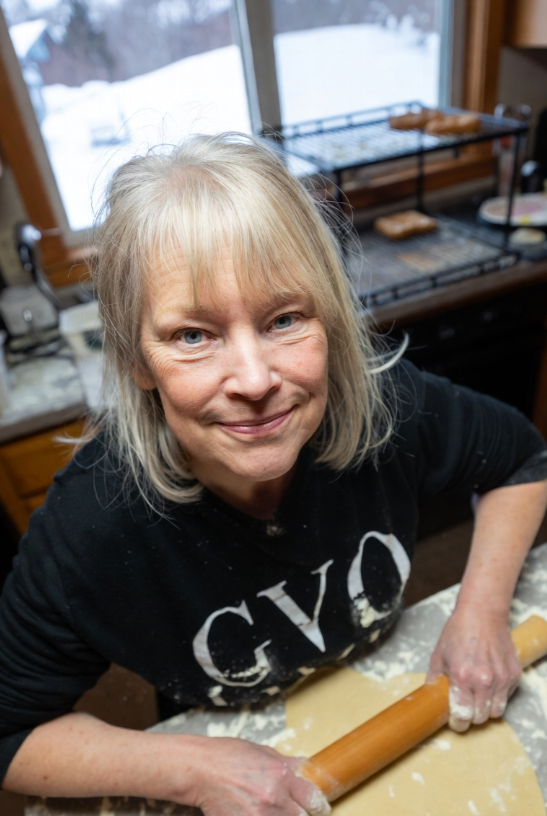
About the cook who shared this
Linda Johansson
Week 447 of Linda’s 30-year story
· Duluth, Minnesota
Linda is a sixty-three-year-old retired nurse from Duluth, Minnesota, living alone in the house where she raised her children and said goodbye to her husband. She lost Paul to ALS in 2020 after two years of watching the kindest man she'd ever known lose everything but his dignity. She cooks Scandinavian comfort food and Minnesota hotdish and the pot roast Paul loved, and she sets two places at the table out of habit because it makes her feel less alone. Every recipe she writes is a person she's loved.
