
 By
By February begins and with it the first tentative signs of spring — snowdrops in the yards, the earliest crocuses, the particular quality of light that suggests the days are getting longer even when the weather says otherwise. I am looking for spring the way I always look for spring: desperately, the way someone in a dark room looks for the switch.
I made sakura-shaped onigiri this week — rice shaped into cherry blossom forms using a mold I bought at Uwajimaya, pressed with pickled plum and nori. They are silly and beautiful and they made Miya clap, which is the highest review a toddler can give. I packed them for our Tuesday walk to the park, and Miya ate them on a bench while ducks paddled in the pond and the gray sky threatened rain and I thought: this is the life I am building. Not the one I planned. Not the one I expected. But a life made of small pink rice shapes and a child on a bench and a duck that does not care about my anxiety, and the not-caring of the duck is a form of wisdom I aspire to.
I visited Fumiko in Sacramento this weekend. Just me — Brian stayed with Miya, his first full weekend solo, which was an act of faith on my part and an act of courage on his. I flew down Friday and came back Sunday and in between I sat in Fumiko's kitchen and watched her cook and tried to memorize everything I cannot write down: the way she holds the knife, the angle of her wrist, the sound of the kombu hitting the water, the exact shade of gold the dashi turns when the bonito flakes have given everything they have.
She is slower. I noticed immediately and pretended not to, because Fumiko would be mortified by the noticing. The walker moves at her pace now. She sits between tasks. She cooked me dinner — miso soup, grilled fish, rice, tsukemono — and the meal took her two hours instead of the one it used to take, and every minute of those two hours was an act of love so fierce it made my chest ache. She does not cook for me because she must. She cooks for me because cooking is how she says the things she cannot say, and the things she cannot say are the things that matter most.
I helped her wash the dishes. She let me, which is new. Fumiko does not let people into her kitchen. The letting was a concession to age, to the body that is slowing, to the hands that shake slightly now when they hold the dishcloth. I washed. She dried. We did not speak. Nakamuras do not speak while they work. The work is the speech.
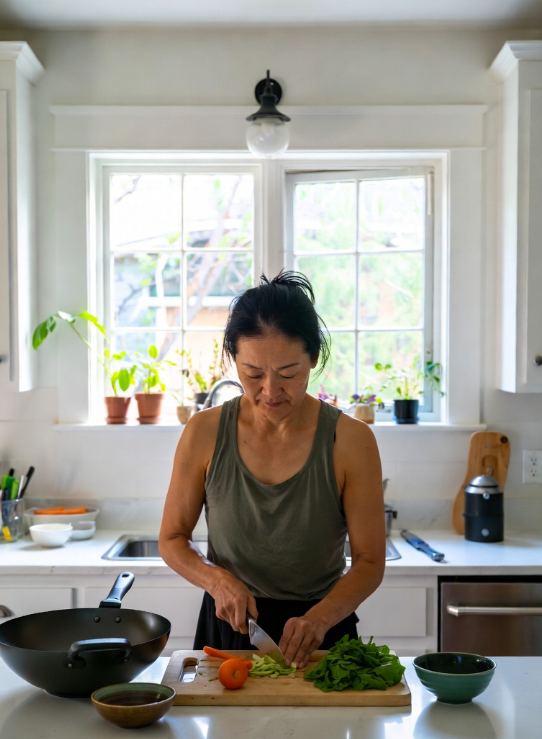
I came home from Sacramento on Sunday evening, and Brian had already put Miya to bed, and the house was quiet in that particular way it gets when a toddler has burned through all available energy and surrendered. I did not want to cook anything ambitious. I wanted something that moved in the direction of Fumiko’s kitchen without pretending to be it — something with miso and warmth and the smell of broth filling a room. This ramen is not what Fumiko would make. But it is what I can make on a Sunday night when I am tired and grateful and trying to hold something close.
Easy Vegetarian Ramen
Prep Time: 15 min | Cook Time: 30 min | Total Time: 45 min | Servings: 4
Ingredients
- 8 cups vegetable broth
- 1 piece kombu (about 4 inches), optional but recommended
- 3 tablespoons white miso paste
- 1 tablespoon soy sauce, plus more to taste
- 1 tablespoon toasted sesame oil
- 1 teaspoon grated fresh ginger
- 2 cloves garlic, minced
- 10 oz dried ramen noodles (or 2 packages, seasoning packets discarded)
- 4 large eggs
- 2 cups baby spinach or roughly chopped bok choy
- 1 cup shredded carrots
- 4 scallions, thinly sliced
- 1 cup corn kernels (fresh, frozen, or canned and drained)
- 2 tablespoons sesame seeds, for serving
- Chili crisp or sriracha, for serving (optional)
- Nori sheets, cut into strips, for serving (optional)
Instructions
- Build the broth. In a large pot, combine vegetable broth and kombu (if using) over medium heat. Bring to a gentle simmer and let the kombu steep for 10 minutes, then remove and discard. Do not let the broth boil vigorously while the kombu is in — low and slow draws out the best flavor.
- Bloom the aromatics. Add garlic and ginger to the broth and simmer 5 minutes. In a small bowl, whisk miso paste with 1/4 cup of the warm broth until smooth, then stir it back into the pot along with the soy sauce and sesame oil. Keep warm over low heat. Taste and adjust with additional soy sauce as needed.
- Soft-boil the eggs. Bring a small saucepan of water to a boil. Gently lower eggs in and cook exactly 7 minutes for jammy yolks. Transfer immediately to an ice bath, peel when cool enough to handle, and halve lengthwise just before serving.
- Cook the noodles. Cook ramen noodles according to package directions in a separate pot of boiling water. Drain and rinse briefly with warm water to remove excess starch. Divide evenly among four deep bowls.
- Wilt the greens. Stir spinach or bok choy into the hot broth off the heat and let it wilt for 1 to 2 minutes. The residual heat is enough — you want the greens tender but still bright.
- Assemble. Ladle hot broth generously over noodles in each bowl. Arrange carrots, corn, and scallions on top. Nestle two egg halves into each bowl. Finish with sesame seeds, nori strips if using, and a drizzle of chili crisp for those who want it.
Nutrition (per serving)
Calories: 420 | Protein: 18g | Fat: 14g | Carbs: 58g | Fiber: 5g | Sodium: 1,190mg