
 By
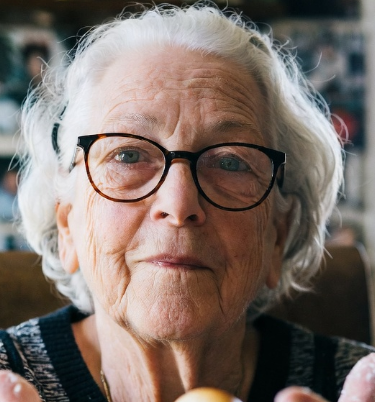
By The school year ends this week — my forty-second year of teaching, the strangest year of my career, the year of masks and Zoom and plexiglass and the particular exhaustion of a woman who taught teenagers to read literature while simultaneously caring for a husband who was forgetting how to read anything. I am tired. I am not too tired. There is a difference, and the difference is everything, and the difference is measured in the distance between "I need a rest" and "I need to stop," and I am firmly in the former, not yet the latter, though the latter whispers to me in the evenings when the house is quiet and Marvin is sleeping and I am grading papers with eyes that are getting worse and hands that ache and a mind that is still sharp but aware of its own effort.
The last day of school. I stood in my empty classroom — desks pushed back, board erased, the specific silence of a room that was full of people and now isn't — and I said my private prayer: let me come back. One more year. One more September. One more class of freshmen who haven't read anything and will, by June, have read everything I can give them. Let me come back. The prayer is different this year. This year it's not automatic. This year it's a question.
I made strawberry shortcake — the same recipe I made two Junes ago, buttery biscuits and fresh berries and whipped cream, the taste of the school year ending and the summer beginning, the transitional food, the food that marks the passage from one season of Ruth to another: school Ruth becoming summer Ruth, teacher becoming cook, Mrs. Feldman becoming Bubbe. Both are me. Both are necessary. The strawberries are perfect. The whipped cream is real. The school year is over. The summer begins.
The strawberry shortcake was for me — the ritual, the recognition, the private ceremony of closing one chapter. But the summer, with its slower mornings and Marvin napping and the grandchildren arriving in waves, calls for something I can make quickly and share freely, something that requires no ceremony at all: drop doughnuts, warm from the oil and dusted with sugar, the kind of thing that disappears from the plate before you can think too hard about any of it. After forty-two years of planning and grading and measuring everything, it is a relief to drop batter by the spoonful and let the heat do the rest.
Drop Doughnuts
Prep Time: 10 minutes | Cook Time: 15 minutes | Total Time: 25 minutes | Servings: 24 doughnuts
Ingredients
- 2 cups all-purpose flour
- 1/3 cup granulated sugar
- 2 teaspoons baking powder
- 1/2 teaspoon salt
- 1/2 teaspoon ground nutmeg
- 1 large egg, beaten
- 3/4 cup whole milk
- 1 teaspoon vanilla extract
- 2 tablespoons unsalted butter, melted
- Vegetable oil, for frying (about 3 cups)
- 1/2 cup powdered sugar, for dusting
Instructions
- Heat the oil. Pour about 2 to 3 inches of vegetable oil into a heavy-bottomed pot or Dutch oven. Heat over medium-high heat until the oil reaches 375°F on a candy or deep-fry thermometer.
- Mix dry ingredients. In a large bowl, whisk together the flour, granulated sugar, baking powder, salt, and nutmeg until evenly combined.
- Mix wet ingredients. In a separate bowl, stir together the beaten egg, milk, vanilla extract, and melted butter.
- Combine. Pour the wet ingredients into the dry ingredients and stir just until a soft, slightly sticky dough forms. Do not overmix — a few lumps are fine.
- Fry the doughnuts. Working in batches of 4 to 5, drop heaping tablespoons of dough carefully into the hot oil. Fry for 2 to 3 minutes per side, turning once, until deep golden brown all over. Adjust heat as needed to keep oil temperature steady.
- Drain. Using a slotted spoon, transfer doughnuts to a plate lined with paper towels. Let drain for 1 to 2 minutes.
- Dust and serve. Sift powdered sugar generously over the warm doughnuts and serve immediately.
Nutrition (per serving)
Calories: 105 | Protein: 2g | Fat: 5g | Carbs: 14g | Fiber: 0g | Sodium: 85mg