Part one of the Polish food series published. "From Gda┼äsk to Greenfield." Milwaukee Eats ran it as a feature with photos from the Historical Society — black and white images of the old neighborhood, the churches, the markets. My words alongside hundred-year-old photographs. The disconnect in time — my twenty-three-year-old voice narrating the lives of people born in the 1870s — felt strange and right at the same time. We're telling the same story. They just started it.
The response was immediate and deep. Not viral — not thousands of shares — but concentrated. Polish-American families from across Milwaukee DM'd me stories about their own grandmothers, their own kitchens, their own recipe cards. A man in his sixties sent me a photo of his mother making pierogi in 1952 — same wooden table, same rolling pin, same posture that I've seen in every kitchen I've visited. A woman from Racine sent me her grandmother's bigos recipe, handwritten in Polish, asking if I could translate it. (I can't, but Mrs. Wojcik can.)
The food is the thread. It's always been the thread. The thing that connects the immigrants to the grandmothers to the kids like me who are standing at the end of the chain, holding on.
Two years since Babcia died. February 8th. I went to Holy Cross Cemetery on Saturday morning. Snow on the ground, gray sky, the particular cold of a Milwaukee February that goes through your coat and into your bones. I brought pierogi. Potato and cheese. Warm, wrapped in foil. Set them on the headstone.
"Two years, Babcia. The series is published. The business plan is done. I'm ready. Almost. Soon."
The wind didn't answer. It never does. But the pierogi sat there, steaming slightly in the cold air, and that was answer enough.
At the brewery, Marcus asked me to stay late on Wednesday. After everyone left, he poured two beers and sat across from me. "Jake," he said. "I know about Helen's."
I froze. He said, "Your mom told my wife at church." (Of course she did. Linda Kowalski, the most efficient information network in Bay View.) "I'm not mad," he said. "I'm proud. When you're ready, I want to help."
Marcus. Proud. Offering to help. I didn't know what to say. So I drank my beer and said, "Thanks, Marcus." And he said, "Don't rush it. Do it right." Which is what everyone says. Because they know me. And they know that the best things take time.
After two years and two beers with Marcus and one cold February morning at Holy Cross, I needed to cook something that felt like proof — proof that I’m still holding the thread. Pierogi get the headlines in this series, but it’s dill pickle soup that shows up in every Polish kitchen I’ve ever sat in, quiet and unassuming, the thing the grandmothers made when there was nothing else to say. The woman from Racine mentioned it in her letter. Mrs. Wojcik makes it every Sunday. I’ve been putting off making it myself, the way you put off things that matter — but the series is published now, and Babcia knows, and it felt like time.
Dill Pickle Soup
Prep Time: 15 min | Cook Time: 35 min | Total Time: 50 min | Servings: 6
Ingredients
- 1 lb Yukon Gold potatoes, peeled and diced (about 3 medium)
- 3 large dill pickles, shredded or finely chopped (about 1 cup)
- 1/2 cup dill pickle brine (from the jar)
- 1 medium yellow onion, diced
- 3 medium carrots, peeled and sliced
- 3 stalks celery, sliced
- 3 cloves garlic, minced
- 2 tablespoons unsalted butter
- 6 cups chicken or vegetable broth
- 1/2 cup sour cream
- 2 tablespoons all-purpose flour
- 1 teaspoon dried dill (plus fresh dill for garnish)
- 1/2 teaspoon white pepper
- Salt to taste
Instructions
- Sauté the aromatics. Melt butter in a large pot or Dutch oven over medium heat. Add onion, carrots, and celery. Cook, stirring occasionally, for 6–8 minutes until softened. Add garlic and cook 1 minute more.
- Build the base. Add broth and diced potatoes to the pot. Bring to a boil, then reduce heat to a steady simmer. Cook for 15 minutes, until potatoes are just tender when pierced with a fork.
- Add the pickles. Stir in the shredded dill pickles, pickle brine, dried dill, and white pepper. Simmer for an additional 10 minutes. Taste — the soup should be tangy and savory. Adjust brine to your preference.
- Temper the sour cream. In a small bowl, whisk together sour cream and flour until smooth. Ladle about 1/2 cup of hot broth from the pot into the bowl and whisk to combine. This tempers the cream so it won’t curdle.
- Finish and thicken. Pour the tempered sour cream mixture back into the pot, stirring constantly. Simmer gently for 3–5 minutes until the soup thickens slightly. Do not boil after adding sour cream.
- Season and serve. Taste and adjust salt as needed. Ladle into bowls and top with fresh dill. Serve with crusty rye bread.
Nutrition (per serving)
Calories: 185 | Protein: 5g | Fat: 8g | Carbs: 24g | Fiber: 3g | Sodium: 920mg
About the cook who shared this
Jake Kowalski
Week 202 of Jake’s 30-year story
· Milwaukee, Wisconsin
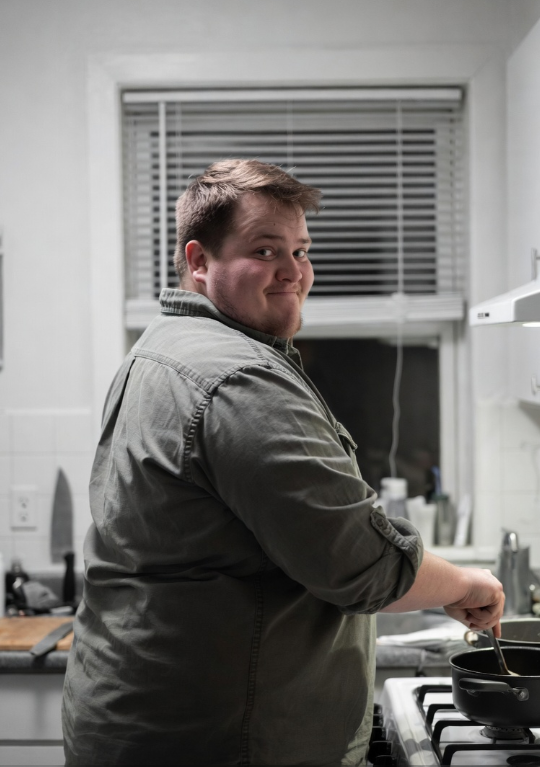
Jake is a twenty-nine-year-old brewery worker, newlywed, and proud Polish-American from Milwaukee's Bay View neighborhood. He didn't start cooking until his grandmother Babcia Helen passed away and left behind a stack of grease-stained recipe cards. Now he makes pierogi from scratch, smokes meats on a balcony smoker his landlord pretends not to notice, and writes for guys who want to cook good food but don't know a roux from a rub.
