
 By
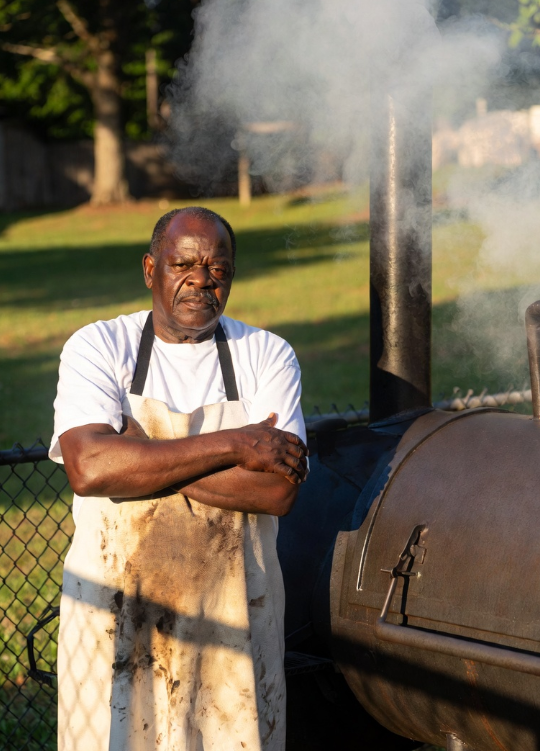
By Last week of June and the Fourth of July is coming, which in the BBQ world is like Christmas, Easter, and your birthday all wrapped in an American flag and set over a hickory fire. I have been planning this year's Fourth of July cook since approximately January, because a pitmaster who waits until July to plan his July Fourth cook is not a pitmaster — he's a man with a grill and a dream and insufficient preparation.
This week was about logistics. I ordered two cases of pork ribs from the butcher on Thomas Street — a man named Jerome who has been cutting meat for forty years and who knows, without being told, that I want spare ribs with the membrane already removed because removing the membrane is the only tedious part of rib preparation and I have outsourced tedium to Jerome since 1995. I also ordered two pork shoulders, ten pounds each, because the Fourth of July demands shoulders the way New Year's demands black-eyed peas: it's tradition, and tradition doesn't negotiate.
The mail route was brutal this week. Three days over 95 degrees, and on Friday it hit 98 with a heat index of 110, which is the kind of temperature that makes you understand why people in hot climates invented siestas and ceiling fans and the concept of "too hot to function." I finished my route on Friday with a headache and legs that felt like they'd been filled with concrete, and Rosetta took one look at me and put me on the couch with ice packs and electrolyte water and a expression that said, "If you say one word about being fine, I will end you."
I am not fine. Or rather, I am fine in the way that fifty-seven-year-old men who have been walking six miles a day for thirty-six years in Memphis heat are fine: still standing, still moving, but aware that the standing and moving are getting harder, and that the gap between "I can do this" and "I should do this" is widening. Rosetta knows. My knee knows. The retirement letters in the drawer know. I'm the last one to know, and maybe I already know and I'm just not ready to say it out loud.
Saturday I did a test batch of my baked beans for the Fourth — the recipe I've been refining for twenty years. Navy beans, soaked overnight. Yellow onion, diced fine. Brown sugar, molasses, yellow mustard, ketchup, a splash of apple cider vinegar, and two tablespoons of my BBQ sauce, the tomato-based one I keep separate from the vinegar mop. You bake them low — 300 degrees — for three hours, until the sauce is thick and the beans are soft but not mushy, and the whole house smells like a cookout that hasn't happened yet.
Rosetta tasted the beans and said, "More mustard." I said, "How can you possibly know that after one bite?" She said, "Thirty-seven years of nursing has given me diagnostic taste buds." I added more mustard. They were better. I will never tell her this.
Sunday after church, I drove out to Whitehaven. Mama was in her chair, watching the birds through the window — she loves the cardinals, calls them her "red friends" — and she asked me about the Fourth of July. She wanted to know if I was doing a whole hog. I said no, Mama, nobody does a whole hog anymore. She said Uncle Clyde did a whole hog every Fourth of July until 2003. I said I know, Mama. She said, "Well, somebody should." And she looked at me the way only a mother can look at a son, with expectation and love and the absolute certainty that he will rise to meet whatever she's asking. I said, "Mama, I'll think about it." She said, "Don't think. Cook."
The baked beans are handled — Rosetta made sure of that, mustard and all — but a Fourth of July spread with twenty-plus people doesn’t survive on one side dish, no matter how good it is. I’ve been making this Dill Pickle Pasta Salad for the last several years as the counterpoint to the beans: where the beans are sweet and smoky and slow, this one is cold and sharp and ready to cut through all that richness. It’s the kind of thing you can make the day before, which matters when you’re already managing two pork shoulders and two cases of ribs and the ambient temperature of Memphis in July.
Dill Pickle Pasta Salad
Prep Time: 15 minutes | Cook Time: 10 minutes | Total Time: 25 minutes (plus 1 hour chilling) | Servings: 10
Ingredients
- 1 lb rotini or elbow macaroni
- 1 1/2 cups dill pickles, diced small (about 4–5 spears)
- 1/2 cup pickle brine (from the jar)
- 1 cup mayonnaise
- 1/2 cup sour cream
- 1 tablespoon yellow mustard
- 1 teaspoon garlic powder
- 1 teaspoon onion powder
- 1/2 teaspoon black pepper
- 1/2 teaspoon salt, plus more for pasta water
- 1/4 cup red onion, finely diced
- 2 tablespoons fresh dill, chopped (or 2 teaspoons dried)
- 1/2 cup sharp cheddar cheese, cubed small (optional)
Instructions
- Cook the pasta. Bring a large pot of salted water to a boil. Cook pasta according to package directions until al dente. Drain and rinse under cold water to stop cooking, then transfer to a large mixing bowl.
- Pickle-soak the pasta. While the pasta is still warm, pour the 1/2 cup of pickle brine over it and toss to coat. Let it absorb for 5 minutes — this step is what gives the salad its backbone of flavor.
- Make the dressing. In a separate bowl, whisk together the mayonnaise, sour cream, yellow mustard, garlic powder, onion powder, salt, and black pepper until smooth.
- Combine. Add the diced pickles, red onion, and fresh dill to the pasta. Pour the dressing over everything and fold gently until evenly coated. Fold in the cheddar cheese if using.
- Chill. Cover and refrigerate for at least 1 hour before serving. Taste after chilling — the pasta will absorb the dressing, so add a spoonful of extra mayo or a splash of pickle brine to loosen it back up if needed.
- Serve. Transfer to a serving bowl, garnish with a few sprigs of fresh dill and a handful of pickle slices on top. Serve cold alongside your BBQ.
Nutrition (per serving)
Calories: 320 | Protein: 7g | Fat: 16g | Carbs: 38g | Fiber: 2g | Sodium: 610mg