The PEG tube was placed on Wednesday. Outpatient procedure at St. Mary's — my hospital, my floor, though not my floor anymore. I walked the hallways and the smell was the same — antiseptic, coffee, the particular smell of a hospital that is both sterile and deeply human — and I was a visitor now, not a nurse, and the hallways felt different from this side.
Paul was calm. He typed before the procedure: "See you on the other side." The machine said it. The anesthesiologist looked at the machine and then at Paul and then at me and said, "He has a good sense of humor." I said, "He's had it for sixty-two years."
The procedure took forty-five minutes. I sat in the waiting room and read a magazine about Duluth restaurants and thought about how many of these restaurants Paul and I have been to and how the last restaurant meal we had was in 2018, before the wheelchair, before the voice, before everything, and the magazine was glossy and cheerful and I read it the way you read a postcard from a country you'll never visit again.
Paul came out fine. The tube is in his abdomen — a small, external port that sits flat against his skin. The nutritionist showed me how to operate the pump, how to prepare the formula, how to clean the site. I did everything correctly because I'm a nurse and nurses do things correctly and the doing-correctly is the thing that holds me together when the doing-at-all threatens to break me.
We went home. Paul was tired. I put him to bed. I set up the feeding pump on the nightstand, next to the BiPAP machine, next to the breathing monitor. The nightstand is a medical station now. Three machines. Three sounds. Pump. BiPAP. Monitor. The orchestra of survival, expanded.
Paul can still eat by mouth. The tube is supplemental, not replacement. I made him soup that evening — cream of mushroom, homemade, blended smooth — and I held the cup to his lips and he drank and the drinking was slow and careful and the swallowing was effortful but it happened. He ate. He tasted. The soup went down.
He typed after: "Still eating. The tube is backup." I said, "Exactly. The tube is backup." He typed: "Like a spare tire." I said, "Paul, the tube is nothing like a spare tire." He typed a smiley face. The machine said nothing. The smiley face said everything.
The spare tire. My husband has a feeding tube and he's comparing it to a spare tire. This man. This impossible, wonderful, failing, stubborn, humorous, beloved man.
The tube is in. The soup is warm. The smiley face is on the screen. We continue.
I made cream of mushroom that first night, but this curried acorn squash soup has become the one I return to now — it blends silky smooth, it’s warm without being heavy, and the flavor is real enough that Paul actually notices it. That matters. The tube is backup, as he said, and as long as he can still taste something, I want that something to be worth tasting. This soup is easy to hold in a cup, easy to sip slowly, and it fills the kitchen with a smell that feels like a regular evening — not a medical one.
Curried Acorn Squash Soup
Prep Time: 15 min | Cook Time: 40 min | Total Time: 55 min | Servings: 6
Ingredients
- 2 medium acorn squash, halved and seeded
- 1 tablespoon olive oil
- 1 medium onion, chopped
- 2 cloves garlic, minced
- 1 1/2 teaspoons curry powder
- 1/4 teaspoon ground ginger
- 1/4 teaspoon ground cumin
- 3 cups low-sodium vegetable broth
- 1 cup water
- 1/2 cup light coconut milk
- 1/2 teaspoon salt
- 1/4 teaspoon black pepper
- 1 tablespoon maple syrup or honey (optional, to balance bitterness)
Instructions
- Roast the squash. Preheat oven to 400°F. Place squash halves cut-side down on a lightly oiled baking sheet. Roast 30–35 minutes until flesh is completely tender when pierced with a fork. Let cool slightly, then scoop out the flesh and set aside.
- Sauté the aromatics. Heat olive oil in a large pot over medium heat. Add the chopped onion and cook 5 minutes until softened. Add garlic, curry powder, ginger, and cumin and stir for 1 minute until fragrant.
- Build the soup. Add the squash flesh, vegetable broth, and water to the pot. Stir to combine and bring to a gentle simmer over medium heat, about 5 minutes.
- Blend smooth. Use an immersion blender directly in the pot — or transfer in batches to a standing blender — and puree until completely smooth with no lumps. For a silkier texture, blend an extra minute.
- Finish and season. Return the blended soup to low heat. Stir in the coconut milk, salt, and pepper. Add maple syrup or honey if desired to balance the curry. Taste and adjust seasoning. Heat through without boiling.
- Serve. Ladle into bowls or pour into a cup for sipping. A light drizzle of coconut milk on top is a nice touch, though entirely optional.
Nutrition (per serving)
Calories: 118 | Protein: 2g | Fat: 4g | Carbs: 21g | Fiber: 3g | Sodium: 280mg
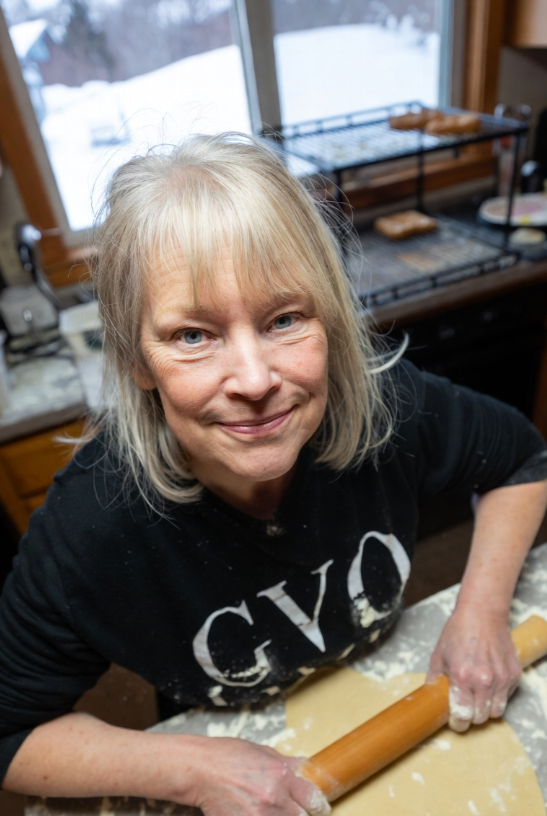
About the cook who shared this
Linda Johansson
Week 163 of Linda’s 30-year story
· Duluth, Minnesota
Linda is a sixty-three-year-old retired nurse from Duluth, Minnesota, living alone in the house where she raised her children and said goodbye to her husband. She lost Paul to ALS in 2020 after two years of watching the kindest man she'd ever known lose everything but his dignity. She cooks Scandinavian comfort food and Minnesota hotdish and the pot roast Paul loved, and she sets two places at the table out of habit because it makes her feel less alone. Every recipe she writes is a person she's loved.
