
 By
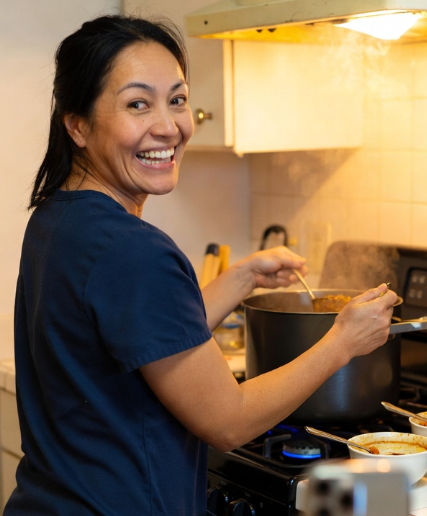
By Jason and I are moving in together. The decision happened the way the "I love you" happened — organically, in the kitchen, over food. He was at my apartment on his day off, cooking his sinigang (which is now genuinely good — I need to document this evolution for the blog: "A Firefighter Learns Sinigang: A Love Story in Tamarind"), and he looked up from the pot and said, "I don't want to go home tonight." And I said, "Then don't." And he said, "I mean permanently." And I said, "I know what you mean."
We're keeping my apartment. His lease is up in December. He'll move in. The apartment is small — one bedroom, a kitchen that doubles as my office and my therapy room and my blog headquarters — but it's mine and it's becoming ours, and the "ours" feels different from the "mine" in a way that is both thrilling and terrifying, the combination that I'm learning is the default setting for every significant life decision.
I told Lourdes. She said, "Are you getting married?" I said, "We're moving in together." She said, "That's different." I said, "Yes." She was quiet. Then: "Does he have a rice cooker?" I said, "He bought one." She said, "Then it's fine." The rice cooker as dowry. The rice cooker as proof of commitment. In Lourdes's world, a man who owns a rice cooker has declared his intentions more clearly than any diamond ring.
Angela was thrilled. "You deserve this," she said, and the "this" was not just Jason but the life — the shared apartment, the cooking together, the possibility of a future that includes another person's boots by the door and another person's toothbrush in the holder and the ordinary intimacy that I've watched Angela have with James and wanted without admitting the wanting.
I made lechon kawali to celebrate — the crispy pork belly, the shatter-when-you-bite-it dish that requires a gallon of oil and produces pork that is an argument for living. The oil popped and sizzled and the kitchen filled with smoke and the pork belly emerged golden and perfect and I ate it with vinegar sauce, standing at the counter, and Jason ate his seated at the table, and we are two people with different eating positions and compatible hearts, moving toward a shared kitchen, and the kitchen — as always, as forever — is the room where the real decisions happen.
I know I said it was lechon kawali night, and it was — but a few days later, when the smoke had cleared from my kitchen and the reality of we are actually doing this settled in, I wanted something I could cook in one pan and eat together, seated, like the two people with a shared address we’re about to become. This Cuban Ground Beef Hash hit exactly that note: bold, unfussy, deeply savory, and the kind of dish that makes a small apartment smell like something permanent and good.
Cuban Ground Beef Hash
Prep Time: 15 minutes | Cook Time: 35 minutes | Total Time: 50 minutes | Servings: 4
Ingredients
- 1 1/2 lbs ground beef (80/20)
- 2 medium Yukon Gold potatoes, peeled and diced into 1/2-inch cubes
- 1 medium yellow onion, finely diced
- 1 green bell pepper, finely diced
- 4 cloves garlic, minced
- 1 can (14.5 oz) diced tomatoes, drained
- 1/3 cup green olives, sliced
- 2 tablespoons capers, drained
- 1 1/2 teaspoons ground cumin
- 1 teaspoon dried oregano
- 1/2 teaspoon smoked paprika
- 1/4 teaspoon ground black pepper
- 1 teaspoon kosher salt, plus more to taste
- 2 tablespoons olive oil, divided
- Fresh cilantro and lime wedges, for serving
Instructions
- Parboil the potatoes. Place diced potatoes in a small saucepan, cover with salted water, and bring to a boil. Cook for 5–6 minutes until just barely fork-tender but not falling apart. Drain and set aside.
- Brown the beef. Heat 1 tablespoon olive oil in a large skillet or cast iron pan over medium-high heat. Add ground beef and cook, breaking it up with a wooden spoon, until browned and no pink remains, about 6–8 minutes. Drain excess fat, then transfer beef to a bowl and set aside.
- Build the sofrito base. In the same skillet, add remaining 1 tablespoon olive oil over medium heat. Add onion and bell pepper and cook, stirring occasionally, until softened, about 5 minutes. Add garlic and cook 1 minute more until fragrant.
- Season and combine. Stir in cumin, oregano, smoked paprika, salt, and black pepper. Add the drained diced tomatoes and stir to combine, scraping up any browned bits from the pan. Return the browned beef to the skillet and stir everything together.
- Add olives, capers, and potatoes. Fold in the green olives, capers, and parboiled potato cubes. Reduce heat to medium-low and cook uncovered for 10–12 minutes, stirring occasionally, until potatoes are fully cooked through and have absorbed the flavors of the pan.
- Taste and finish. Taste for seasoning and adjust salt as needed. Remove from heat and let rest for 2 minutes. Serve over white rice with fresh cilantro scattered on top and lime wedges alongside.
Nutrition (per serving)
Calories: 430 | Protein: 31g | Fat: 24g | Carbs: 22g | Fiber: 3g | Sodium: 780mg