
 By
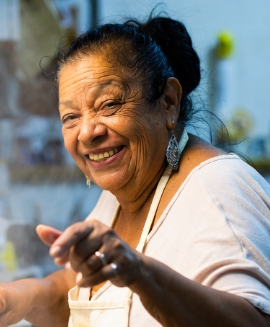
By The first week of Camila's life, and I am in New Haven more than I am in Hartford. Three days this week — Tuesday, Thursday, Saturday — driving the hour from my kitchen to Rosa's kitchen, carrying containers, holding the baby, feeding the mother, doing the work that grandmothers have done since grandmothers existed: showing up with food and arms and the specific competence of a woman who has done this before, four times with her own children and four times already with her grandchildren, and the doing is muscle memory and the muscle memory is love.
Rosa is recovering. She is tired in the way that new mothers are tired — the bone-deep, identity-level tired that comes from the body rebuilding itself while simultaneously sustaining another body, the exhaustion that no amount of sleep addresses because the sleep is interrupted and the interruption is a baby and the baby is sacred and the sacredness does not negotiate with sleep schedules. I bring food. I bring sofrito and rice and beans and caldo de pollo. I bring pernil on Saturday because Saturday is pernil day regardless of what else is happening in the world. Rosa eats. Carlos eats. The food does what food does: it sustains. It repairs. It says, in containers labeled with masking tape: your mother is here, your mother brought food, your mother will keep bringing food until you can cook again, which will be in approximately three weeks, and in those three weeks you will eat what I made and you will not thank me because the food is not a favor, the food is an obligation, and the obligation is the oldest one I know.
Mami met Camila on Sunday. I brought Mami to New Haven — the drive, the wheelchair, the production of moving an eighty-four-year-old woman an hour south — and Rosa placed Camila in Mami's arms. Mami looked at the baby. The baby looked at Mami. The looking was mutual and eternal, the gaze between a great-grandmother and a great-granddaughter, eighty-four years apart, the oldest and the newest, the beginning and the continuation. Mami said, She looks like me. She was right. Camila looks exactly like her. The cycle turns. The face repeats. The recipe carries forward.
Every Saturday I brought pernil, and every Saturday the pernil needed this — the chimichurri I learned to make the way my mother made it, bright with garlic and vinegar and herbs, the kind of sauce that doesn’t just sit on the side of a plate but becomes part of the meal’s whole argument. Standing in Rosa’s kitchen this week, watching Mami hold Camila — four generations in one room, the oldest face and the newest face finding each other — I thought about how the recipes are the thread: the same chimichurri my mother drizzled over roasted pork when I was Rosa’s age, the same one I’ve been making for forty years, the same one Rosa will make someday when it’s her turn to drive an hour with containers and masking tape labels and a grandmother’s stubborn love.
Cuban Chimichurri
Prep Time: 10 minutes | Cook Time: 0 minutes | Total Time: 10 minutes | Servings: 8
Ingredients
- 1 cup fresh flat-leaf parsley, packed
- 1/4 cup fresh oregano leaves (or 1 tablespoon dried)
- 6 cloves garlic, peeled
- 1/3 cup white wine vinegar
- 1/2 cup olive oil
- 1/2 teaspoon cumin
- 1/2 teaspoon crushed red pepper flakes
- 3/4 teaspoon kosher salt
- 1/4 teaspoon black pepper
- 2 tablespoons fresh lemon juice
Instructions
- Prep the herbs. Wash and dry the parsley and oregano thoroughly. Remove any thick stems from the parsley but keep the thin ones — they carry flavor.
- Pulse the garlic. Add the garlic cloves to a food processor or blender and pulse 4–5 times until roughly chopped. Do not over-process — you want texture, not paste.
- Add the herbs. Add the parsley and oregano to the processor and pulse another 6–8 times until coarsely chopped. Scrape down the sides as needed.
- Build the sauce. Transfer the herb and garlic mixture to a bowl. Stir in the vinegar, lemon juice, cumin, red pepper flakes, salt, and black pepper.
- Emulsify with oil. Slowly drizzle in the olive oil while stirring constantly until the sauce comes together. It should be loose, spoonable, and bright green.
- Rest before serving. Let the chimichurri sit at room temperature for at least 20 minutes before serving. The flavors bloom as it rests. It keeps refrigerated in a sealed jar for up to one week — bring back to room temperature before using.
- Serve. Spoon generously over pernil, roasted chicken, grilled skirt steak, or rice. It belongs on almost everything.
Nutrition (per serving)
Calories: 125 | Protein: 0g | Fat: 14g | Carbs: 2g | Fiber: 0g | Sodium: 145mg