Summer solstice. The longest day. Paul and I on the porch until the light gave up. The same ritual. The third time I'm writing about it. The third solstice.
Last year, Paul mentioned his hand on this night. "My hand's been bothering me," he said, a year ago, on this porch, in this light. One year. One year from the first mention to now — the left hand gone, the right hand weakening, the diagnosis confirmed, the nursing career ended, the caregiving begun. One year.
The light was the same. The lake was the same. The porch was the same. Paul was different. I was different. The light doesn't care about our differences. The light gives its longest day regardless.
Paul didn't mention the hand this year. He mentioned the ships — three ore boats visible on the horizon, moving slowly, enormous. He pointed (right hand) and named them (voice strong, voice unchanged, voice perfect). "That's a thousand-footer," he said. "Probably the Paul R. Tregurtha." I said, "You've been identifying ships for thirty years and I've never checked. You could be making these names up." He said, "The Paul R. Tregurtha is 1,013 feet long and carries 68,000 tons of iron ore. I am not making it up." He was delighted. He was offended. He was Paul.
I held his right hand. His grip is weaker but still there — still enough to hold, still enough to squeeze, still enough for the hand-in-hand that has been our thing since 1986 when he held my hand at a church potluck and his fingers were warm and I thought: this is a good hand.
It's still a good hand.
I made a solstice dinner: grilled salmon with dill and lemon, new potatoes from the garden (the first of the season — small, waxy, boiled with salt and butter, the most perfect food in June), and a salad of greens and radishes and the first cherry tomatoes. Everything from here — the fish from the lake, the potatoes from the garden, the herbs from the beds. Everything the place provides.
Paul ate it all. One-handed. Carefully. Without complaint. He said, "This is the summer meal, Linda. This is the one." I said, "Which one?" He said, "The meal I'd eat every day for the rest of my life if I could." I smiled and my heart cracked and I said, "Then I'll make it again tomorrow." He said, "Please."
I made it again the next day. The same salmon. The same potatoes. The same dill. The same everything.
Because when the person you love says "I'd eat this every day for the rest of my life," you make it again. You make it again and again. You make it until you can't. And then you remember making it.
Summer solstice. The longest day. The light stretched past ten. The ships moved on the horizon. The hand in mine was weaker but warm. We are still here. We are still here.
The new potatoes from the garden are always the quietest part of that solstice plate — small, waxy, boiled with salt and butter — but Paul called the whole meal “the one.” When you don’t have garden potatoes just yet, or when you need that same grounding, golden comfort any night of the year, these crispy garlic baked potato wedges carry the same spirit: simple, honest, made with care. They’re the kind of thing you put on the table without ceremony, and somehow they’re what everyone remembers. Make them alongside grilled salmon and something green from the garden, and you’ll understand exactly what Paul meant.
Crispy Garlic Baked Potato Wedges
Prep Time: 10 minutes | Cook Time: 40 minutes | Total Time: 50 minutes | Servings: 4
Ingredients
- 2 pounds Yukon Gold or russet potatoes (about 4 medium), scrubbed and cut into 1-inch wedges
- 3 tablespoons olive oil
- 4 cloves garlic, minced
- 1 teaspoon kosher salt
- 1/2 teaspoon freshly ground black pepper
- 1/2 teaspoon smoked paprika
- 1/4 teaspoon garlic powder
- 2 tablespoons fresh flat-leaf parsley, finely chopped (for serving)
- Flaky sea salt, to finish (optional)
Instructions
- Preheat the oven. Heat your oven to 425°F (220°C). Line a large rimmed baking sheet with parchment paper and set aside.
- Soak the wedges. Place the cut potato wedges in a large bowl of cold water and soak for at least 10 minutes. This draws out excess starch and helps them crisp up in the oven.
- Dry thoroughly. Drain the wedges and spread them on a clean kitchen towel. Pat completely dry — moisture is the enemy of crispiness. Return them to the bowl.
- Season. Drizzle the olive oil over the wedges and toss to coat evenly. Add the minced garlic, salt, black pepper, smoked paprika, and garlic powder. Toss again until every wedge is well coated.
- Arrange and roast. Spread the wedges in a single layer on the prepared baking sheet, cut-side down, making sure they are not touching. Roast for 20 minutes, then flip each wedge and roast for another 18–20 minutes until deeply golden, crisp on the edges, and tender in the center.
- Finish and serve. Remove from the oven and immediately season with flaky sea salt if using. Scatter the chopped parsley over the top and serve hot.
Nutrition (per serving)
Calories: 245 | Protein: 4g | Fat: 10g | Carbs: 36g | Fiber: 3g | Sodium: 490mg
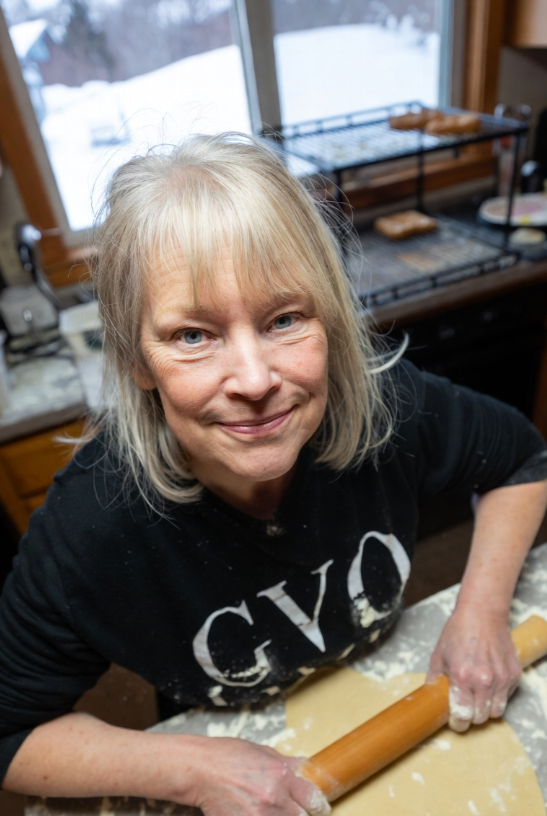
About the cook who shared this
Linda Johansson
Week 117 of Linda’s 30-year story
· Duluth, Minnesota
Linda is a sixty-three-year-old retired nurse from Duluth, Minnesota, living alone in the house where she raised her children and said goodbye to her husband. She lost Paul to ALS in 2020 after two years of watching the kindest man she'd ever known lose everything but his dignity. She cooks Scandinavian comfort food and Minnesota hotdish and the pot roast Paul loved, and she sets two places at the table out of habit because it makes her feel less alone. Every recipe she writes is a person she's loved.
