
 By
By Late January in Memphis is the doldrums — the holidays are over, the weather is gray and cold and can't decide between rain and not-rain, and the city operates on a kind of low-grade endurance that feels like the last mile of a long walk, which I know something about. My route this week was wet — not raining hard, but misty, the kind of moisture that soaks through your jacket so gradually you don't notice until you're damp to the bone and wondering when it happened.
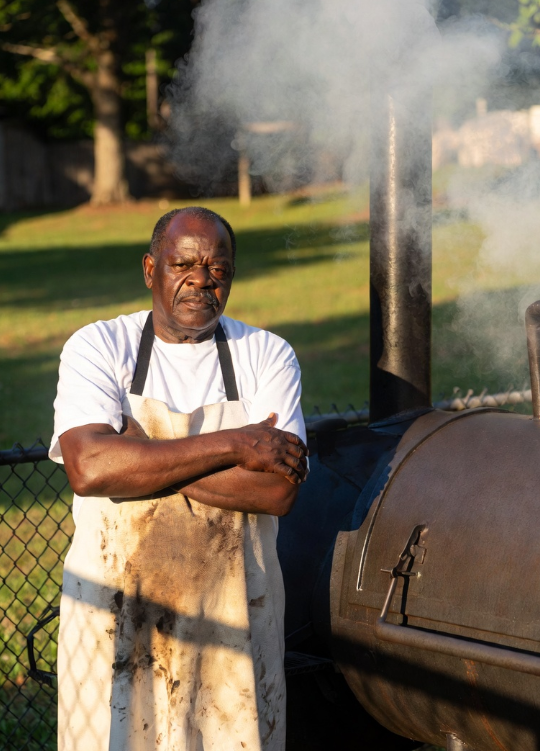
I made jambalaya this week, because jambalaya is the food equivalent of a bonfire — warm, communal, and impossible to feel sad while eating. This is not a Memphis dish. This is a Louisiana dish, and in Memphis we acknowledge Louisiana cooking the way we acknowledge our neighbor to the south: with respect, with envy, and with the understanding that they do things with rice and spice that we have no business attempting. But I attempt it anyway, because Rosetta's cousin Darlene is from Baton Rouge and she taught me her recipe twenty years ago, and I've been making it ever since.
Darlene's jambalaya: andouille sausage (smoked, of course — I use my own), chicken thighs, the holy trinity (onion, celery, bell pepper), garlic, crushed tomatoes, chicken stock, rice, and the Cajun seasoning that Darlene sends me in a Ziploc bag twice a year from a spice shop in Baton Rouge that refuses to share the recipe, which I respect, because I understand the sacredness of a proprietary blend. You brown the sausage and chicken first, build the trinity in the same pot with the fond, add the liquids, bring it to a boil, stir in the rice, and then the hardest part: put the lid on and don't lift it for twenty minutes. Don't stir. Don't peek. Don't interfere. The rice needs to absorb the liquid in its own time, and lifting the lid lets the steam escape, and steam is what cooks the rice, and escaping steam is like escaping faith — once it's gone, you can't get it back.
Twenty minutes later, the lid comes off and the jambalaya is done — the rice fluffy, the sausage smoky, the chicken tender, the whole thing alive with Cajun heat that starts at the back of the tongue and works its way forward like a story someone is telling you, building toward a punchline you can feel coming but still surprises you when it arrives.
I fed the jambalaya to Rosetta and Tyrone, who came over because Tyrone comes over whenever he senses food being made within a five-mile radius — the man has a sixth sense for cooking that is, in my opinion, his finest quality. Tyrone ate two bowls and said, "Earl, if you ever opened a restaurant, I'd eat there every day." I said, "Tyrone, you eat here every other day now." He said, "Right, but if you had a restaurant, I'd pay." Rosetta said, "He would not." She is correct.
Friday evening I called Charlie. She sounded tired. Not the usual Nashville-tired but a deeper tired, the kind that comes from being twenty-three and alone in a city and wondering if this is what your life is going to be — work, apartment, sleep, repeat. I wanted to tell her to come home. I wanted to tell her that Orange Mound has room for her, that her room is still here, that the Stevie Wonder poster is still on the wall. But I didn't, because Charlie is a grown woman and she gets to choose her own life, even if her choice makes her father's chest tight with worry.
Instead I said, "What did you eat for dinner?" She said, "A Kind bar." I said, "Charlie Denise Johnson." She said, "Fine, and leftover Thai food." I said, "That's a start." We talked for an hour about nothing — the weather in Nashville, the weather in Memphis, a show she's watching, a book she's reading. Nothing important. Everything important. Because the conversation wasn't about the content. It was about the connection. It was about a father and a daughter and the invisible wire between them that stretches from Memphis to Nashville and hums with everything they can't say.
I can’t always get Darlene’s seasoning blend up from Baton Rouge on short notice, and on the nights when the jambalaya pot feels like too much — too much rice, too much patience, too many reminders that Charlie is four hours away eating Kind bars in a Nashville apartment — I reach for something that still gives me that slow-building heat but gets on the table faster. These Crispy Cheddar Chipotle Chicken Fajitas scratch the same itch: the chipotle has that deep, smoked-meat richness that reminds me of andouille, the cast iron gives you that good fond, and the whole thing hits the tongue the same way — quietly at first, then all the way forward. Some nights that’s exactly what a worried father in Memphis needs.
Crispy Cheddar Chipotle Chicken Fajitas
Prep Time: 15 min | Cook Time: 25 min | Total Time: 40 min | Servings: 4
Ingredients
- 1 1/2 lbs boneless, skinless chicken thighs, sliced into 1/2-inch strips
- 2 chipotle peppers in adobo sauce, minced, plus 1 tablespoon adobo sauce
- 2 tablespoons olive oil, divided
- 1 teaspoon smoked paprika
- 1 teaspoon ground cumin
- 1/2 teaspoon garlic powder
- 1/2 teaspoon onion powder
- 3/4 teaspoon kosher salt, plus more to taste
- 1/4 teaspoon black pepper
- 1 large yellow onion, halved and sliced thin
- 1 red bell pepper, sliced thin
- 1 green bell pepper, sliced thin
- 1 1/2 cups shredded sharp cheddar cheese
- 8 flour tortillas (8-inch)
- Sour cream, fresh salsa, and lime wedges for serving
Instructions
- Marinate the chicken. In a large bowl, combine the chicken strips with the minced chipotle peppers, adobo sauce, smoked paprika, cumin, garlic powder, onion powder, salt, pepper, and 1 tablespoon of the olive oil. Toss well to coat. Let sit at room temperature for 10 to 15 minutes while you prep the vegetables.
- Char the peppers and onion. Heat a large cast iron skillet over high heat until smoking. Add the remaining tablespoon of olive oil, then add the onion and bell peppers in a single layer. Cook without stirring for 2 to 3 minutes to get a good char on the bottom, then toss and cook another 4 to 5 minutes until tender with charred edges. Season with salt, transfer to a plate, and set aside.
- Sear the chicken. Return the skillet to high heat. Add the marinated chicken strips in a single layer — work in batches if needed so you don’t crowd the pan. Cook 4 to 5 minutes without moving them, letting the fond build and the edges crisp, then flip and cook another 3 to 4 minutes until cooked through and browned. Return all chicken to the pan if you worked in batches.
- Add the crispy cheddar. Reduce heat to medium. Sprinkle the shredded cheddar in an even layer directly over the chicken in the skillet. Let it melt and sizzle undisturbed for 2 minutes until the edges of the cheese begin to turn crispy and lacy against the hot iron. Do not stir.
- Warm the tortillas. While the cheese crisps, char the tortillas one at a time directly over a gas burner flame for 15 to 20 seconds per side, or wrap them in a damp paper towel and microwave for 45 seconds.
- Assemble and serve. Return the charred peppers and onion to the skillet and fold them gently into the chicken and cheddar. Serve immediately from the skillet with warm tortillas, sour cream, fresh salsa, and lime wedges alongside.
Nutrition (per serving)
Calories: 540 | Protein: 44g | Fat: 24g | Carbs: 37g | Fiber: 3g | Sodium: 710mg