
 By
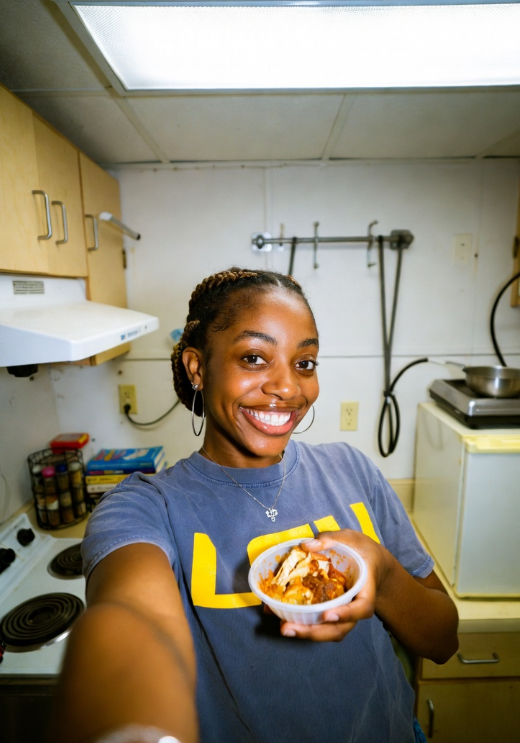
By Senior year. August. Back at the apartment. The same kitchen, the same level burners, the same cast iron pot that has been seasoned by three years of college cooking and which is now as much a part of me as my hands. Senior year is not a beginning — it is a continuation, the last section of a journey that started when I was twelve and that will end, if the plan holds, at the door of a medical school.
Classes: Biochemistry II, Anatomy II, a seminar on healthcare disparities in the American South (which I chose because it is the intersection of everything I care about: medicine, race, geography, and justice), and a capstone research project. The course load is heavy but the heaviness is familiar — I have been carrying heavy since freshman year, and the carrying has made me stronger, the way carrying a pot of gumbo from the stove to the table makes your arms stronger and you do not notice until the day you pick up something light and feel the absence of weight.
The healthcare disparities seminar is taught by Dr. Okafor, a Nigerian-American public health researcher who has spent twenty years studying why Black communities in the South have worse health outcomes than white communities with the same income level. The answer, she says, is not just poverty — it is infrastructure, access, trust, and the legacy of a medical system that experimented on Black bodies and then wondered why Black patients did not trust it. I sat in her lecture and thought about the kids in Scotlandville, about DeAndre, about MawMaw Shirley's kitchen as a health intervention, about the mothers who work three jobs and feed their kids what they can afford and what they have time for, and the what-they-can-afford is not enough and the what-they-have-time-for is not nutritious and the gap between affordable food and nutritious food is the gap where disease lives.
I am going to close that gap. Not alone. Not with one practice. But with one practice and one kitchen and one Saturday cooking class and one mother at a time. MawMaw Shirley said it: "Put a kitchen in your office." I promised. The promise is the plan. The plan is the building. The building starts with one brick, and the brick is me, and I am solid.
After writing that promise down — put a kitchen in your office — I came home and did what I always do when the mission gets louder than the noise: I pulled out the cast iron and made Creole pork chops, the same dish that has been in rotation since freshman year, the one that smells like MawMaw Shirley’s house and tastes like Scotlandville and feels, in a very specific way, like evidence that the food I grew up with is not the problem but the solution. It is fast enough for a Tuesday night between Biochemistry problem sets and good enough to remind me exactly what I am building toward.
Creole Pork Chops
Prep Time: 10 min | Cook Time: 20 min | Total Time: 30 min | Servings: 4
Ingredients
- 4 bone-in pork chops (about 3/4 inch thick)
- 2 teaspoons Creole seasoning
- 1/2 teaspoon garlic powder
- 1/2 teaspoon onion powder
- 1/2 teaspoon smoked paprika
- 1/4 teaspoon cayenne pepper (adjust to taste)
- 1/2 teaspoon dried thyme
- Salt and black pepper to taste
- 2 tablespoons vegetable oil
- 1 medium onion, thinly sliced
- 1 green bell pepper, thinly sliced
- 3 cloves garlic, minced
- 1 can (14.5 oz) diced tomatoes
- 1/2 cup chicken broth
- 1 teaspoon Worcestershire sauce
- 2 green onions, sliced (for garnish)
Instructions
- Season the chops. Pat pork chops dry with paper towels. In a small bowl, combine Creole seasoning, garlic powder, onion powder, smoked paprika, cayenne, thyme, salt, and pepper. Rub the spice mixture generously over both sides of each pork chop.
- Sear in cast iron. Heat vegetable oil in a large cast iron skillet over medium-high heat until shimmering. Add the pork chops and sear without moving them for 3—4 minutes per side until a deep brown crust forms. Transfer to a plate and set aside.
- Build the sauce. Reduce heat to medium. In the same skillet, add onion and bell pepper. Cook, stirring occasionally, for 4—5 minutes until softened. Add garlic and cook for 1 minute more until fragrant.
- Add the tomatoes. Pour in the diced tomatoes with their juices, chicken broth, and Worcestershire sauce. Stir to combine, scraping up any browned bits from the bottom of the pan.
- Braise to finish. Return the pork chops to the skillet, nestling them into the tomato mixture. Reduce heat to medium-low, cover, and simmer for 10—12 minutes until the pork is cooked through (internal temperature of 145°F) and the sauce has thickened slightly.
- Rest and serve. Remove from heat and let rest for 3 minutes. Garnish with sliced green onions and serve over white rice or with crusty bread to soak up the sauce.
Nutrition (per serving)
Calories: 340 | Protein: 32g | Fat: 16g | Carbs: 12g | Fiber: 2g | Sodium: 620mg