Fall is here and the pandemic is entering its worst phase. Cases rising everywhere. Wisconsin is a hotspot — the state is averaging over two thousand new cases a day, up from a few hundred in July. Milwaukee is tightening restrictions again. The taproom patio is still open but Marcus is watching the weather and the numbers and both are trending in the wrong direction.
I wrote the RecipeSpinoff dough piece this week: "The Meditation of Dough: What Your Hands Know That Your Brain Doesn't." It's about pierogi dough, but it's really about the body's knowledge — how your hands learn things that your mind can't articulate, how repetition becomes intuition, how Babcia's hands knew the dough was ready before her eyes confirmed it. The recipe is the dough itself: flour, egg, water, salt, a splash of sour cream. Simple. Infinite.
Sent it to the editor. She called me — not emailed, called — and said, "Jake, this is the best thing you've written." Coming from an editor who has read hundreds of food essays, that means something. It means I'm not just telling stories anymore. I'm writing.
Dad is being stubborn about COVID precautions. He wears his mask at the store but complains about it the entire time. He refuses to stop going to the hardware store on Saturdays, which is his sacred ritual. Mom is vigilant — masks, hand sanitizer, distance — but Dad is a fifty-two-year-old Midwestern man who considers personal risk assessment a fundamental right. I worry.
Made something warming: Babcia's czernina — duck blood soup. Yes, duck blood soup. It's one of the most polarizing dishes in Polish cuisine — sweet and sour, made with duck blood, vinegar, dried fruit, and served with noodles. Babcia made it once a year. I have her recipe card but I've been avoiding it because... duck blood. But the Polish grocery on Mitchell Street has it (frozen, imported), and I decided this was the week.
The result: extraordinary and deeply strange. The broth is dark, tangy, subtly sweet from the dried plums and raisins. The duck blood gives it a richness that no other ingredient can replicate. It tastes ancient. It tastes like a recipe that has survived centuries for a reason. I will make it again. I will also never post it on Instagram because explaining duck blood soup to sixty-five thousand people is more than I can handle right now.
Czernina is not a recipe I’m ready to share — not yet, maybe not ever on a public platform — but the impulse behind it, that reaching for something ancient and warming and deeply nourishing when the world outside feels frightening, is something I can translate. This creamy tortellini soup carries the same spirit: a dark, cold evening, a pot on the stove, noodles bobbing in rich broth, the smell filling the apartment while the case numbers climb. It’s not Babcia’s czernina, but it’s made in the same spirit — soup as a small act of defiance against helplessness. Make it when you need to feel like you’re doing something, even when you can’t do very much.
Creamy Tortellini Soup
Prep Time: 10 minutes | Cook Time: 30 minutes | Total Time: 40 minutes | Servings: 6
Ingredients
- 1 tablespoon olive oil
- 1 medium yellow onion, diced
- 3 cloves garlic, minced
- 2 medium carrots, peeled and sliced
- 2 stalks celery, sliced
- 1 teaspoon dried Italian seasoning
- 1/2 teaspoon crushed red pepper flakes (optional)
- 1/2 teaspoon salt, plus more to taste
- 1/4 teaspoon black pepper
- 4 cups chicken or vegetable broth
- 1 can (14.5 oz) diced tomatoes, undrained
- 9 oz refrigerated cheese tortellini
- 3 cups fresh baby spinach
- 1 cup heavy cream
- 1/4 cup freshly grated Parmesan cheese, plus more for serving
Instructions
- Saute the aromatics. Heat olive oil in a large Dutch oven or heavy-bottomed pot over medium heat. Add the diced onion, carrots, and celery and cook, stirring occasionally, until softened, about 6–8 minutes. Add the garlic and cook for another 60 seconds until fragrant.
- Season and build the base. Stir in the Italian seasoning, red pepper flakes (if using), salt, and black pepper. Add the diced tomatoes with their juices and stir to combine, scraping up any bits from the bottom of the pot.
- Add broth and simmer. Pour in the broth and bring the soup to a gentle boil over medium-high heat. Reduce heat to medium-low and simmer for 10 minutes to let the flavors develop and the vegetables finish cooking through.
- Cook the tortellini. Add the cheese tortellini directly to the simmering broth. Cook according to package directions, typically 5–7 minutes, until the tortellini are tender and cooked through.
- Finish with cream and spinach. Reduce heat to low. Stir in the heavy cream and baby spinach, cooking just until the spinach wilts, about 2 minutes. Do not boil after adding the cream.
- Add Parmesan and adjust seasoning. Stir in the grated Parmesan cheese. Taste and adjust salt and pepper as needed. Serve immediately, topped with additional Parmesan.
Nutrition (per serving)
Calories: 390 | Protein: 14g | Fat: 22g | Carbs: 35g | Fiber: 3g | Sodium: 780mg
About the cook who shared this
Jake Kowalski
Week 235 of Jake’s 30-year story
· Milwaukee, Wisconsin
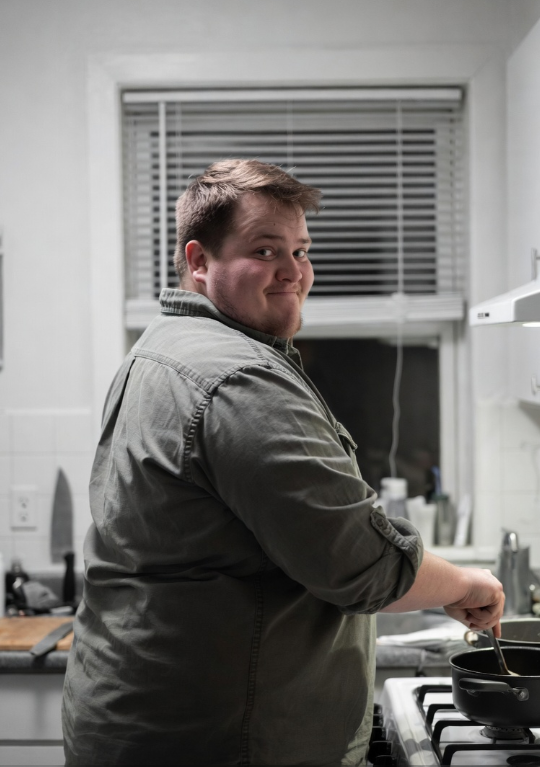
Jake is a twenty-nine-year-old brewery worker, newlywed, and proud Polish-American from Milwaukee's Bay View neighborhood. He didn't start cooking until his grandmother Babcia Helen passed away and left behind a stack of grease-stained recipe cards. Now he makes pierogi from scratch, smokes meats on a balcony smoker his landlord pretends not to notice, and writes for guys who want to cook good food but don't know a roux from a rub.
