
 By
By January cold. The real kind, the kind that makes minus ten feel personal. The furnace runs without stopping. The woodstove eats birch and maple and oak with the appetite of something that knows the temperature and has decided to fight back. I stoke the fire at five AM, at noon, at six, at midnight. The rhythm of winter in a farmhouse: feed the fire, check the pipes, let the dog out (briefly), let the dog in (immediately), make soup. The soup is the point. The rest is survival.
I made onion soup. French onion soup — five onions sliced thin, cooked in butter for forty-five minutes until they're dark and sweet and transformed from sharp, eye-watering bulbs into something caramelized and tender. Beef broth, a splash of sherry, thyme. Ladled into bowls, topped with a thick slice of bread and a generous handful of Gruyère, broiled until the cheese melts and bubbles. The cheese is the shield. The soup is the warmth beneath. You break through the cheese with your spoon and the steam rises and for a moment, even at minus ten, the cold is irrelevant.
The Historical Society talk is this week. "Old Vermont Cooking" — the food our grandmothers made. I've been preparing: notes on the recipes, the history, the way food in this state was shaped by what the land gave and what the winters demanded. I'm bringing samples — baked beans, brown bread, maple candy. You can't talk about food without feeding people. I learned that from my mother, who never had a conversation without offering something to eat, and from Helen, who never lets anyone leave the house without pressing food into their hands. It's a Vermont thing. It's a Bergstrom thing. It's a survival thing dressed up as hospitality.
Helen says I'm nervous about the talk. I say I'm not. She says my hands do the thing they do when I'm nervous — the tapping, the fidgeting, the unconscious drumming on the kitchen table that I don't realize I'm doing until she puts her hand on mine and says, "Stop." I stop. She's right. I'm nervous. It's been two years since I stood in front of a group, and the last time was forty high school students who had to be there. This time it's adults who chose to come. The stakes are different. The butterflies are the same.
The talk is Friday. The beans are soaking. The brown bread is steaming in the coffee can. The maple candy is poured. I'm ready. Or I will be. Helen says I will be. Helen's always right.
Minus ten. Onion soup. Cheese on top. The talk is coming. I'll be fine. The food will speak for itself.
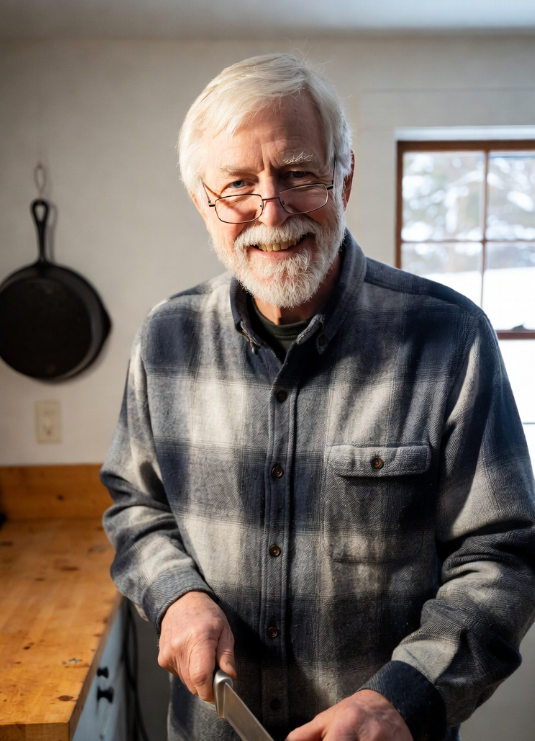
The onion soup got me through that week, but it’s not the only pot I keep going when the furnace won’t quit and the dog won’t stay outside longer than thirty seconds. This creamy potato carrot soup is the one I make when the onions are gone and the root cellar still has plenty to offer — just potatoes, carrots, butter, and broth, the kind of honest ingredients that don’t ask anything of you except a sharp knife and a little patience. It’s the soup I’ll probably make the night before the Historical Society talk, when my hands need something to do besides drum on the table.
Creamy Potato Carrot Soup
Prep Time: 15 minutes | Cook Time: 30 minutes | Total Time: 45 minutes | Servings: 6
Ingredients
- 2 tablespoons butter
- 1 tablespoon olive oil
- 1 medium yellow onion, diced
- 3 cloves garlic, minced
- 1 1/2 pounds Yukon Gold potatoes, peeled and cubed
- 1 pound carrots, peeled and sliced
- 4 cups chicken or vegetable broth
- 1 cup whole milk
- 1/2 teaspoon dried thyme
- 1/4 teaspoon ground nutmeg
- Salt and black pepper, to taste
- 2 tablespoons fresh chives, chopped, for garnish
Instructions
- Sauté the aromatics. Melt the butter with the olive oil in a large Dutch oven or heavy pot over medium heat. Add the diced onion and cook until soft and translucent, about 5 minutes. Add the garlic and cook for 1 minute more.
- Cook the vegetables. Add the cubed potatoes and sliced carrots to the pot. Pour in the broth. Bring to a boil, then reduce to a steady simmer. Cook uncovered for 20 to 25 minutes, until the potatoes and carrots are completely tender when pierced with a fork.
- Blend until smooth. Remove the pot from heat. Using an immersion blender, blend the soup until smooth and creamy. Alternatively, carefully transfer the soup in batches to a countertop blender, leaving the lid slightly ajar to vent steam, and blend until smooth.
- Finish the soup. Return the pot to low heat. Stir in the milk, thyme, and nutmeg. Season with salt and pepper. Heat gently for 3 to 5 minutes until warmed through — do not boil.
- Serve. Ladle into bowls and garnish with chopped chives. Serve with crusty bread.
Nutrition (per serving)
Calories: 210 | Protein: 5g | Fat: 8g | Carbs: 31g | Fiber: 4g | Sodium: 620mg