
 By
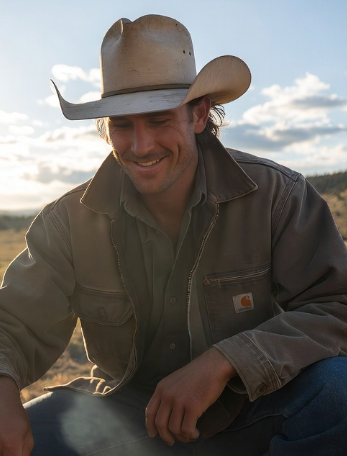
I've been riding every day. Out before dawn with the cattle, checking the pairs — cow and calf — making sure everyone's nursing, nobody's sick, nobody's wandered. It's the kind of work that requires attention but not thought, which is exactly the ratio I need. My hands know what to do. My eyes know what to look for. The rest of me can just exist on the horse, in the cold morning air, in the Montana that doesn't care about Afghanistan.
Eighteen calves now. All alive. That's a good number — some years you lose two or three to weather or complications or the hundred small catastrophes that can end a life that's only hours old. This year, eighteen for eighteen. Dad keeps a tally on a piece of paper tacked to the barn wall. His handwriting is getting shakier — Mom noticed, I noticed, we don't mention it. He writes the numbers and they tremble on the page and the numbers are still right even if the lines aren't straight.
Therapy Tuesday. Dr. Kessler asked about the Army. Specifically about the good parts. I said there weren't good parts. He said, "None?" I sat with that for a long time. Then I told him about Espinoza's tamales. About the time our squad got lost on a training exercise and ended up eating MREs in a field for twelve hours and laughing until our ribs hurt. About the way Derek could fall asleep anywhere — in a truck, on a cot, standing up once — and the absolute trust that takes, to sleep when the world is what it was. I told him the good parts and the good parts made the bad parts worse because the good parts are what I lost. Dr. Kessler said, "You didn't lose them. You carry them." I don't know if he's right. I want him to be right.
Mom is planting peas. First thing in the ground every year — the garden isn't ready for much but peas don't care, they thrive on cold and stubbornness, which makes them the most Montana vegetable there is. I helped her string the trellis wire. She hummed while we worked, a hymn from church, and I held the wire while she tied it and neither of us mentioned that my hands were shaking. They do that sometimes. Not Parkinson's. Not cold. Just the tremor that comes from carrying too much for too long. The wire held. The peas will climb. Spring does what spring does.
Mom’s peas won’t be ready until June, but the frozen ones in the freezer are a decent stand-in for now — and this pasta has become the meal I make on the nights after therapy, when I need something warm on the stove and don’t have much left in me. The peas remind me of her humming over the trellis wire. The ham is what my dad calls “icebox luck,” using what you’ve got. It comes together fast, which matters on the days when fast is all you can manage.
Creamy Fettuccine with Ham and Peas
Prep Time: 10 minutes | Cook Time: 20 minutes | Total Time: 30 minutes | Servings: 4
Ingredients
- 12 oz fettuccine
- 2 tablespoons unsalted butter
- 3 cloves garlic, minced
- 1 1/2 cups diced cooked ham (about 8 oz)
- 1 cup heavy cream
- 1/2 cup low-sodium chicken broth
- 2 cups frozen peas (or fresh shelled peas)
- 3/4 cup freshly grated Parmesan, plus more for serving
- 1/2 teaspoon black pepper
- 1/4 teaspoon kosher salt, plus more for pasta water
- Pinch of red pepper flakes (optional)
- 2 tablespoons fresh flat-leaf parsley, roughly chopped
Instructions
- Boil the pasta. Bring a large pot of heavily salted water to a boil. Cook fettuccine according to package directions until al dente. Before draining, reserve 1/2 cup of pasta water. Drain and set aside.
- Build the base. In a large skillet over medium heat, melt the butter. Add the garlic and cook, stirring, for about 1 minute until fragrant but not browned.
- Add the ham. Add the diced ham and cook for 2—3 minutes, stirring occasionally, until it picks up a little color at the edges.
- Make the cream sauce. Pour in the heavy cream and chicken broth. Bring to a gentle simmer and cook for 4—5 minutes, stirring, until the sauce thickens slightly and coats the back of a spoon.
- Add the peas. Stir in the peas and cook for 2 minutes until heated through. Season with the black pepper, salt, and red pepper flakes if using.
- Combine with pasta. Add the drained fettuccine to the skillet and toss to coat, adding reserved pasta water a splash at a time if the sauce needs loosening.
- Finish with Parmesan. Remove from heat. Stir in the grated Parmesan until melted and smooth. Taste and adjust seasoning.
- Serve. Divide among bowls and top with fresh parsley and extra Parmesan. Eat while it’s hot.
Nutrition (per serving)
Calories: 585 | Protein: 29g | Fat: 25g | Carbs: 61g | Fiber: 5g | Sodium: 790mg