
 By
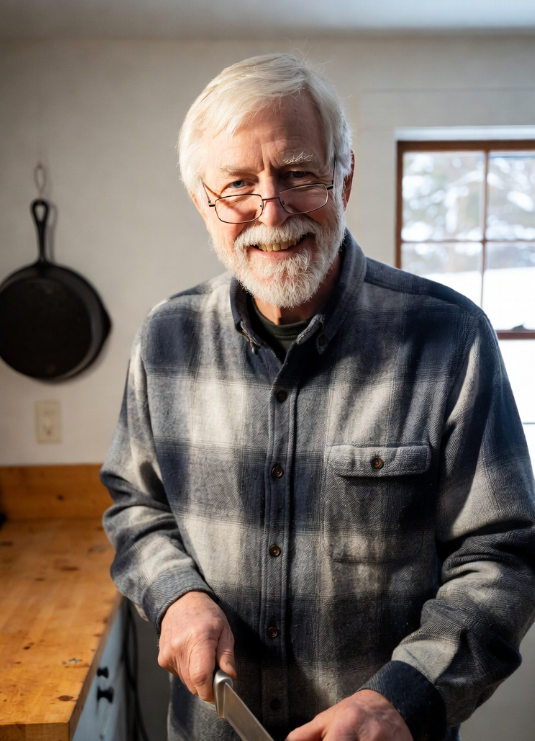
By The last week of October has a particular quality in Vermont that is different from September or early October. The foliage is largely down now, the bare branches making the sky look bigger and grayer, the fields taking on that exhausted straw color that will persist until the snow comes. I find this week clarifying rather than bleak. Something about the stripped landscape makes the remaining structure visible — the stone walls, the tree lines, the shapes of the hills — in a way that the summer and fall foliage conceals. You see the bones of the place.
I mulched the garlic beds again and added a second layer of straw, which I do in years when the forecast calls for a hard early winter. The almanac is predicting a cold one and the woolly bears I have been seeing all fall were nearly all solid dark brown, which old Vermonters will tell you means a brutal winter ahead. I do not fully believe in woolly bears as meteorologists but I also do not discount them entirely. The straw goes on either way.
The root cellar is stocked as well as it has been in years. Eighteen butternuts, eleven acorn squash from a plant that volunteered from last year's compost, thirty pounds of potatoes, twenty pounds of onions, and about eight pounds of beets I pulled and buried in sand the way my mother taught me. Also six quarts of the tomato jam, twelve of apple butter, twenty of tomato sauce, and eight of the rhubarb jam from spring. I walked through and did an inventory on Saturday and stood there for a moment thinking about what it means to have enough. It is a simple feeling and a good one.
Apple pie for the first time this fall — the real one, with the lard crust, made from the last of the good Cortlands. The crust is the argument and I am not interested in any other position. Butter crust is fine and shortening crust is fine and all-lard is transcendent, the flakiest and most tender result I know how to achieve. Helen taught me the ratio and the handling — cold fat, cold water, cold hands, as little working as possible — and I have not deviated from it in thirty-five years. I brought half the pie to Ted and Patricia's household and the boys apparently ate most of it before dinner, which Ted reported with satisfaction.
The apple pie satisfied something deep, but once it was out the door and on its way to Ted and Patricia’s, I found myself still wanting to bake —that particular restlessness that comes after a good inventory, when the root cellar is full and the straw is down and there is nothing left to do but be inside and warm. I had cranberries in the freezer from last year and a can of pineapple rings I had been holding onto since summer, and the combination struck me as exactly right for this end-of-October feeling: bright color against the gray, sweet against the cold, celebratory in a quiet and entirely private way. The upside-down cake is an honest thing to bake.
Cranberry Pineapple Upside-Down Cake
Prep Time: 20 minutes | Cook Time: 45 minutes | Total Time: 1 hour 5 minutes | Servings: 8
Ingredients
- 1/4 cup unsalted butter
- 3/4 cup packed brown sugar
- 1 can (20 oz) pineapple rings, drained, juice reserved
- 1 cup fresh or frozen cranberries
- 1 1/2 cups all-purpose flour
- 1 1/2 teaspoons baking powder
- 1/4 teaspoon salt
- 1/2 cup unsalted butter, softened
- 3/4 cup granulated sugar
- 2 large eggs
- 1 teaspoon vanilla extract
- 1/2 cup reserved pineapple juice
Instructions
- Preheat and prepare the pan. Preheat oven to 350°F. Melt 1/4 cup butter in a 9-inch round cake pan either in the oven or on the stovetop over low heat. Swirl to coat the bottom evenly.
- Build the topping. Sprinkle the brown sugar evenly over the melted butter in the pan. Arrange pineapple rings in a single layer over the brown sugar. Fill the centers and gaps between the rings with cranberries.
- Mix the dry ingredients. In a medium bowl, whisk together the flour, baking powder, and salt. Set aside.
- Cream the butter and sugar. In a large bowl, beat the softened butter and granulated sugar together until light and fluffy, about 3 minutes. Add the eggs one at a time, beating well after each addition. Stir in the vanilla extract.
- Combine wet and dry. Add the flour mixture to the butter mixture in three additions, alternating with the reserved pineapple juice, beginning and ending with the flour mixture. Stir until just combined —do not overmix.
- Pour and bake. Carefully spoon and spread the batter over the arranged fruit in the pan, smoothing the top gently. Bake for 40 to 45 minutes, until a toothpick inserted in the center comes out clean and the top is golden brown.
- Invert and cool. Let the cake rest in the pan for 10 minutes. Run a knife around the edge, then place a serving plate firmly over the pan and invert in one confident motion. Leave the pan in place for one minute before lifting it off to allow the topping to settle onto the cake. Serve warm or at room temperature.
Nutrition (per serving)
Calories: 420 | Protein: 4g | Fat: 18g | Carbs: 62g | Fiber: 2g | Sodium: 160mg