
 By
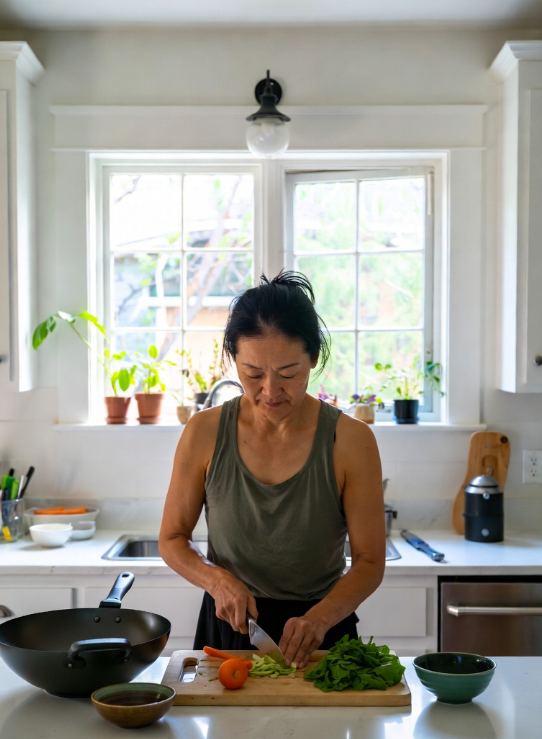
By February rain. The chipped bowl. The kitchen the warmest room. Sunday farmers market. Tomatoes, shiso, kabocha when in season, mushrooms in fall. The shopping list is short and exact.
Miya, 9, can shape onigiri without falling apart. She uses wet hands. She knows the order without being told. Barbara called Sunday. We talked for twenty minutes. She told me about the play she is directing. I told her about the kitchen.
Miso soup every morning this week. Fumiko's recipe. The dashi from scratch. The kombu soaked overnight. The bonito flakes added at the right moment. The white miso. The green onion. The chipped bowl.
I made dashi at five. The day began.
Miya's old room is now my office. The desk is by the window. The shiso outside. The newsletter in progress. The afternoons are quiet.
The rain in long sheets Tuesday afternoon. I made tea. I watched it from the porch. The cottonwoods on the next block were silver in the wet.
Yoga Tuesday morning. The studio in Sellwood. Eight students. The class was the class.
I made onigiri for tomorrow's lunch. Three triangles. Salted plum in the center. Wrapped in nori. The cling wrap. The drawer where I keep them. The system.
I cleaned the kitchen Sunday afternoon. Wiped the counters. Reorganized the drawer where the chopsticks live. Sharpened the knife. The reset was the reset.
Sunday farmers market in the rain. The vendors knew me. The Hood River apple stand had honeycrisps. I bought four pounds.
A panic flicker Tuesday evening, brief, manageable. I breathed. I drank water. I went outside and walked around the block. The flicker passed. The body did its work.
I wrote at the kitchen table from six to eight. The newsletter was forming. The opening sentence was the hard sentence — they always are. I rewrote it five times. The fifth time was the right time.
The cat was the cat. Mochi at fifteen sleeps most of the day. She still eats with enthusiasm. She still sits at the kitchen window watching the back garden.
I texted Miya a photo of the shiso. She texted back a heart and a single word: home.
I read for an hour Sunday night. A book of essays by a Korean-American writer about food and grief. I underlined a paragraph that said exactly what I had been trying to say in the newsletter for months.
Made dashi at five-thirty AM. Ten minutes in the kitchen alone with the kombu and the bonito flakes. The day's first prayer.
I drove to Uwajimaya Wednesday. Kombu, bonito flakes, white miso, a small bag of mochiko for tomorrow's project. The store smells like home.
A reader sent me a handwritten card this week. Her grandmother had cooked Japanese food in 1970s Boise. She had felt alone in it. The newsletter, she wrote, made her feel less alone. I taped the card to the wall above my desk.
Tomi watered the garden Saturday morning. The shiso was head-high. The shishito peppers were producing. The kabocha was running on the fence.
Therapy Tuesday. We talked about the wedding. We talked about Barbara. We talked about Fumiko. The hour passed. The work continues.
The neighbor's dog barked at nothing for twenty minutes Sunday afternoon. The neighbor apologized. I told him I had been writing through it and the white noise was helpful. He laughed.
Coffee with a friend Saturday morning. We talked about books, about kids, about the way our forties became our fifties. The talking is the thing.
Miya is in elementary school. The Saturday Japanese school continues. She still complains. She is still going.
I came home from the Sunday market with four pounds of honeycrisps and no real plan for them — just the weight of the bag and the wet smell of the rain still on my coat. After a week of dashi at five in the morning and the newsletter and the quiet afternoons, I wanted something that asked very little of me and gave a lot back. Cranberry applesauce was Fumiko’s answer to a surplus of apples, too, and standing at the stove watching it reduce felt like a continuation of the same slow, deliberate practice I’d been in all week.
Cranberry Applesauce
Prep Time: 10 minutes | Cook Time: 25 minutes | Total Time: 35 minutes | Servings: 8
Ingredients
- 4 medium honeycrisp apples (about 2 lbs), peeled, cored, and roughly chopped
- 1 cup fresh or frozen cranberries
- 1/3 cup water
- 2–3 tablespoons maple syrup or honey, to taste
- 1/2 teaspoon ground cinnamon
- 1/4 teaspoon ground ginger
- Pinch of fine sea salt
- 1 teaspoon fresh lemon juice
Instructions
- Combine. Add the chopped apples, cranberries, and water to a medium saucepan over medium heat. Stir to combine.
- Simmer. Bring to a gentle boil, then reduce heat to low. Cover and cook for 20–25 minutes, stirring occasionally, until the apples are very soft and the cranberries have burst and broken down.
- Season. Remove from heat. Stir in the maple syrup, cinnamon, ginger, salt, and lemon juice. Taste and adjust sweetness as needed.
- Mash or blend. For a chunky texture, mash with a fork or potato masher. For a smoother sauce, use an immersion blender or transfer carefully to a blender and process to your preferred consistency.
- Cool and store. Let cool to room temperature before serving. Transfer to a jar and refrigerate for up to 10 days, or freeze for up to 3 months.
Nutrition (per serving)
Calories: 72 | Protein: 0g | Fat: 0g | Carbs: 19g | Fiber: 3g | Sodium: 18mg