I baked at 6 AM because the house was too quiet and the oven is the surest way I know to make a house feel inhabited. The oven generates heat, smell, the small ticks of metal expanding, the predictable rise of dough on the counter, the timer I can hear from three rooms away. The oven is, in some real sense, my roommate. I have not told this to my children. They would gently suggest something. The oven and I prefer no suggestions.
Erik came over Sunday. He chopped wood for me without being asked — the pile by the back door was getting low, and Erik had noticed, and Erik had brought his ax, and Erik had spent forty-five minutes splitting and stacking and not making a single comment about how the wood needed to be done. He drank coffee. He left. The whole visit was forty-five minutes. It was perfect. Erik is a perfect brother in the specific way of Scandinavian brothers — silent, useful, present.
Mamma called Tuesday. Her voice was small but her mind was sharp. She wanted to talk about Pappa, of all people. About the time he fixed her bicycle in 1962. About how he always said "there" when he had finished a job, the same way every time, the small declarative finality. She had not thought of this in years, she said. The memory came to her in the kitchen, while she was peeling an apple. I listened. I did not interrupt. The memory was unprovoked and total. The memory is everything.
I cooked Salmon with dill this week. Lake trout or salmon, slow-roasted with butter and dill and lemon. The reliable spring fish.
The Damiano Center on Thursday: wild rice soup, fifty gallons. Gerald helped me ladle. He told me about a regular who got into a sober house this week — a man named Curtis, who has been coming for soup for eight years and who has been sober for forty-three days now. The soup did not get him sober. The soup was there when he was hungry. The soup is the door, again. The door is the chance.
I read one of Paul's books in the evening. The Edmund Fitzgerald chapter. I have read it forty times now. The fortieth time is no less affecting than the first. The transmission still gives me a chill: "We are holding our own." Captain McSorley's last known words. The chapter ends with the wreck on the bottom of Lake Superior, and the men still inside, and the lake refusing to give up its dead. Paul read this chapter to me in 1989, on a winter evening, in the living room. I did not know then that he was reading me his own future.
It is enough. Paul is not here. Mamma is not here. Pappa is not here. Erik is not here. They are all here in the kitchen, in the smell, in the taste, in the wooden spoon and the bread pans and the marble slab. The dead are not where the body went. The dead are in the kitchen.
I have been thinking about the kitchen as a kind of slow-moving river. The river has carried things for a hundred and fifty years now — Mormor's recipes from Uppsala, brought across the Atlantic in steerage in the 1880s; Mamma's adaptations of those recipes for the cold of Minnesota; my own modifications, picked up over fifty years; the small experiments my granddaughters bring home from cooking shows they watch on phones. The river keeps moving. I am one bend in it. There will be others.
It is enough.
Salmon with dill was the week’s quiet meal — just me and the pan and the smell of butter and lemon filling the rooms — but when Erik comes or the grandchildren appear at the door without much warning, I reach for something that wants to be shared, something that needs a crowd around it. This Crab Au Gratin Spread is that dish: warm from the oven, smelling of the sea in a landlocked state, the kind of thing that makes people pull chairs in closer. Mamma would have called it a little extravagant. I call it necessary.
Crab Au Gratin Spread
Prep Time: 10 min | Cook Time: 25 min | Total Time: 35 min | Servings: 8
Ingredients
- 8 oz cream cheese, softened
- 1/2 cup sour cream
- 2 tablespoons mayonnaise
- 1 tablespoon fresh lemon juice
- 1 teaspoon Worcestershire sauce
- 1 teaspoon Dijon mustard
- 1/4 teaspoon garlic powder
- 1/4 teaspoon onion powder
- Salt and white pepper to taste
- 12 oz lump crab meat, drained and picked over for shells
- 2 green onions, thinly sliced
- 3/4 cup shredded Gruyère cheese, divided
- 2 tablespoons plain breadcrumbs
- 1 tablespoon unsalted butter, melted
- Crackers, sliced baguette, or sturdy bread for serving
Instructions
- Preheat. Heat your oven to 375°F. Lightly butter a shallow 1-quart baking dish or a 9-inch pie plate.
- Make the base. In a medium bowl, beat the softened cream cheese until smooth. Stir in the sour cream, mayonnaise, lemon juice, Worcestershire sauce, and Dijon mustard until fully combined. Season with garlic powder, onion powder, salt, and white pepper.
- Fold in the crab. Gently fold in the crab meat, green onions, and 1/2 cup of the shredded Gruyère, taking care not to break up the crab lumps too much.
- Fill the dish. Spread the mixture evenly into the prepared baking dish.
- Top and bake. In a small bowl, stir together the remaining 1/4 cup Gruyère, the breadcrumbs, and the melted butter. Scatter evenly over the top. Bake for 22–25 minutes, until the edges are bubbling and the topping is golden brown.
- Rest and serve. Let sit for 5 minutes before serving. Set out alongside crackers or sliced bread and serve warm directly from the dish.
Nutrition (per serving)
Calories: 215 | Protein: 13g | Fat: 16g | Carbs: 5g | Fiber: 0g | Sodium: 390mg
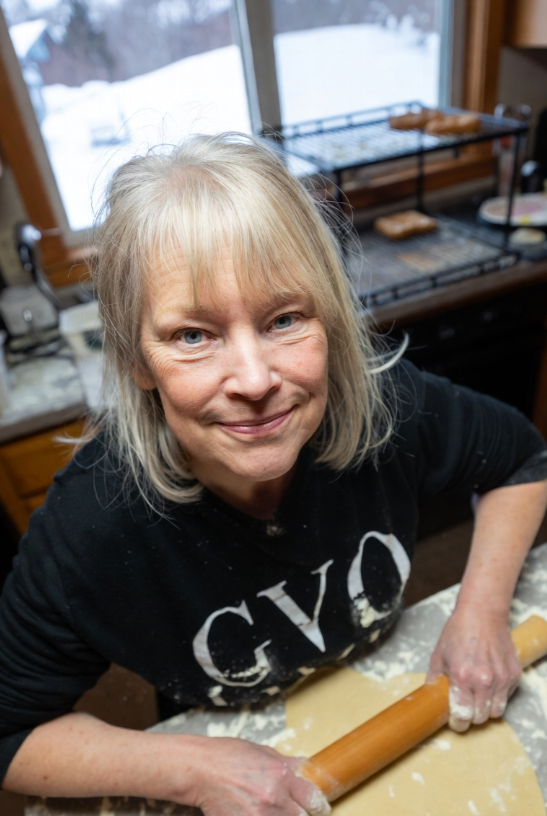
About the cook who shared this
Linda Johansson
Week 375 of Linda’s 30-year story
· Duluth, Minnesota
Linda is a sixty-three-year-old retired nurse from Duluth, Minnesota, living alone in the house where she raised her children and said goodbye to her husband. She lost Paul to ALS in 2020 after two years of watching the kindest man she'd ever known lose everything but his dignity. She cooks Scandinavian comfort food and Minnesota hotdish and the pot roast Paul loved, and she sets two places at the table out of habit because it makes her feel less alone. Every recipe she writes is a person she's loved.
