
 By
By March arrived and spring was trying to begin — the azaleas putting out their first buds along MawMaw's street, the air having that tentative warmth that precedes the real warmth, the city starting to move outdoors again in the way Baton Rouge moves when winter loosens. I felt the season's turn in my own body the way I always do: a lightening, a forward lean, an appetite for things new.
College application season was real now — not a distant shape but a specific calendar. Common App opened in August. Most application deadlines were November for early decision and January for regular. I had a list of seven schools and a plan for each. I had a list of essay topics that Ms. Whitaker and I had been developing since January. The academic record was what it was: consistent, strong, built over four years. What remained was to present it and to trust it.
I also had news that week that I sat with quietly before sharing. The national student essay competition had announced its final results. Second place, national division, for "What the Kitchen Holds." Not first. Second. I had been second in the state science competition in ninth grade and it had stung in a specific way. This stung differently — not as sharply, because I had learned in the intervening years that second at a national level is genuinely significant, and because the piece about DeAndre had been read by judges I would never meet who said it moved them. That part was its own kind of first.
I called MawMaw and told her. She said, "Second in the country." I said yes. She said, "Well. The whole country read about the kitchen." That was the best possible frame for it. I accepted it completely. Some things are better seen through the right lens than through any other.
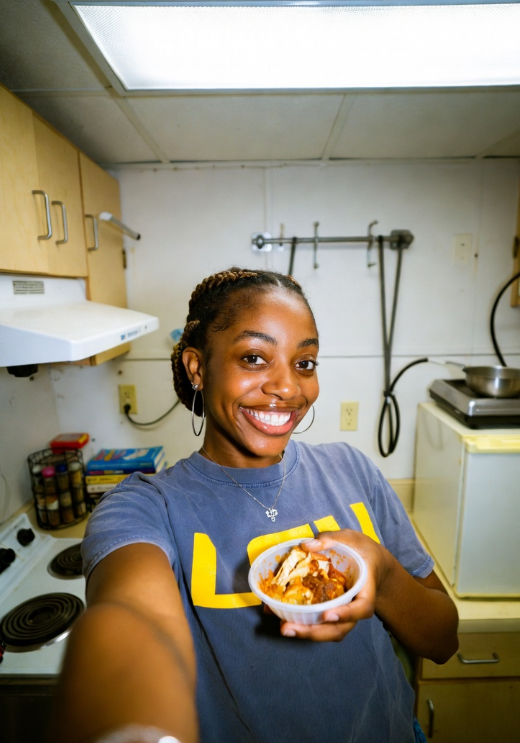
MawMaw’s frame stuck with me — "the whole country read about the kitchen" — and I kept thinking about how the kitchen has always been the real subject, not just a setting. Whether it’s her kitchen on that Baton Rouge street or any kitchen where real life happens, the space itself matters. So when I wanted to do something that honored that idea, I came back to these rental kitchen tips, because not every cook gets to build their dream setup, and making the most of what you have is its own kind of craft — the kind DeAndre understood, the kind MawMaw has always practiced without ever naming it.
The Making of a Cookbook: Rental Kitchen Tips
Prep Time: 15 min | Cook Time: 0 min | Total Time: 15 min | Servings: Any home cook
Ingredients (What You’ll Need)
- 1 clear countertop, wiped clean and fully cleared before you begin
- 2–3 nesting mixing bowls in graduated sizes
- 1 reliable chef’s knife, sharpened
- 1 sturdy cutting board (wood or composite; avoid glass)
- 1 set of measuring cups and spoons, dry and liquid separate
- 1 roll of painter’s tape and a permanent marker (for labeling)
- Portable spice kit: 10–12 essential spices in small uniform jars
- 1 portable induction burner (optional, for limited-range kitchens)
- Reusable produce bags and 1 collapsible colander
- 1 instant-read thermometer
- Natural light, where possible, or a clip-on task lamp
Instructions
- Assess the space. Before unpacking anything, walk the full kitchen. Open every drawer and cabinet. Note what’s provided, what’s missing, and where the light falls best. Rental kitchens vary enormously — treat the first walkthrough as your mise en place for the room itself.
- Establish your triangle. Arrange your primary work zone so the stove, sink, and prep surface form a tight triangle. In a small rental kitchen, efficiency of movement matters more than square footage. Everything you reach for more than twice a session should live within arm’s reach of that triangle.
- Label and contain. Use painter’s tape and a marker to label any containers you bring in. This matters especially when cooking from a manuscript or testing multiple recipe variations in a day — you cannot afford to grab the wrong jar mid-recipe. Color-code by category if it helps.
- Protect the surfaces. Rental kitchens penalize damage. Use a silicone mat under your cutting board, a trivet under any hot vessel, and a splatter screen on pans whenever possible. The goal is to cook freely without worrying about the deposit.
- Manage the light. Good food photography and good cooking both suffer under harsh overhead fluorescents. If the kitchen has a window, orient your main prep work toward it. If not, a clip-on daylight lamp positioned at counter height changes everything.
- Minimize what you carry in. Bring only tools you will use in this specific session. The temptation to pack every gadget is real, but a cluttered rental counter is harder to work on than a sparse one. Restraint is a form of kitchen literacy.
- Leave it better than you found it. Wipe surfaces between recipe tests, wash as you go, and do a full reset before you leave. A clean kitchen is a kitchen you’re welcome back in — and in a rental, that relationship matters.
Nutrition (per serving)
Calories: 0 | Protein: 0g | Fat: 0g | Carbs: 0g | Fiber: 0g | Sodium: 0mg | What this recipe nourishes is the work itself.