
 By
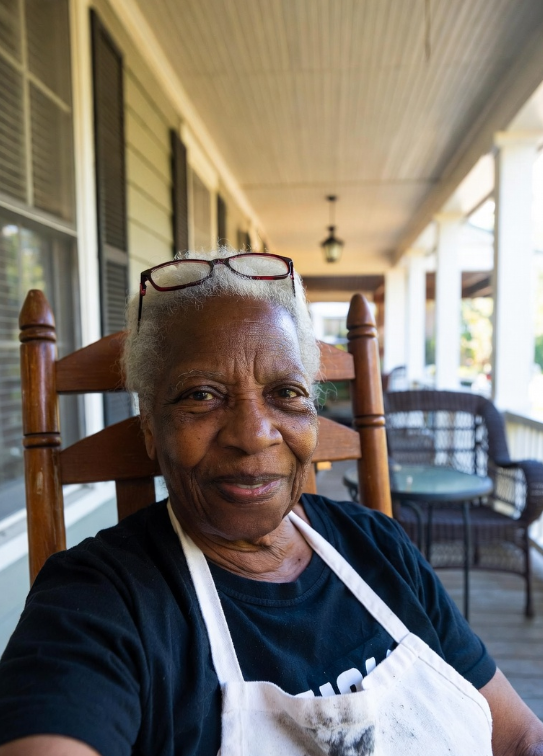
First week of school. Four hundred and twenty-six children. I stood behind the counter at eleven a.m. on Monday and watched them file in — the little ones wide-eyed and unsure, the bigger ones pretending they owned the place, the new transfers trying to figure out where to sit — and I felt the way I imagine a shepherd feels when the flock comes home. These are my children. Not biologically, but in every way that matters at lunchtime.
The quiet girl is back. She's in third grade now — she grew two inches over the summer and her hair is in braids and she walked in and looked for me behind the counter and when she saw me, she didn't smile exactly, but her face relaxed. Like coming home. She took her tray and sat in her spot and ate every bite, just like always. I put an extra roll in the line where she could reach it. Old habits.
New teacher this year — a young woman named Miss Franklin who teaches first grade and who came to the kitchen on Tuesday to introduce herself and ask if she could bring her class for a "kitchen tour." I said, "Honey, this is a cafeteria kitchen, not the Smithsonian." She said she wanted the children to see where their food comes from. I said, "It comes from me, and I'm standing right here, and they can see me every day at lunch." But she had such a hopeful look that I said yes, and on Thursday, twenty-two six-year-olds trooped through my kitchen in a line, and I showed them how I make cornbread in Hattie Pearl's skillet and how I wash lettuce and where the big refrigerator is. One boy asked if I lived in the kitchen. I said, "Sometimes it feels that way, baby."
I made gumbo this week. The first gumbo of the fall — I know it's still August and it's still ninety degrees, but gumbo doesn't care about the calendar. Gumbo is a state of mind. I start with a roux — oil and flour, stirred over medium heat for forty-five minutes until it's the color of dark chocolate. This is not optional. You cannot rush a roux. A roux is a commitment. If you are not willing to stand at the stove for forty-five minutes stirring without stopping, you are not ready for gumbo. Once the roux is right — dark, nutty, smelling like something holy — you add your trinity: onion, celery, bell pepper. Then okra, because this is Lowcountry gumbo and okra is non-negotiable. Andouille sausage. Shrimp. Crab if you can get it, and I could, because the man at the dock had crab this week. Served over rice in a bowl deep enough to swim in.
Earl ate two bowls. He said, "You put crab in this one." I said, "I did." He said, "You love me." I said, "I do." Forty years of marriage, distilled to four sentences over gumbo.
Now go on and feed somebody.
All that gumbo—the dark roux, the okra, the crab Earl caught me putting in—is a Sunday project, a labor of love that takes the better part of an afternoon. But on a school morning, when I have four hundred and twenty-six children to feed before noon and a kitchen tour to survive, I need something for me that comes together fast and still means something. This chorizo skillet is that dish. It’s got the same sausage soul as my gumbo, the same trinity spirit of onion and pepper, and it hits the table in thirty minutes flat—enough fuel to stand behind that counter all day long and put an extra roll where somebody can reach it.
Chorizo Green Chile Breakfast Skillet
Prep Time: 10 minutes | Cook Time: 20 minutes | Total Time: 30 minutes | Servings: 4
Ingredients
- 8 oz fresh chorizo sausage, casings removed
- 2 cups frozen diced hash brown potatoes (or 2 medium Yukon Gold potatoes, diced small)
- 1 can (4 oz) diced green chiles, drained
- 1 small yellow onion, diced
- 1 medium red bell pepper, diced
- 6 large eggs
- 3/4 cup shredded Monterey Jack cheese
- 1 tablespoon olive oil
- 1/2 teaspoon garlic powder
- 1/2 teaspoon smoked paprika
- Salt and black pepper to taste
- 2 tablespoons fresh cilantro, chopped (optional)
- Sour cream or hot sauce for serving (optional)
Instructions
- Brown the chorizo. Heat a large cast-iron or oven-safe skillet over medium heat. Add the chorizo and cook, breaking it up with a wooden spoon, until browned and cooked through, about 5–6 minutes. Transfer to a paper-towel-lined plate, leaving about 1 tablespoon of drippings in the pan.
- Cook the potatoes. Add the olive oil to the skillet with the reserved drippings. Add the diced potatoes in a single layer and press down lightly. Cook without stirring for 4–5 minutes until the bottom is golden and crisp, then toss and cook another 3–4 minutes until tender throughout. Season with garlic powder, smoked paprika, salt, and pepper.
- Add the vegetables. Push the potatoes to the sides of the skillet. Add the onion and bell pepper to the center and cook, stirring, for 3–4 minutes until softened. Stir in the green chiles and mix everything together in the pan.
- Return the chorizo. Add the cooked chorizo back to the skillet and stir to combine evenly with the potatoes and vegetables. Taste and adjust seasoning as needed.
- Add the eggs. Use a spoon to create 6 small wells in the skillet mixture. Crack one egg into each well. Season the eggs lightly with salt and pepper. Reduce heat to medium-low, cover the skillet with a lid or foil, and cook for 4–6 minutes, until the egg whites are fully set and the yolks are done to your liking.
- Finish with cheese. Uncover the skillet and sprinkle the shredded Monterey Jack evenly over the top. Replace the lid for 1 minute to melt the cheese.
- Serve. Scatter fresh cilantro over the top if using. Bring the skillet straight to the table and serve hot with sour cream or hot sauce on the side.
Nutrition (per serving)
Calories: 420 | Protein: 24g | Fat: 27g | Carbs: 20g | Fiber: 2g | Sodium: 780mg