Sophie texted a photo of Ingrid eating limpa bread. Ingrid is two. The bread is in both her hands. She is grinning. The line continues. The line is not metaphysical. The line is the bread, in the hands, going into the mouth, of a child whose great-great-grandmother brought the recipe across an ocean. The line is the bread.
Sophie is pregnant again. Another baby. Due next year. I will be a great-grandmother of two. The cheat sheet on the refrigerator is going to need updating. I have a small piece of graph paper taped inside the pantry door with a family tree on it. I update it after every birth, every wedding, every death. The paper is folded at the corners now and slightly yellowed at the edges. The tree has many branches. The branches keep coming.
Sophie's daughter Ingrid is walking now. She walked across the kitchen and grabbed my leg and looked up at me and said "Mor" — the Swedish for grandmother. Sophie is teaching her Swedish, or as much Swedish as Sophie remembers, which is enough for the basics. Ingrid said "Mor" with the perfect Swedish O, the rounded back-of-the-mouth O that only a child still learning sounds can pronounce. I cried. Sophie cried. The dog watched us with the patience of a saint.
I cooked Beef and barley soup this week. Beef shank simmered for three hours, the meat shredded back in, barley added in the last forty minutes. Carrots, celery, onion, mushrooms. The soup that warms a long table.
Damiano Thursday. A teenage boy came in alone. He was hungry. He did not want to make eye contact. I served him soup. I did not make small talk. He ate two bowls. He left. The not-asking was the gift. The not-asking is sometimes the right form of attention. The teenagers know.
The kitchen is the reliquary. I have used this word in the blog before. I am using it again because it is the right word. A reliquary is the container that holds the bones of the saints. The kitchen holds the bones of my saints — Pappa, Lars, Mamma, Paul, Erik, the first Sven, the second Sven. The bones are not literal bones. The bones are the marble slab and the bread pans and the glasses on the shelf and the wooden spoon worn smooth by Mamma's hand. The kitchen holds them. The kitchen is what holds them.
It is enough. It has to be. And on a morning like this, with the lake doing what the lake does and the dog at my feet and the bread on the counter and the kitchen warm enough to live in, it is.
Sven (whichever Sven I am living with at the moment) has the daily distinction of being the most consistent presence in my life. He follows me from kitchen to porch to bedroom. He sleeps within ten feet of me at all times. He notices when I am sad and he comes to put his head on my knee and the head is heavy and warm and the heaviness is the comfort. The dog is not a person. The dog is the only creature in the house, however, and the dog does the work that another person would do if there were one. The dog is enough.
I have started, in the last few years, to think about what I will leave behind. Not in a morbid way. In a practical way. The recipes are written down. The notebook is on the counter. The kitchen is in good order. The house is in Anna's name (we did the legal work in 2032; the kids agreed; it was the practical thing). The grandchildren and great-grandchildren each have a few small specific things — a wooden spoon, a bread pan, a particular cast iron skillet — that I have already labeled with their names on small pieces of masking tape. Nobody knows about the masking tape labels. They will find them when they find them.
It is enough.
The week I made the beef and barley soup, I also pulled this bread from the oven — because soup without something to tear at and pass around is only half a meal, and I have never been interested in half a meal. Watching Ingrid hold the limpa in both fists reminded me that bread is not a side dish in this house; it is the point, it is the line, it is what gets handed across the table and across the decades. Chimichurri Monkey Bread is not Swedish, and Pappa would have raised an eyebrow, but it is pull-apart and herbed and made to be shared, and that is Swedish enough for me. If the table is growing, the bread should be big enough to go around.
Chimichurri Monkey Bread
Prep Time: 20 min | Cook Time: 35 min | Total Time: 55 min | Servings: 10
Ingredients
- 3 cans (16.3 oz each) refrigerated flaky biscuit dough
- 1/2 cup unsalted butter, melted
- 1 cup fresh flat-leaf parsley, finely chopped
- 1/4 cup fresh cilantro, finely chopped
- 4 cloves garlic, minced
- 2 tablespoons olive oil
- 2 tablespoons red wine vinegar
- 1 teaspoon dried oregano
- 1/2 teaspoon crushed red pepper flakes
- 1/2 teaspoon kosher salt
- 1/4 teaspoon black pepper
- 1/2 cup finely grated Parmesan cheese
- Flaky sea salt, for finishing
Instructions
- Preheat and prep. Preheat your oven to 350°F. Generously grease a 10- or 12-cup Bundt pan with butter or nonstick spray and set aside.
- Make the chimichurri butter. In a large bowl, whisk together the melted butter, olive oil, red wine vinegar, parsley, cilantro, garlic, oregano, red pepper flakes, salt, and black pepper until well combined. The mixture should smell very good. Taste it. Adjust salt if needed.
- Cut the dough. Open all three cans of biscuit dough. Cut each biscuit into quarters, giving you roughly 48 pieces. They do not need to be perfect — rough edges brown nicely and give the loaf its texture.
- Coat the dough pieces. Add all the dough pieces to the bowl with the chimichurri butter. Toss gently but thoroughly until every piece is well coated on all sides.
- Layer into the pan. Begin placing the coated dough pieces into the prepared Bundt pan, layering them evenly. As you layer, sprinkle Parmesan between the layers. Drizzle any remaining chimichurri butter from the bowl over the top.
- Bake. Bake for 32–38 minutes, until the top is deep golden brown and the center is cooked through. If the top browns too quickly, tent loosely with foil for the last 10 minutes.
- Rest and invert. Remove from the oven and let rest in the pan for 5 minutes — no less, or it will fall apart. Run a thin knife around the edges, then invert onto a large serving plate or wooden board.
- Finish and serve. Scatter a pinch of flaky sea salt over the top. Serve immediately, pulling pieces apart at the table. It is meant to be eaten with hands. That is the whole point.
Nutrition (per serving)
Calories: 390 | Protein: 8g | Fat: 21g | Carbs: 42g | Fiber: 1g | Sodium: 810mg
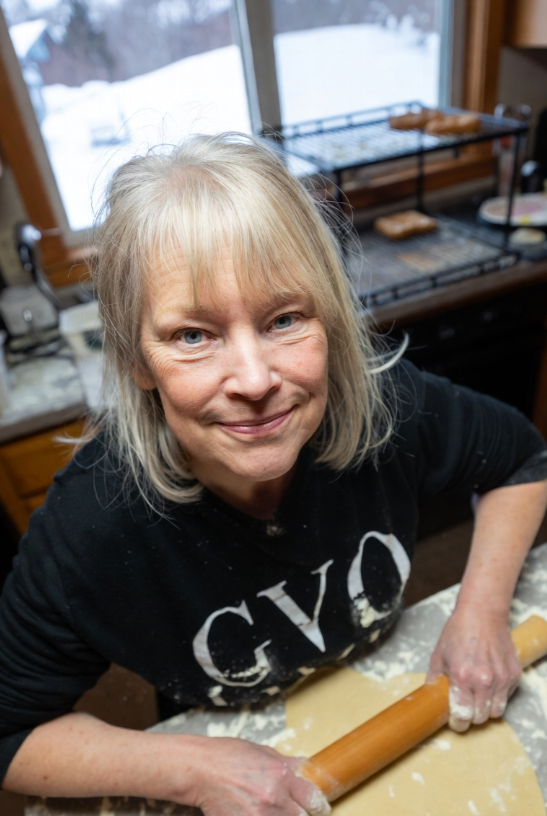
About the cook who shared this
Linda Johansson
Week 548 of Linda’s 30-year story
· Duluth, Minnesota
Linda is a sixty-three-year-old retired nurse from Duluth, Minnesota, living alone in the house where she raised her children and said goodbye to her husband. She lost Paul to ALS in 2020 after two years of watching the kindest man she'd ever known lose everything but his dignity. She cooks Scandinavian comfort food and Minnesota hotdish and the pot roast Paul loved, and she sets two places at the table out of habit because it makes her feel less alone. Every recipe she writes is a person she's loved.
