
 By
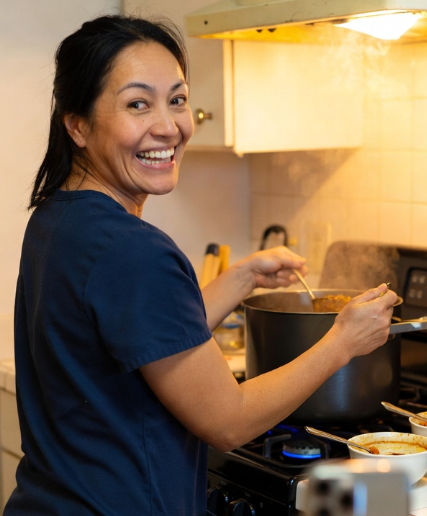
By The cooking marathon hit its stride this week. I documented four dishes with Lourdes in a single Saturday session that lasted seven hours and produced enough food to feed the entire Mountain View neighborhood. Pancit bihon. Pancit canton. Pancit palabok. Pancit malabon. Four versions of Filipino noodles, each one different, each one claiming supremacy, each one the subject of heated debate in every Filipino household.
Lourdes made each one with the casual expertise of a woman who has been cooking noodles since before I was born. The bihon went first — thin rice noodles, the everyday pancit, the one I grew up eating every birthday. Then canton — thicker egg noodles, sauteed with vegetables and meat, the noodles toasted slightly in the pan so the edges get crispy. Then palabok — the thick rice noodles with the orange shrimp sauce and the chicharron topping, the showpiece pancit, the one for parties. And finally malabon — similar to palabok but with a thicker sauce and more seafood, named for the city in Metro Manila where it originated.
I wrote furiously while she cooked. "The noodles go in last," she said for the bihon. "If you put them in too early, they turn to paste. Paste is for wallpaper, not dinner." For the canton: "The fire has to be hot. Hot as you can get it. The noodles need to hear the pan." For the palabok: "The sauce is everything. Without the sauce, it's just noodles. With the sauce, it's a feast." For the malabon: "This one takes patience. Like your father. He was patient. I was not. He made the malabon."
The Reynaldo comment caught me. Lourdes doesn't talk about Reynaldo cooking — she usually talks about him eating, about his appetite, about the way he consumed her food with the appreciation of a man who understood that his wife's cooking was a love letter written three times a day. But Reynaldo cooked too. He was the one who made malabon, who had the patience for the thick sauce, who stirred for twenty minutes while Lourdes did something else. I didn't know this. I added it to the notebook. Another detail, another thread, another piece of my father I didn't have before.
The blog post wrote itself: "Four Noodles, Four Arguments: A Filipino Family's Pancit Wars." It's one of my favorites. Light, funny, full of Lourdes's voice. The comments were immediate — everyone has a pancit opinion, everyone's mother makes it differently, everyone is wrong except their own family. This is the blog at its best: not just recipes but arguments, not just food but identity, not just cooking but the particular Filipino insistence that love is expressed in noodles and the correct noodle is always yours.
After seven hours in Lourdes’s kitchen watching her coax four completely different personalities out of the same basic idea—noodles, heat, patience—I came home craving that sound she described for the canton: the sizzle of noodles hitting a screaming-hot pan, the edges crisping just enough to remind you that fire is doing real work. This chicken and ramen stir-fry is my weeknight answer to that feeling. It won’t settle the great pancit debate, but it will absolutely start one at your own table.
Chicken and Ramen Stir-Fry
Prep Time: 15 minutes | Cook Time: 15 minutes | Total Time: 30 minutes | Servings: 4
Ingredients
- 2 packages (3 oz each) ramen noodles, seasoning packets discarded
- 1 lb boneless, skinless chicken breasts, thinly sliced
- 2 tablespoons soy sauce, divided
- 1 tablespoon oyster sauce
- 1 tablespoon hoisin sauce
- 1 teaspoon sesame oil
- 1/2 teaspoon ground white pepper
- 2 tablespoons vegetable oil, divided
- 3 cloves garlic, minced
- 1 teaspoon fresh ginger, grated
- 1 cup shredded cabbage
- 1 cup matchstick carrots
- 1 red bell pepper, thinly sliced
- 3 green onions, sliced, whites and greens separated
- 2 cups bean sprouts
- 1 tablespoon toasted sesame seeds, for garnish
Instructions
- Cook the noodles. Bring a pot of water to a boil and cook ramen noodles for 2 minutes, just until loosened. Drain, rinse with cold water, and set aside. Do not overcook—they will finish in the pan.
- Make the sauce. In a small bowl, whisk together 1 tablespoon soy sauce, oyster sauce, hoisin sauce, sesame oil, and white pepper. Set aside.
- Marinate the chicken. Toss sliced chicken with the remaining 1 tablespoon soy sauce and let sit for 5 minutes while you prep the vegetables.
- Sear the chicken. Heat 1 tablespoon vegetable oil in a large wok or skillet over the highest heat your stove allows. Add the chicken in a single layer and cook without moving for 2 minutes, until golden. Stir and cook another 1–2 minutes until cooked through. Transfer to a plate.
- Stir-fry the vegetables. Add the remaining tablespoon of oil to the same pan. Add garlic, ginger, and the white parts of the green onions. Stir-fry for 30 seconds until fragrant. Add cabbage, carrots, and bell pepper. Toss over high heat for 2–3 minutes until just tender but still with some bite.
- Add the noodles. Push the vegetables to the sides and add the drained noodles to the center of the pan. Let them sit undisturbed for 1 minute so the bottom layer gets slightly crispy and toasted. Then toss everything together with the sauce.
- Finish and serve. Return the chicken to the pan along with the bean sprouts. Toss for 1 minute until everything is coated and heated through. Plate immediately and top with the green parts of the scallions and toasted sesame seeds.
Nutrition (per serving)
Calories: 420 | Protein: 34g | Fat: 14g | Carbs: 38g | Fiber: 3g | Sodium: 820mg