Spring is teasing. Thirty-five degrees on Tuesday, which after months of single digits felt like opening a window you didn't know was closed. The snow is still here — it'll be here until April, at least — but it's changed character: softer, wetter, the kind of snow that melts during the day and re-freezes at night, creating a crust that crunches under your boots.
Sven has opinions about this. He prefers fluffy snow (easy to bound through) and despises crusty snow (difficult to walk on, embarrassing when your legs break through). He picks his way across the yard like a man crossing a minefield, and I watch from the window and feel guilty and amused in equal measure.
I had a good week at work. Not because nothing bad happened — this is oncology, something is always happening — but because a patient I've been caring for since October got her scans back and they were clean. Clean. She sat on the bed and stared at the doctor and said, "What?" and the doctor said, "Clear. No evidence of disease." And she looked at me and I looked at her and we both started crying and the doctor — who is not a crier — blew his nose and left the room.
I went home and made a celebration dinner: gravlax. Cured salmon, which takes three days to make — you coat the salmon in salt, sugar, dill, and peppercorns, and you weight it in the refrigerator and you wait. The waiting is the hard part, because I'm a woman who wants to fix things now, and salmon doesn't care about my schedule. But after three days, you unwrap it and the salmon has transformed — silky, pink, tasting like dill and the sea and patience.
I started the gravlax on Monday. We ate it on Thursday with mustard sauce, rye bread, and thinly sliced red onion. Paul said, "This is worth waiting for." I said, "Most things worth having are."
Elsa called from Ely. The wolves have been active — she tracked a pack across five miles of frozen lake, following their prints in the snow, mapping their territory. She's applying for a permanent position at Voyageurs for the summer season. She sounds more herself than she's sounded in months — the winter in the woods has clarified something in her, the way that isolation sometimes clarifies.
Peter texted: a photo of a bridge he designed, just completed, somewhere in Illinois. It's beautiful — clean lines, elegant curve, the kind of bridge that makes you believe in the person who built it. I texted back: "Beautiful, honey. I'm proud of you." He texted: "Thanks Mom." Two words. But they came with a photo, and the photo came unprompted, and I'm counting that as a door staying open.
The days are getting longer. The ice is groaning. The gravlax was perfect. We're almost through.
Gravlax isn’t the only recipe that asks you to trust the process and step away — this chicken liver pâté has that same quality of transformation, where humble ingredients are slowly coaxed into something silky and extraordinary. I’ve made it on other weeks that called for a proper celebration dinner, the kind where you want something on the table that feels both effortful and generous, something you’d set out with good bread and a glass of wine for someone whose news deserved marking. If patience is the secret ingredient in a week like this one, then pâté understands.
Chicken Liver Pâté
Prep Time: 15 minutes | Cook Time: 20 minutes | Total Time: 3 hours 35 minutes (includes chilling) | Servings: 8
Ingredients
- 1 lb chicken livers, trimmed and patted dry
- 6 tablespoons unsalted butter, divided
- 1 medium shallot, finely chopped
- 2 cloves garlic, minced
- 1/4 cup dry white wine or dry sherry
- 2 tablespoons heavy cream
- 1 teaspoon fresh thyme leaves (or 1/2 teaspoon dried)
- 1/2 teaspoon Dijon mustard
- 1/4 teaspoon allspice
- Salt and freshly ground black pepper, to taste
- 2 tablespoons clarified butter or melted unsalted butter (for sealing, optional)
- Cornichons, toasted rye or crusty bread, and thinly sliced red onion, for serving
Instructions
- Sauté the aromatics. Melt 2 tablespoons of butter in a large skillet over medium heat. Add the shallot and cook, stirring, for 3–4 minutes until softened. Add the garlic and thyme and cook for 1 minute more.
- Cook the livers. Increase heat to medium-high. Add the chicken livers in a single layer and cook for about 3 minutes per side, until browned on the outside but still faintly pink in the center. Do not overcook — a rosy interior keeps the pâté silky.
- Deglaze the pan. Pour in the white wine and scrape up any browned bits from the bottom of the pan. Let the wine reduce by half, about 2 minutes. Remove the pan from the heat and let cool for 5 minutes.
- Blend until smooth. Transfer the liver mixture to a food processor. Add the remaining 4 tablespoons of butter (cut into pieces), the heavy cream, Dijon mustard, and allspice. Process for 1–2 minutes until completely smooth, scraping down the sides as needed. Season generously with salt and pepper and blend again.
- Pass through a sieve (optional but recommended). For an ultra-silky texture, press the pâté through a fine-mesh sieve with a spatula. This step takes a few minutes and is entirely worth it.
- Fill and chill. Spoon the pâté into one large ramekin or two small jars, smoothing the top. If sealing, pour a thin layer of clarified or melted butter over the surface. Cover and refrigerate for at least 3 hours, or overnight, until firm and set.
- Serve. Let the pâté sit at room temperature for 10 minutes before serving. Spread generously on toasted rye bread and top with thin slices of red onion and a cornichon on the side.
Nutrition (per serving)
Calories: 185 | Protein: 11g | Fat: 14g | Carbs: 2g | Fiber: 0g | Sodium: 210mg
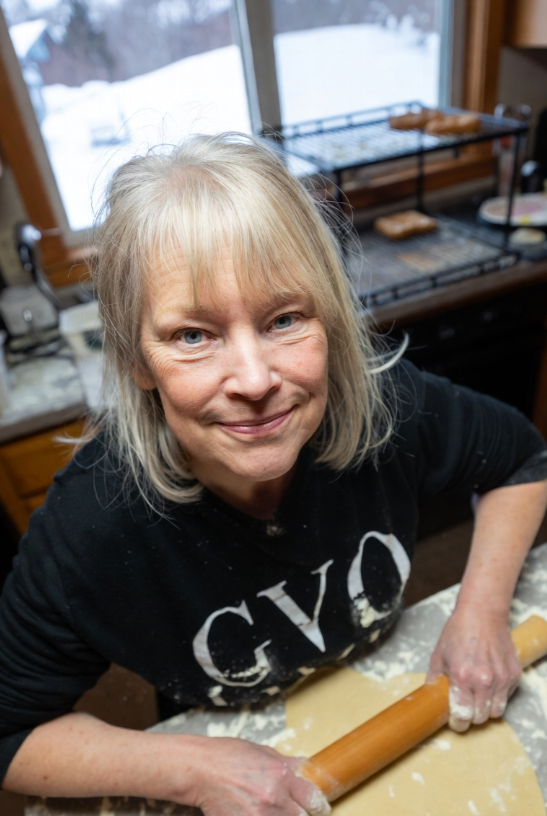
About the cook who shared this
Linda Johansson
Week 51 of Linda’s 30-year story
· Duluth, Minnesota
Linda is a sixty-three-year-old retired nurse from Duluth, Minnesota, living alone in the house where she raised her children and said goodbye to her husband. She lost Paul to ALS in 2020 after two years of watching the kindest man she'd ever known lose everything but his dignity. She cooks Scandinavian comfort food and Minnesota hotdish and the pot roast Paul loved, and she sets two places at the table out of habit because it makes her feel less alone. Every recipe she writes is a person she's loved.
