
 By
By Jason and I have been together six months. Half a year. Long enough to know his coffee order (black, which I find both admirable and concerning), his worst habit (leaving paramedic gear on my kitchen counter, which is a health code violation I tolerate because love), and his best quality (the stillness — the ability to be in a room without filling it with noise, a skill that paramedics and nurses share and that makes our silences companionable rather than awkward).
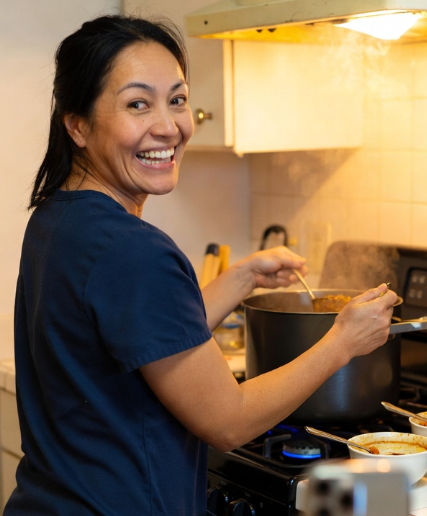
We're good together. I say this with the clinical detachment of a nurse charting vitals and the emotional caution of a woman who has learned that good things can end. We're good. We cook together on weekends. He makes his slowly-improving sinigang. I make everything else. We've developed a system: he chops, I direct, we eat, he washes. The system is domestic and efficient and slightly ridiculous and I love it in the way I love the cooking itself — not for the product but for the process, the standing side by side, the shared labor, the warmth of a kitchen that contains two people instead of one.
I made chicken inasal this weekend and taught him to grill it — the lemongrass, the calamansi, the annatto oil basting. He was attentive, the way he is with everything — medical, culinary, relational. He basted the chicken with the concentration of a man monitoring a patient's IV drip, which is the most Jason compliment I can give. The chicken was perfect. Orange-red from the annatto, charred at the edges, the calamansi cutting through the char with a brightness that tasted like Iloilo even though the closest I've been to Iloilo is my mother's kitchen.
I wrote a blog post about cooking with a partner — not a recipe post but a reflection. "Two Cooks, One Kitchen: What Happens When You Let Someone In." It's about the vulnerability of sharing your kitchen, your recipes, your sacred space with another person. The kitchen has been my therapy room, my church, my recovery ward. Letting Jason into it was letting him into all of those things, and the letting was terrifying and the result is a man who grills inasal with paramedic focus and washes dishes without being asked.
The post got comments from couples who cook together, from single people who cook alone and are fine with it, from someone who said, "My kitchen is my therapy too. I'm not ready to share it yet." I wrote back: "Take your time. The kitchen will tell you when it's ready." This may or may not be true. But it felt true, and the blog is the place where feeling true is enough.
So here it is — the recipe Jason grilled with paramedic-level focus while I hovered and tried not to backseat-baste. This chicken inasal is the dish that let someone else into my kitchen, and the lemongrass-calamansi marinade is as close to my mother’s Iloilo as I’ve been able to get from a Brooklyn apartment. If you’re cooking it with someone, let them do the basting — it’s the best part, and sharing the best parts is sort of the whole point.
Chicken Inasal
Prep Time: 20 minutes + 4 hours marinating | Cook Time: 20 minutes | Total Time: 4 hours 40 minutes | Servings: 4
Ingredients
- 2 lbs bone-in, skin-on chicken thighs (about 6 pieces)
- 3 stalks lemongrass, tender white parts only, finely minced
- 1/4 cup calamansi juice (or substitute 2 tablespoons lime juice + 1 tablespoon orange juice)
- 1/4 cup coconut vinegar
- 6 cloves garlic, minced
- 1 tablespoon freshly grated ginger
- 1 tablespoon brown sugar
- 1 tablespoon soy sauce
- 1 teaspoon freshly ground black pepper
- 1 teaspoon salt
For the Annatto Basting Oil:
- 1/3 cup neutral oil (canola or vegetable)
- 2 tablespoons annatto (achuete) seeds
- 2 tablespoons calamansi juice
- 1 tablespoon butter, melted
- 2 cloves garlic, minced
- Salt to taste
For Serving:
- Steamed white rice or garlic rice
- Sinamak (spiced vinegar) for dipping
Instructions
- Prepare the marinade. In a large bowl, combine the lemongrass, calamansi juice, coconut vinegar, garlic, ginger, brown sugar, soy sauce, pepper, and salt. Whisk until the sugar dissolves.
- Marinate the chicken. Score the chicken thighs with shallow cuts on both sides. Add to the marinade, turning to coat evenly. Cover and refrigerate for at least 4 hours, or overnight for the best flavor.
- Make the annatto oil. Heat the oil and annatto seeds in a small saucepan over low heat for 5 minutes, until the oil turns a deep orange-red. Strain out the seeds and discard them. Stir in the calamansi juice, melted butter, minced garlic, and a pinch of salt. Set aside.
- Preheat the grill. Heat a charcoal or gas grill to medium-high heat, about 400–425°F. Clean and oil the grates well to prevent sticking.
- Grill the chicken. Remove the chicken from the marinade and shake off excess. Place skin-side down on the grill. Cook for 6–8 minutes per side, basting generously with the annatto oil every few minutes using a brush or a tied bundle of lemongrass stalks.
- Check for doneness. The chicken is ready when the internal temperature reaches 165°F, the skin is charred in spots, and the annatto oil has built up a glossy orange-red glaze. If the outside chars too quickly, move to indirect heat to finish cooking through.
- Rest and serve. Let the chicken rest for 5 minutes. Serve over steamed rice with spiced vinegar on the side and any remaining annatto oil drizzled on top.
Nutrition (per serving)
Calories: 420 | Protein: 32g | Fat: 28g | Carbs: 8g | Fiber: 1g | Sodium: 780mg