
 By
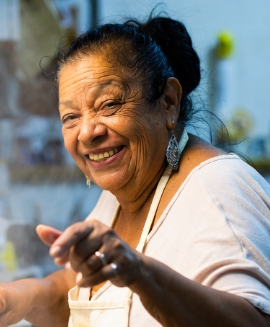
By Late August. Sofía starts nursing school next week — the program, the real program, the thing she has been working toward for three years of prerequisite courses and anatomy labs and the particular determination of a woman who knows exactly what she wants and who has watched her mother feed a hospital for thirty-three years and decided to feed the hospital differently, with medicine instead of meals, with care instead of calories. But the root is the same. The root is: someone is in need. You show up. You give them what they need. Whether it's a tray of food or a blood pressure check, the action is the same: I am here for you.
I took Sofía shopping for scrubs. This is not a glamorous shopping trip. This is not the shopping trip of dresses and shoes. This is the shopping trip of functional clothing, of fabric that can withstand bodily fluids and industrial washing machines, of shoes that a person can stand in for twelve hours without their feet seceding from their body. But I took her because shopping is care and care is what mothers do and because I wanted to be there when she bought her first set of scrubs the way I was there when she bought her first school uniform, the way Mami was there when I bought my first work uniform at Hartford Hospital in 1988.
The scrubs are navy blue. She held them up in the store and looked at herself in the mirror and I saw Mami. I saw Mami looking at herself in the mirror in Bayamón, in the sewing room, holding up a wedding dress she had made, the same posture, the same stance, the same woman looking at herself becoming herself. The scrubs are not a wedding dress. The mirror is in a medical supply store, not a sewing room. But the becoming is the same. Sofía is becoming. The becoming is beautiful.
I made her favorite dinner that night: arroz con pollo, the version with extra olives because Sofía loves olives, and flan, because flan is celebration and the night before nursing school begins is a celebration. She ate everything. She went upstairs. She came down at 5 AM the next morning in her navy scrubs and she looked at me in the kitchen — I was making her breakfast, of course I was making her breakfast, sofrito eggs and tostones and café — and she said, Mami, I'm nervous. I said, Sofia, when I walked into this hospital for the first time in 1988, I was terrified. She said, What did you do? I said, I fed someone. You are going to do the same thing. You are going to care for someone. It is the same thing. Go. Be excellent.
The arroz con pollo I made Sofía that night is a dish I’ve made so many times I could do it in the dark — and have, some years, when the hospital shifts ran long and the kitchen felt very quiet. But the heart of that meal is the same heart as this Chicken and Orzo Skillet: one pan, everything together, the chicken giving itself into the grain and the broth until you can’t separate one from the other. That’s family. That’s what I was trying to say to her that night without saying it. This is the recipe I reach for when I need food to do the heavy lifting — when the words aren’t quite enough and the table has to speak instead.
Chicken And Orzo Skillet
Prep Time: 15 minutes | Cook Time: 35 minutes | Total Time: 50 minutes | Servings: 4–6
Ingredients
- 2 lbs bone-in, skin-on chicken thighs (about 4–6 pieces)
- 1 1/4 cups orzo pasta
- 1 medium yellow onion, finely diced
- 4 cloves garlic, minced
- 1 red bell pepper, diced
- 1 can (14.5 oz) diced tomatoes, with juices
- 2 1/2 cups low-sodium chicken broth
- 1 teaspoon smoked paprika
- 1 teaspoon dried oregano
- 1/2 teaspoon ground cumin
- 1/2 teaspoon kosher salt, plus more to taste
- 1/4 teaspoon black pepper
- 2 tablespoons olive oil
- 1/3 cup green olives, sliced (optional but encouraged)
- 1/4 cup fresh flat-leaf parsley, roughly chopped
- Lemon wedges, for serving
Instructions
- Season the chicken. Pat the chicken thighs dry with paper towels. Season all over with salt, pepper, and smoked paprika, pressing the spices gently into the skin.
- Sear the chicken. Heat olive oil in a large, deep oven-safe skillet or braiser over medium-high heat. Add the chicken thighs skin-side down and sear without moving for 5–6 minutes, until the skin is deep golden brown. Flip and sear the other side for 3 minutes. Transfer to a plate — the chicken will finish cooking in the pan.
- Build the base. Reduce heat to medium. In the same skillet, add the diced onion and red bell pepper to the rendered chicken fat. Cook, stirring occasionally, for 4–5 minutes until softened. Add the garlic, oregano, and cumin and cook 1 minute more until fragrant.
- Add the tomatoes and broth. Pour in the diced tomatoes with their juices and stir to scrape up any browned bits from the bottom of the pan. Add the chicken broth and bring to a gentle simmer.
- Add the orzo. Stir the orzo into the simmering liquid, spreading it into an even layer. Nestle the seared chicken thighs back into the skillet, skin-side up, pressing them gently into the orzo so they sit just above the surface.
- Simmer until cooked through. Reduce heat to medium-low, cover loosely, and cook for 18–20 minutes, stirring the orzo gently once or twice to prevent sticking, until the orzo is tender and has absorbed most of the liquid and the chicken registers 165°F at the thickest part.
- Finish and serve. Scatter the sliced olives over the top if using. Let the skillet rest uncovered for 3–4 minutes — the orzo will thicken as it sits. Sprinkle generously with fresh parsley and serve straight from the pan with lemon wedges alongside.
Nutrition (per serving)
Calories: 435 | Protein: 33g | Fat: 17g | Carbs: 36g | Fiber: 3g | Sodium: 570mg