Peter did not call. I called him. He picked up on the third try. He sounded thin — the way he has sounded for months now, the way Pappa used to sound. I told him about the meatballs I was making. He said he wished he was here. I said come for Christmas. He said he would try. I did not push. I did not lecture. I said I loved him. I hung up the phone and I stood at the kitchen sink for a long minute looking at the lake.
Sophie texted a photo of Mira eating cereal. Mira's face was covered in milk. The photo was lit from the side by morning light and the smile in it was uninhibited and full and I could not stop looking at it. I printed the photo. I taped it to the fridge. I have a system on the fridge now: a column for each grandchild, a column for each great-grandchild, photos rotated weekly. The fridge is the gallery. The gallery is the proof.
Peter called from Chicago. He sounded thinner than last week. He said work was fine. I do not believe him. He said his apartment was fine. I do not believe him either. He asked about the dog. He asked about the lake. He told me he loved me. I told him I loved him too. I told him about the bread I was baking. He said he could almost smell it through the phone. We hung up. I stood at the sink for a long minute. I did not know what else to do.
I cooked Beef stew (kalops) this week. The Swedish stew, ancient and patient. Beef chuck cut in cubes, browned in butter, simmered with onion, allspice (the secret), bay leaf, salt, beef stock, for two and a half hours, until the meat surrenders. Served with boiled potatoes and pickled beets. The kitchen smells like every Swedish grandmother who has ever cooked in a cold place.
Damiano Thursday. A teenage boy came in alone. He was hungry. He did not want to make eye contact. I served him soup. I did not make small talk. He ate two bowls. He left. The not-asking was the gift. The not-asking is sometimes the right form of attention. The teenagers know.
The kitchen is the reliquary. I have used this word in the blog before. I am using it again because it is the right word. A reliquary is the container that holds the bones of the saints. The kitchen holds the bones of my saints — Pappa, Lars, Mamma, Paul, Erik, the first Sven, the second Sven. The bones are not literal bones. The bones are the marble slab and the bread pans and the glasses on the shelf and the wooden spoon worn smooth by Mamma's hand. The kitchen holds them. The kitchen is what holds them.
It is enough. It has to be. And on a morning like this, with the lake doing what the lake does and the dog at my feet and the bread on the counter and the kitchen warm enough to live in, it is.
Sven (whichever Sven I am living with at the moment) has the daily distinction of being the most consistent presence in my life. He follows me from kitchen to porch to bedroom. He sleeps within ten feet of me at all times. He notices when I am sad and he comes to put his head on my knee and the head is heavy and warm and the heaviness is the comfort. The dog is not a person. The dog is the only creature in the house, however, and the dog does the work that another person would do if there were one. The dog is enough.
It is enough.
The kalops had already done its work — two and a half hours of simmering, the kitchen warm enough to live in, the allspice doing what allspice does. But the week kept asking things of me, and by Thursday, after the boy with the hollow eyes ate two bowls of soup and left without a word, I wanted something even simpler. Something that asked nothing back. Cheesy tuna noodles is that dish — the kind that has no ceremony, no technique to protect, no tradition to honor except the tradition of feeding yourself when you are not sure you feel like it. I made it in the same kitchen that held the kalops, the bread, the photo of Mira on the fridge. The kitchen held this too.
Cheesy Tuna Noodles
Prep Time: 10 minutes | Cook Time: 35 minutes | Total Time: 45 minutes | Servings: 4
Ingredients
- 8 oz egg noodles (medium width)
- 2 cans (5 oz each) solid white tuna in water, drained
- 1 can (10.5 oz) condensed cream of mushroom soup
- 1 cup shredded sharp cheddar cheese, divided
- 1/2 cup whole milk
- 1/2 cup frozen peas
- 1/4 cup finely diced yellow onion
- 1/2 teaspoon garlic powder
- 1/4 teaspoon black pepper
- 1/2 teaspoon salt, or to taste
- 1/2 cup plain breadcrumbs
- 1 tablespoon unsalted butter, melted
Instructions
- Preheat and prep. Preheat your oven to 375°F (190°C). Lightly grease a 9x13-inch baking dish and set aside.
- Cook the noodles. Bring a large pot of salted water to a boil. Cook egg noodles according to package directions until just al dente, about 7–8 minutes. Drain well and return to the pot.
- Make the filling. In a large mixing bowl, whisk together the condensed soup and milk until smooth. Stir in the drained tuna, frozen peas, diced onion, garlic powder, salt, pepper, and 3/4 cup of the shredded cheddar. Mix until combined.
- Combine. Add the drained noodles to the bowl and fold everything together gently so the noodles are well coated.
- Assemble. Pour the noodle mixture into the prepared baking dish and spread into an even layer. Scatter the remaining 1/4 cup of cheddar across the top.
- Make the topping. In a small bowl, stir together the breadcrumbs and melted butter until the crumbs are evenly moistened. Sprinkle the breadcrumb mixture over the cheese layer.
- Bake. Bake uncovered for 25–30 minutes, until the top is golden brown and the edges are bubbling. Let rest for 5 minutes before serving.
Nutrition (per serving)
Calories: 410 | Protein: 30g | Fat: 13g | Carbs: 44g | Fiber: 3g | Sodium: 740mg
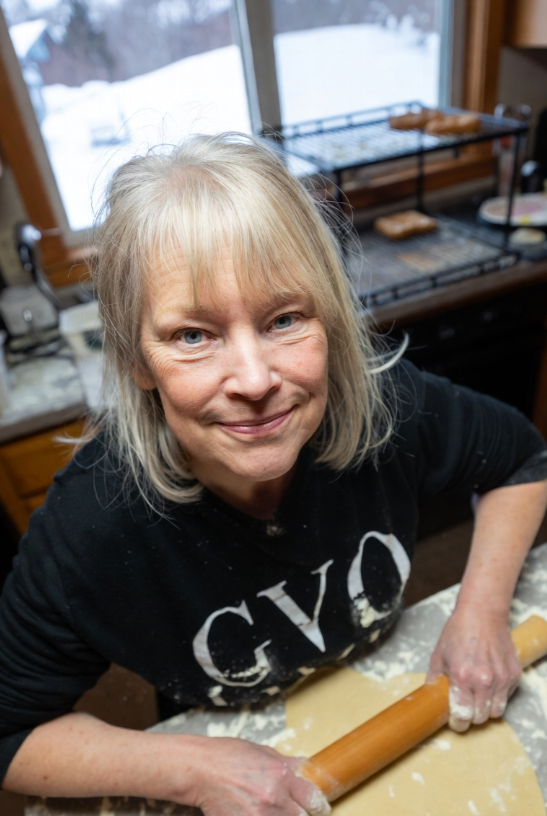
About the cook who shared this
Linda Johansson
Week 308 of Linda’s 30-year story
· Duluth, Minnesota
Linda is a sixty-three-year-old retired nurse from Duluth, Minnesota, living alone in the house where she raised her children and said goodbye to her husband. She lost Paul to ALS in 2020 after two years of watching the kindest man she'd ever known lose everything but his dignity. She cooks Scandinavian comfort food and Minnesota hotdish and the pot roast Paul loved, and she sets two places at the table out of habit because it makes her feel less alone. Every recipe she writes is a person she's loved.
