
 By
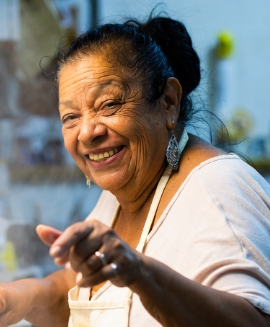
By The week after graduation is strange. Sofia is home but she is not a student anymore. She is something in between — not a child, not quite an adult, floating in the space between who she was and who she will become. She sleeps until ten. She eats breakfast in her pajamas. She watches Netflix on the couch with a blanket and no responsibilities, and I let her because she has earned this rest and because soon enough the rest will end and real life will start and she will miss these lazy June mornings the way I miss the lazy June mornings in Bayamon that I did not appreciate when I had them.
I put her to work in my kitchen. Not hard work — not the kind of work I do at the hospital — but teaching work. I am teaching her the recipes. Not writing them down, not yet. Teaching them the way Mami taught me, which is the way Abuela Consuelo taught Mami — by doing. Stand next to me. Watch my hands. Taste this. Tell me when it is ready. How do you know when it is ready? You know when it is ready because it smells right and looks right and feels right, and these are not measurements, these are instincts, and instincts are taught by proximity and repetition and love.
This week I taught Sofia to make sofrito from scratch. The real sofrito, the foundation. Culantro, recao, aji dulce, garlic, onion, tomato. She chopped while I supervised. She blended while I corrected. She cooked the base in oil while I watched the color change from bright green to golden, and I said, There. Right there. That is the color. That is the sound. That is the smell. Now you know. Now you carry it.
She said, Mami, how do you know all this without a recipe? I said, Mija, the recipe is in my hands. Your grandmother put it there forty years ago and it has not left. Now I am putting it in your hands. And your hands will put it in someone else hands. And that is how food survives. Not in books. Not on websites. In hands. In the passing. In the teaching.
Eduardo came home to the smell of sofrito and said, Sofia made this? I said, Sofia made this. He tasted it. He closed his eyes — the Eduardo thing, the eyes-closed thing that means the food took him somewhere. He opened his eyes and said, It is good. Sofia beamed. I beamed. The sofrito was good. Not perfect — perfect takes forty years and a mother looking over your shoulder — but good. Good is the beginning. Good is the first step. Good is where the chain starts.
After I watched Sofia carry sofrito home in her hands that week, I felt the particular restlessness that comes after a long act of love — the need to keep cooking, to keep giving. Caponata has always lived in my kitchen alongside the Puerto Rican recipes, a dish I learned from a Sicilian nurse I worked beside at the hospital for twelve years, who taught it to me the same way I taught Sofia her sofrito: stand here, watch, taste, feel when it is ready. It is a recipe about patience and sweet-and-sour transformation, about vegetables that give themselves over to the heat and become something entirely new — and that week, that felt exactly right.
Caponata
Prep Time: 20 minutes | Cook Time: 40 minutes | Total Time: 1 hour | Servings: 6
Ingredients
- 1 large eggplant (about 1 1/2 lbs), cut into 3/4-inch cubes
- 1 teaspoon kosher salt, plus more for salting eggplant
- 1/4 cup olive oil, divided
- 1 medium yellow onion, diced
- 3 stalks celery, sliced thin
- 4 cloves garlic, minced
- 1 can (14 oz) diced tomatoes, drained
- 1/3 cup green olives, pitted and roughly chopped
- 2 tablespoons capers, drained
- 3 tablespoons red wine vinegar
- 1 tablespoon sugar
- 1/4 teaspoon black pepper
- 1/4 cup fresh basil leaves, torn
- 2 tablespoons toasted pine nuts (optional)
Instructions
- Salt the eggplant. Place the cubed eggplant in a colander, toss generously with salt, and let it sit for 20 minutes. This draws out bitterness and excess moisture. Rinse well and pat thoroughly dry with paper towels.
- Brown the eggplant. Heat 3 tablespoons of the olive oil in a large heavy skillet or Dutch oven over medium-high heat. Add the eggplant in a single layer and cook, stirring occasionally, until golden and tender, about 10 to 12 minutes. Transfer to a plate and set aside.
- Build the base. Add the remaining 1 tablespoon of olive oil to the same pan over medium heat. Add the onion and celery and cook, stirring, until softened and just beginning to turn golden, about 7 minutes. Add the garlic and cook 1 minute more, until fragrant.
- Add tomatoes and simmer. Stir in the drained diced tomatoes, olives, and capers. Season with 1 teaspoon salt and 1/4 teaspoon black pepper. Reduce heat to medium-low and simmer for 10 minutes, stirring occasionally, until the mixture thickens slightly.
- Season sweet and sour. Stir in the red wine vinegar and sugar. Taste and adjust — the flavor should be balanced between tangy and sweet, neither sharp nor flat. Add a touch more vinegar or sugar to find your balance.
- Combine and rest. Return the browned eggplant to the pan and stir everything together gently. Simmer for 5 more minutes so the flavors marry. Remove from heat and let the caponata rest for at least 15 minutes before serving — it improves as it sits.
- Finish and serve. Stir in the torn basil leaves and scatter pine nuts over the top if using. Serve warm, at room temperature, or chilled alongside crusty bread, grilled fish, or simply on its own.
Nutrition (per serving)
Calories: 148 | Protein: 2g | Fat: 10g | Carbs: 14g | Fiber: 4g | Sodium: 420mg