
 By
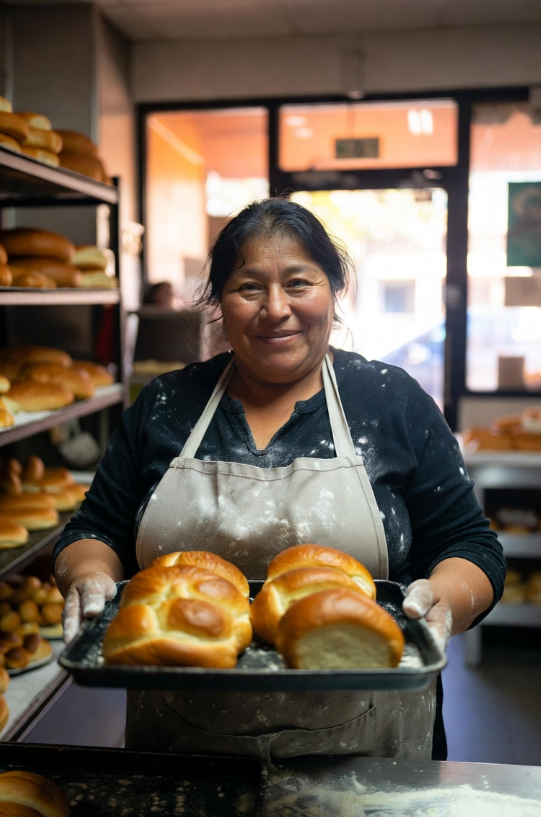
By Easter week. The bakery is busy. The house is busy. The world is spinning at the speed of spring and I am holding on with flour-covered hands and the stubbornness that has gotten me through forty years and two countries and three deaths and a bakery that should not exist but does.
Easter Mass was beautiful. Father Morales spoke about resurrection — not just of Christ but of hope, of purpose, of the things we thought were dead that turn out to be merely sleeping. I sat in the pew with my family — Luis beside me, Luis Jr. on his other side, Isabella next to me, Sofia, Diego, Camila at the end trying not to swing her legs — and I thought about what is resurrected in my life. Rosa is dead but her recipes live. Alejandro is dead but his house still stands. Javier is dead but his name lives in the family WhatsApp and in the candles I light every Sunday. Resurrection is not about the body. It is about the echo. The echo is louder than the life, sometimes. The echo outlasts everything.
Camila sang in the children's choir at Easter Mass. Her first public performance in a church setting (the coffee table concerts don't count, though they should). She sang "Alleluia" with the other children, but her voice floated above the rest — not louder, but clearer, the way a bell floats above traffic, not by volume but by purity. Father Morales noticed. After Mass he said to me, "That child has a gift." I said, "I know." He said, "A gift like that needs training." I said, "She's five." He said, "Mozart was five." I said, "Father, this is El Paso, not Vienna." He smiled. But I thought about it all day.
I made capirotada for Easter dinner — the final iteration this season, for the family table, with the piloncillo syrup slightly darker than usual (I let it caramelize an extra minute, the way Rosa did when she was feeling bold). The capirotada was perfect — the bread soft, the cheese melted, the raisins plump, the cinnamon weaving through everything like a thread in a tapestry. Camila ate it without picking out the raisins. A miracle. The first raisin miracle of the Easter season.
Luis Jr. and I had a conversation after dinner. He said: "Mom, when I'm at basic, I'll write." I said: "You'd better." He said: "I'll call when I can." I said: "Every Sunday." He said: "I'll try." I said: "Don't try. Do." He smiled — the rare Luis Jr. smile, the one that uses his whole face — and he said: "I got my stubbornness from you." I said: "You got it from Rosa." He said: "Same thing." Same thing. Yes. The same thing, passed down through women who refuse to let go, from a kitchen in Anapra to a bakery in El Paso to a boy about to become a soldier. The same stubbornness. The same love. The same refusal to accept distance as goodbye.
That Easter capirotada—the one Camila ate without picking out the raisins, the one with the piloncillo syrup caramelized one bold minute longer the way Rosa used to do it—is the recipe I’m sharing today. It is not complicated. It is bread and sugar and cinnamon and cheese and the stubbornness to keep making it year after year, even when the people you first made it for are no longer at the table. Especially then.
Capirotada (Mexican Easter Bread Pudding)
Prep Time: 20 minutes | Cook Time: 35 minutes | Total Time: 55 minutes | Servings: 8
Ingredients
- 6 bolillo rolls (or French bread), sliced 1/2-inch thick and toasted
- 8 ounces piloncillo (Mexican unrefined cane sugar), roughly chopped
- 3 cups water
- 1 cinnamon stick (Mexican canela preferred)
- 3 whole cloves
- 1/2 cup raisins
- 1/2 cup roasted peanuts, roughly chopped
- 1 cup Monterey Jack cheese, shredded
- 2 tablespoons unsalted butter, plus more for greasing
- 1/4 teaspoon ground cinnamon
Instructions
- Make the piloncillo syrup. In a medium saucepan, combine the piloncillo, water, cinnamon stick, and cloves. Bring to a boil over medium heat, stirring occasionally until the piloncillo dissolves completely. Reduce heat and simmer for 10–12 minutes until the syrup thickens slightly and turns a deep amber. For a bolder flavor, let it caramelize one extra minute. Remove the cinnamon stick and cloves.
- Toast the bread. Arrange the bolillo slices on a baking sheet and toast in the oven at 375°F for 5–7 minutes per side, until golden and dry. This helps the bread absorb the syrup without falling apart.
- Assemble the capirotada. Grease a 9x13-inch baking dish with butter. Layer half the toasted bread slices across the bottom. Sprinkle with half the raisins, half the peanuts, and half the cheese. Repeat with a second layer of bread, raisins, peanuts, and cheese.
- Add the syrup. Pour the warm piloncillo syrup evenly over the layered bread. Dot the top with small pieces of butter and sprinkle with ground cinnamon.
- Bake. Cover the dish with aluminum foil and bake at 375°F for 20 minutes. Remove the foil and bake for an additional 5–8 minutes, until the cheese is melted and bubbly and the top is lightly golden.
- Rest and serve. Let the capirotada cool for 10 minutes before serving. It should be soft and custardy, with the bread soaked through and the cheese pulling in warm strings. Serve warm.
Nutrition (per serving)
Calories: 340 | Protein: 9g | Fat: 12g | Carbs: 52g | Fiber: 2g | Sodium: 280mg