
 By
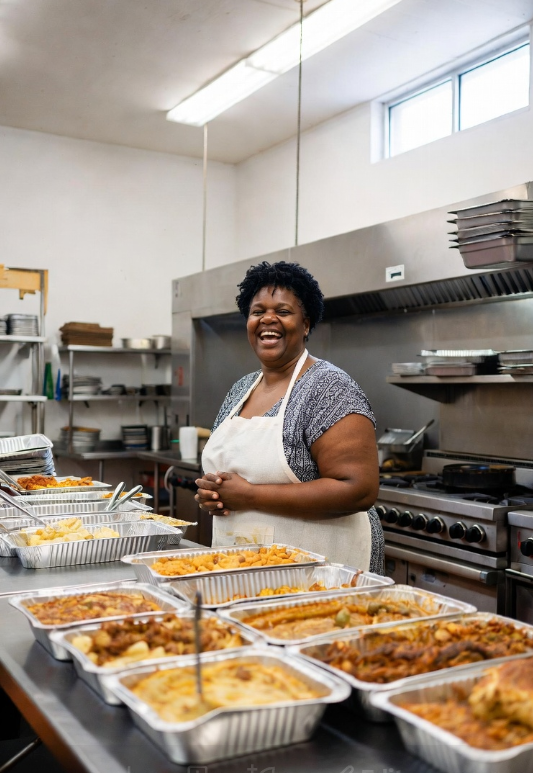
By September is almost here. The cooking class has settled into its pandemic rhythm and the students are advancing—Imani, who started not knowing how to make biscuits, is now making yeasted bread and asking about laminated dough, which I told her is the natural progression of someone who has learned to respect what the gluten is telling her. She is twenty-one years old and she is asking about laminated dough and I am here for every word of it. Brenda—my fifty-eight-year-old student who arrived tired of canned food—made a pot roast on her own last week and texted me a photograph. The photograph showed a perfect braise, a rich dark sauce, evidence of the sear I taught her in February. "Judge it," she texted. I texted back: "Outstanding." She sent a row of small yellow faces with tears coming out of their eyes, which I understand is a positive response.
Destiny and Travis have been together for almost a year now. She doesn't talk about him every time we speak anymore—he has moved from the "new person I'm telling you about" category into the "assumed part of the landscape" category, which is the best possible sign. You know someone is part of your life when you stop announcing them and start taking them for granted, in the best sense—the sense that means they are already woven in, already the assumed background of daily life, the person you don't explain because everyone already knows.
I made a large batch of tomato sauce this week from the last of the garden tomatoes—the ones Calvin grew with his usual enthusiastic overcalculation. Twenty pounds of tomatoes became twelve jars of sauce that will feed us through the winter, that will become Sunday gravy and soup and the base of dishes I haven't imagined yet. The summer's work preserved. The season stored. The food made ready for the cold months. Bernice did this every August. I do this every August. Some Augusts it is an act of abundance. This August it is an act of faith: that there will be cold months to use this sauce in, that we will still be here, that the table will continue to be set.
The tomato sauce is already sealed and cooling on the counter, and I keep walking past it just to look at the jars—at the way the late afternoon light comes through that deep red and says: you did something that matters. I had nectarines left from the farmstand, more than we’d eat fresh before they turned, and it seemed like the most natural thing in the world to keep going, to keep the canning pot out and the jars warm and just carry the whole feeling of August preservation one step further. Putting fruit away in honey syrup is quieter than tomato sauce but it carries the same intention: I am setting the table for future meals I can’t yet see, and I believe in them anyway.
Canned Nectarines in Honey Syrup
Prep Time: 25 minutes | Cook Time: 30 minutes | Total Time: 55 minutes | Servings: 6 pint jars (about 12 servings)
Ingredients
- 5 lbs firm-ripe nectarines (about 14–16 medium)
- 4 cups water
- 1 cup mild honey (clover or wildflower)
- 2 tablespoons bottled lemon juice
- 1/2 teaspoon pure vanilla extract (optional)
- 6 sterilized pint jars with new lids and bands
Instructions
- Prepare your canning setup. Fill a large water-bath canning pot with enough water to cover jars by at least 1 inch. Bring to a boil. Keep jars hot in the simmering water until ready to fill. Set lids in a small saucepan of hot (not boiling) water.
- Make the honey syrup. Combine 4 cups water and 1 cup honey in a medium saucepan over medium heat. Stir until honey is fully dissolved and the syrup is just below a simmer. Keep warm on low heat. Do not boil vigorously.
- Prep the nectarines. Wash nectarines well. To peel, score an X in the bottom of each and blanch in boiling water for 30–45 seconds, then transfer immediately to an ice bath. Skins will slip off easily. Halve and pit each nectarine. (You may leave skins on for a more rustic preserve—they soften beautifully.)
- Acidulate to prevent browning. As you work, place cut nectarines in a bowl of cold water with the 2 tablespoons of lemon juice to keep them from oxidizing while you fill your jars.
- Pack the jars. Remove one hot jar from the canner. Working quickly, pack nectarine halves cut-side down into the jar, fitting them snugly but not crushing. Leave 1/2-inch headspace at the top.
- Add syrup. Stir vanilla (if using) into the warm honey syrup. Ladle hot syrup over the nectarines, maintaining 1/2-inch headspace. Run a thin spatula or bubble remover around the inside edge of the jar to release any air pockets.
- Seal the jars. Wipe the jar rim clean with a damp cloth. Center a new lid on the jar and screw the band on until fingertip-tight—not cranked down hard. Repeat with remaining jars.
- Process in the water bath. Lower filled jars into the boiling water bath. Water should cover jars by at least 1 inch. Return to a full boil, then process for 25 minutes for pint jars (add 5 minutes if you are above 1,000 feet elevation).
- Rest and listen. Turn off heat. Remove the canner lid and let jars rest in the water for 5 minutes. Lift out with jar tongs and set on a clean towel, leaving 1-inch space between jars. Do not tilt or press the lids. Listen for the satisfying “pop” of each lid sealing as the jars cool—1 to 2 hours. Any jar that does not seal should be refrigerated and used within 2 weeks.
- Store. Label sealed jars with the date. Store in a cool, dark place for up to 18 months. The flavor deepens and sweetens after 4–6 weeks. Serve over yogurt, pound cake, oatmeal, or alongside pork—or simply out of the jar on a February afternoon when you need to remember August.
Nutrition (per serving)
Calories: 110 | Protein: 1g | Fat: 0g | Carbs: 28g | Fiber: 2g | Sodium: 5mg