
 By
By Spring breakup is beginning. The snow is softening, the icicles are dripping, the roads are developing that particular March texture — wet on top, frozen underneath, the combination that makes driving in Anchorage feel like ice skating in a two-ton vehicle. The city smells like thaw: wet earth, pine, the slightly funky aroma of a landscape that's been frozen for seven months and is now decompressing.
The blog is steady — two thousand regular readers, consistent comments, the occasional spike from a share. The floor post from November continues to bring new readers in, people who find it through search engines or recommendations, people who type "cooking after trauma" or "PTSD and cooking" and find my story waiting for them like a bowl of sinigang at the end of a long search. Each new reader is a kitchen I'll never see, a stove I'll never stand at, a person who might make adobo tonight because a Filipino nurse in Alaska said it would help. The responsibility of this is not lost on me.
Jason's therapy continues. He's three months in, and the change is subtle but real — the way a slow braise changes meat over hours, not moment to moment but cumulatively, the fibers softening, the toughness yielding. He's quicker to decompress after hard calls. The thousand-yard stare that used to last hours now lasts minutes. He comes home and showers and eats and the transition from firefighter to boyfriend takes thirty minutes instead of three hours. The therapy is working. The sinigang is helping. The combination is the treatment, for him as for me.
I made caldereta for Saturday dinner — the beef stew with liver spread that Reynaldo preferred. Lourdes came over, which she does more often now that Jason lives here, because Lourdes wants to ensure that her kitchen standards are being maintained in her daughter's household, and the way she ensures this is by arriving unannounced with a bag of groceries and inspecting the spice rack. "Where is your Datu Puti?" she asked. I pointed. She examined the bottle. Approximately half full. She nodded. The vinegar audit was passed.
The caldereta was rich and dark and the liver spread gave it that depth — the depth that Reynaldo called "important," the depth that comes from something you have to add separately, something that doesn't occur naturally in the stew but is essential to its character. Like therapy. Like medication. Like the things you add to yourself to become the version that survives. Important ingredients. The caldereta knows.
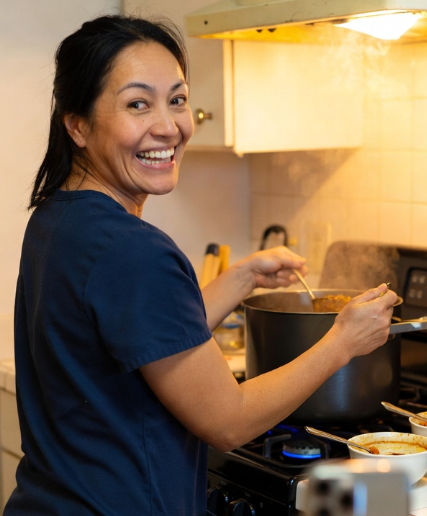
The caldereta was Saturday’s dinner—Reynaldo’s recipe, Lourdes’s approval, Jason’s second bowl. But the week leading up to it was a week of something simpler: a pot of cabbage and beef soup that I kept on the back burner and ladled from all through the thaw, something with the same slow patience, the same cumulative warmth. This is the soup I make when I need a reminder that time and heat do their work quietly, without announcement. It doesn’t require liver spread or a vinegar audit. It just requires you to let it go long enough to become what it needs to be.
Cabbage and Beef Soup
Prep Time: 20 min | Cook Time: 1 hr 10 min | Total Time: 1 hr 30 min | Servings: 8
Ingredients
- 1 1/2 lbs beef stew meat, cut into 1-inch cubes
- 1 tablespoon olive oil
- 1 medium yellow onion, diced
- 3 cloves garlic, minced
- 3 medium carrots, sliced into rounds
- 3 stalks celery, sliced
- 2 medium potatoes, peeled and cubed
- 1/2 head green cabbage, coarsely chopped (about 4 cups)
- 1 can (14.5 oz) diced tomatoes, undrained
- 6 cups beef broth
- 1 tablespoon tomato paste
- 1 teaspoon dried thyme
- 1 teaspoon dried parsley
- 1/2 teaspoon smoked paprika
- Salt and black pepper to taste
Instructions
- Brown the beef. Heat olive oil in a large heavy-bottomed pot or Dutch oven over medium-high heat. Season beef cubes with salt and pepper, then add to the pot in a single layer. Sear for 3–4 minutes per side until browned. Remove beef and set aside.
- Soften the aromatics. In the same pot, reduce heat to medium. Add onion and celery and cook for 4–5 minutes until softened. Add garlic and tomato paste and cook another 1 minute, stirring constantly.
- Build the broth. Return the browned beef to the pot. Add beef broth, diced tomatoes, thyme, parsley, and smoked paprika. Stir to combine. Bring to a boil, then reduce heat to low, cover, and simmer for 40 minutes.
- Add the vegetables. Stir in carrots, potatoes, and cabbage. Return heat to medium and bring back to a gentle simmer. Cover and cook for an additional 25–30 minutes, until the beef is tender and the vegetables are soft.
- Taste and finish. Adjust seasoning with salt and pepper. If the soup thickens too much as it sits, add a splash of broth or water to loosen. Ladle into bowls and serve with crusty bread.
Nutrition (per serving)
Calories: 280 | Protein: 24g | Fat: 10g | Carbs: 22g | Fiber: 4g | Sodium: 620mg