
 By
By Something is happening in the world. There have been news reports for weeks about a virus—a coronavirus, they are calling it, originating in China, spreading through Europe—and this week it is arriving in the United States in a way that is being described as a pandemic and the word pandemic has a weight that is different from the word epidemic, a weight that says something larger is coming than anything we have encountered in recent memory. Calvin has been watching the news. The church leadership has been in conversations about services. The city is beginning to talk about what happens if things escalate.
I do not know what to do with this yet. I am doing what I know to do: I am cooking. I went to the grocery store Monday and bought a careful, considered amount—not the panicking kind of buying, not the cart-full-of-toilet-paper kind, but the practical kind, the kind Bernice would have done: what do you actually need for the next two weeks, what will store well, what feeds the most people with the most dignity, what will sustain you if the world outside becomes temporarily unavailable. Dried beans. Rice. Flour for bread. Canned tomatoes. Cornmeal. Sugar. The staples. The things that have fed people through hard times before.
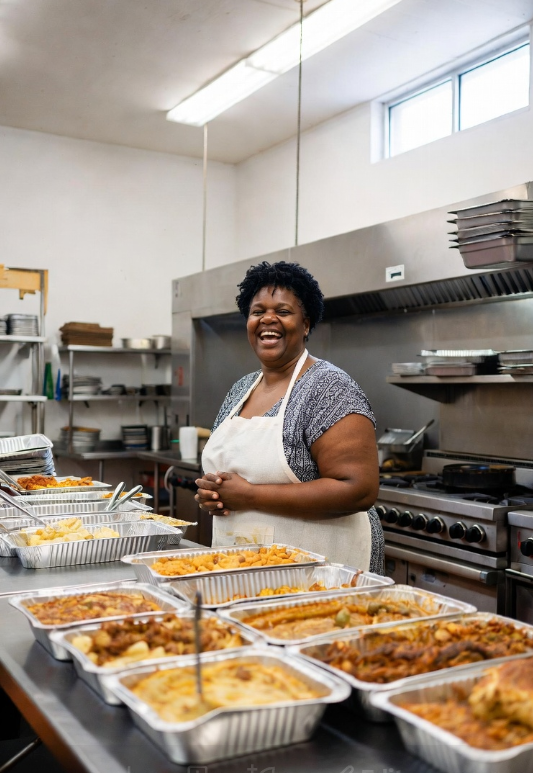
Bernice's Table happened on Tuesday—fifty people, a steady fifty now—and the conversations at the serving line were about the virus. People were worried. I gave everyone an extra piece of chicken and a larger serving of sweet potato pie, not because that fixes anything but because I know what it does to a person to have more than they expected when they were bracing for less. The generosity in a plate of food. The insistence that there is enough. The refusal to participate in the scarcity that fear tries to install. Extra chicken. More pie. That's the answer. That's always been the answer.
The extra piece of chicken I handed out at Bernice’s Table that Tuesday was not a solution—it was a statement. And when I got home and thought about what to make for the rest of the week, what to cook against the hum of dread that had settled into the house, this is the dish I kept returning to: butter chicken and cauliflower, warm and deep and rich, something that makes a pot feel like an argument against scarcity. It uses pantry staples, it stretches, it feeds people with dignity, and every time I lift the lid to stir it I feel like I am doing something useful in a week where useful things are hard to come by.
Butter Chicken and Cauliflower
Prep Time: 15 min | Cook Time: 35 min | Total Time: 50 min | Servings: 6
Ingredients
- 2 lbs boneless, skinless chicken thighs, cut into 1 1/2-inch pieces
- 1 medium head cauliflower, cut into florets (about 4 cups)
- 3 tablespoons butter, divided
- 1 tablespoon olive oil
- 1 medium yellow onion, diced
- 4 garlic cloves, minced
- 1 tablespoon fresh ginger, grated (or 1 teaspoon ground ginger)
- 2 tablespoons tomato paste
- 1 can (14.5 oz) crushed tomatoes
- 1 cup heavy cream or full-fat coconut milk
- 2 teaspoons garam masala
- 1 teaspoon ground cumin
- 1 teaspoon ground coriander
- 1/2 teaspoon turmeric
- 1/2 teaspoon paprika
- 1/2 teaspoon salt, plus more to taste
- 1/4 teaspoon cayenne pepper (optional)
- Fresh cilantro, for serving
- Cooked rice or warm naan, for serving
Instructions
- Season the chicken. Pat chicken pieces dry and season all over with salt, 1 teaspoon garam masala, and the paprika. Set aside for 10 minutes while you prep the vegetables.
- Brown the chicken. Heat 1 tablespoon butter and the olive oil in a large, heavy-bottomed pot or Dutch oven over medium-high heat. Working in batches if needed, add chicken in a single layer and cook without moving for 3—4 minutes until golden. Flip and cook 2 minutes more. The chicken does not need to be cooked through. Transfer to a plate.
- Soften the aromatics. Reduce heat to medium. Add remaining 2 tablespoons butter to the pot. Add the onion and cook, stirring occasionally, for 5—6 minutes until softened and translucent. Add garlic and ginger and stir for 1 minute until fragrant.
- Build the sauce. Add tomato paste and stir for 2 minutes, letting it deepen slightly in color. Add the remaining garam masala, cumin, coriander, turmeric, and cayenne (if using), stirring constantly for 30 seconds. Pour in the crushed tomatoes and stir well to combine, scraping up any browned bits from the bottom of the pot.
- Simmer with the chicken and cauliflower. Return the browned chicken (and any accumulated juices) to the pot along with the cauliflower florets. Stir everything together, bring to a gentle simmer, then cover and cook for 18—20 minutes, stirring once or twice, until the cauliflower is tender and the chicken is cooked through.
- Finish with cream. Reduce heat to low. Stir in the heavy cream or coconut milk and let the sauce warm through for 2—3 minutes. Taste and adjust salt. Do not let it boil after adding the cream.
- Serve. Ladle generously over rice or alongside warm naan. Scatter fresh cilantro over the top. Serve hot, with extra sauce for spooning.
Nutrition (per serving)
Calories: 410 | Protein: 34g | Fat: 26g | Carbs: 12g | Fiber: 3g | Sodium: 480mg