The kitchen is the room I live in. The other rooms are storage for memories — the dining room with its china cabinet, the living room with Paul's shipwreck books, the upstairs bedrooms where the kids grew up and which I have not entered (except to dust) in years. The kitchen is where the present happens. The kitchen is where the food is made and the dog is fed and the morning begins and the evening ends. The kitchen is the entire territory of my daily life now, and I find that this is enough.
Karin and I talked Sunday. Stockholm in winter is dark. Duluth in winter is dark. We compared darknesses. We laughed. Karin said: "Linda, do you remember the time Pappa drove us to Two Harbors in a blizzard because Mamma wanted lutefisk?" I said yes. The story unspooled across the phone for twenty minutes. I had forgotten half of it. Karin remembered all of it. The memory was, briefly, complete between us.
Mamma's hands shake more than they did last month. I do not point it out. I notice. I notice everything. The shake is small — barely visible when she is at rest, more visible when she lifts her coffee cup, most visible when she is trying to thread a needle. She still threads needles. She still bakes. She still calls me on Tuesdays at 10. The hands shake. The shaking does not stop the doing. The doing is what Mamma is.
I cooked Cardamom bread this week. The dough is enriched with butter and milk and egg, scented with cardamom that I grind fresh from the seed. The bread rises twice — once in the bowl, once braided on the pan. Forty-five minutes at 350. The kitchen smells like Christmas-coming. The bread is best the day it is baked. The second-best is toasted with butter on the third day.
Damiano. The kitchen back-room I have known for over twenty years. The pot. The ladle. The faces. Gerald. The work continues. The work is the same work it has been since 2005. The continuity is, I think, the gift the Damiano Center gives me as much as the gift I give it. We hold each other up.
Erik's house is empty now. The Fifth Street house has been sold (the new owners are a young couple from Hermantown, they are kind, they have promised to take care of it; they will paint the walls and tear up the carpet and the kitchen will become someone else's kitchen and I have made my peace with this, mostly). Erik's own house in Lakeside is being cleared out. I helped on Saturday. I packed Erik's coffee mugs. I held one for a long minute. I put it in the box.
It is enough. It has to be. And on a morning like this, with the lake doing what the lake does and the dog at my feet and the bread on the counter and the kitchen warm enough to live in, it is.
I have been reading the Bible more lately. Not in any new way. The same passages I have known since confirmation class in 1977. The Sermon on the Mount. The 23rd Psalm. The book of Ruth. Whither thou goest, I will go. The repetition of the verses is its own form of prayer. The verses do not change. I change. The change is held by the unchanged words.
It is enough.
I wrote that the bread is best the day it is baked, and second-best on the third day toasted with butter—but I have learned there is a third option, and it is this. When the loaf has gone a little stiff and the house is quiet and you want the kitchen to do one more thing for you before the week is through, you cube what is left and pour a custard over it and let the oven do the work. Bread pudding is not a recipe I think of as mine, exactly—it belongs to the category of things that were always already there, waiting. But on a Saturday morning after a week of packing boxes and phone calls and noticing small things, pulling this from the oven felt like the kitchen answering back.
Breakfast Bread Pudding
Prep Time: 15 min | Cook Time: 50 min | Total Time: 1 hr 5 min | Servings: 8
Ingredients
- 8 cups day-old bread, cut into 1-inch cubes (a sturdy enriched loaf works best)
- 4 large eggs
- 2 cups whole milk
- 1/2 cup heavy cream
- 1/3 cup granulated sugar
- 2 tablespoons brown sugar, for topping
- 1 teaspoon pure vanilla extract
- 3/4 teaspoon ground cinnamon
- 1/4 teaspoon freshly ground cardamom (optional, but recommended)
- 1/4 teaspoon salt
- 2 tablespoons unsalted butter, cut into small pieces
Instructions
- Prepare the pan. Preheat your oven to 350°F. Lightly butter a 9x13-inch baking dish and spread the bread cubes evenly across the bottom.
- Make the custard. In a large bowl, whisk together the eggs, milk, heavy cream, granulated sugar, vanilla, cinnamon, cardamom if using, and salt until fully combined and smooth.
- Soak the bread. Pour the custard evenly over the bread cubes. Press the bread down gently with the back of a spoon so every cube absorbs the liquid. Let it rest for 10 minutes.
- Top and dot with butter. Sprinkle the brown sugar over the surface. Scatter the small pieces of butter across the top.
- Bake. Bake uncovered for 45–50 minutes, until the custard is set in the center and the top is golden and slightly puffed. A knife inserted in the middle should come out clean.
- Rest before serving. Allow the pudding to cool for at least 5 minutes before cutting. Serve warm, plain or with a little maple syrup or a dusting of powdered sugar.
Nutrition (per serving)
Calories: 295 | Protein: 9g | Fat: 12g | Carbs: 37g | Fiber: 1g | Sodium: 290mg
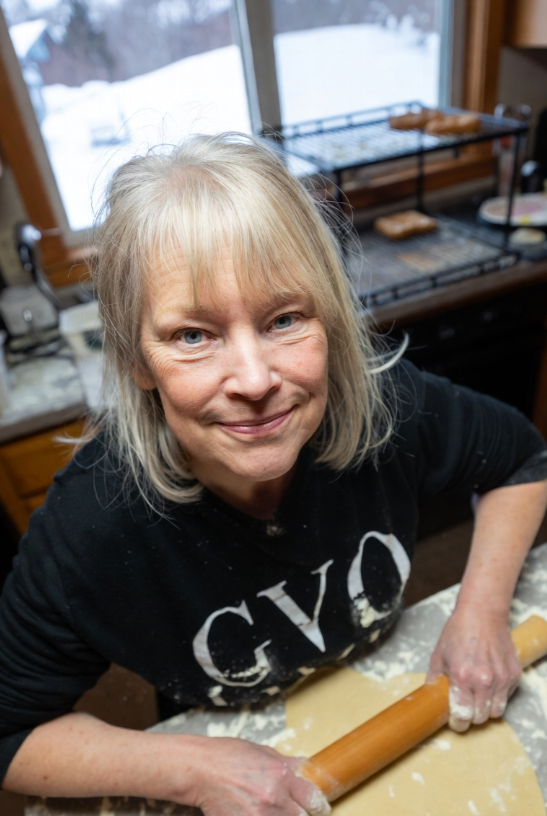
About the cook who shared this
Linda Johansson
Week 302 of Linda’s 30-year story
· Duluth, Minnesota
Linda is a sixty-three-year-old retired nurse from Duluth, Minnesota, living alone in the house where she raised her children and said goodbye to her husband. She lost Paul to ALS in 2020 after two years of watching the kindest man she'd ever known lose everything but his dignity. She cooks Scandinavian comfort food and Minnesota hotdish and the pot roast Paul loved, and she sets two places at the table out of habit because it makes her feel less alone. Every recipe she writes is a person she's loved.
