
 By
October. The darkness is coming for real now — sunset before 8 PM, sunrise after 8 AM, and the gap between them narrowing by six minutes a day, relentless, mathematical, as predictable as grief. Alaska's light loss is not gradual the way it is in the lower 48. It's aggressive. One week it's reasonably light; the next week you're driving to work in the dark and driving home in the dark and the only daylight you see is through the hospital windows between traumas.
The ER feels different as the days shorten. People come in with different injuries — fewer outdoor accidents, more indoor despair. The mental health presentations increase in October and don't stop until March. Alaska has the highest suicide rate in the country, and the darkness is a contributor that no one can medicate or legislate away. I know this as a nurse. I also know it as a patient. The darkness presses on my PTSD the way weather presses on old injuries — not enough to break, but enough to ache.
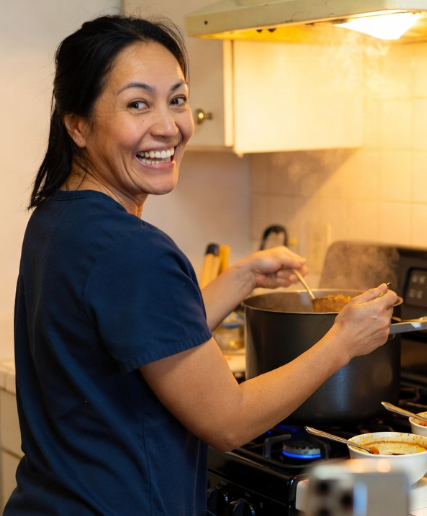
I'm managing it. Extra vitamin D. The light therapy box Dr. Reeves recommended — thirty minutes every morning, a rectangle of artificial daylight on my kitchen table that makes me feel like a houseplant trying to photosynthesize. And cooking, always cooking, because the kitchen is warm and bright and the stove is a light source that also feeds you, which is the most efficient therapy I've found.
This week I made dinuguan — pork blood stew. It's the Filipino dish that scares non-Filipinos the most, the one that gets described as "chocolate meat" to trick children into eating it, the dark, rich, vinegary stew made with pork and pig's blood that looks like nothing you'd want to eat and tastes like everything you'd come back for. Lourdes makes it for All Saints' Day, November 1st, which in the Philippines is a family holiday where you visit cemeteries and eat with the dead and the boundaries between living and gone are thin and permeable.
Finding pig's blood in Anchorage requires connections. Lourdes has connections. A Filipino butcher in Eagle River set aside a container for me — fresh, dark, with the iron smell that reminds you that food was alive before it was food. I cooked the pork with vinegar and garlic, added the blood, and watched the stew darken into something that looks ominous and tastes extraordinary — earthy, tangy, deep, with the vinegar cutting through the richness like a voice cutting through silence.
I ate the dinuguan with puto — steamed rice cakes, white and mild, the perfect counterpoint to the dark stew. Light and dark. Mild and intense. The Filipino kitchen understands contrasts. So does Alaska. So do I, now. I've been on the floor and I'm standing up. The stew is dark and the puto is light and together they make something whole.
Dinuguan is not always findable — the blood, the butcher, the connection that makes it possible — but the craving it answers is. That craving is for something dark and slow and deeply savory, something that fills the kitchen with steam while the window goes black at 4 PM, something that requires patience and rewards it. On the weeks when Lourdes’s Eagle River connection isn’t available, or when I need that same grounded, iron-rich comfort without the hour-long sourcing mission, I turn to braised beef over egg noodles — a different tradition, a different country, but the same instinct: long heat, dark liquid, meat that gives itself over completely. The stew pot on the stove is still a light source. It still feeds you.
Braised Beef Over Egg Noodles
Prep Time: 20 minutes | Cook Time: 2 hours 30 minutes | Total Time: 2 hours 50 minutes | Servings: 6
Ingredients
- 2 1/2 lbs beef chuck roast, cut into 2-inch cubes
- 1 teaspoon kosher salt, plus more to taste
- 1/2 teaspoon freshly ground black pepper
- 2 tablespoons vegetable oil
- 1 large yellow onion, diced
- 4 cloves garlic, minced
- 2 tablespoons tomato paste
- 1 cup dry red wine
- 2 cups beef broth, low sodium
- 1 tablespoon Worcestershire sauce
- 2 sprigs fresh thyme (or 1/2 teaspoon dried)
- 2 bay leaves
- 3 medium carrots, cut into 1-inch pieces
- 2 stalks celery, sliced
- 1 tablespoon cornstarch mixed with 2 tablespoons cold water (optional, for thickening)
- 12 oz wide egg noodles, cooked per package directions
- Fresh parsley, chopped, for garnish
Instructions
- Season and sear the beef. Pat beef cubes dry with paper towels and season all over with salt and pepper. Heat oil in a large Dutch oven or heavy-bottomed pot over medium-high heat. Working in batches to avoid crowding, sear beef on all sides until deeply browned, about 3–4 minutes per side. Transfer seared beef to a plate and set aside.
- Build the base. Reduce heat to medium. Add onion to the same pot and cook, stirring occasionally, until softened and translucent, about 5 minutes. Add garlic and cook 1 minute more. Stir in tomato paste and cook, pressing it into the bottom of the pot, for 2 minutes until it deepens in color.
- Deglaze and add liquid. Pour in the red wine and scrape up any browned bits from the bottom of the pot. Let the wine reduce by half, about 3 minutes. Add beef broth, Worcestershire sauce, thyme, and bay leaves. Stir to combine.
- Braise low and slow. Return the seared beef and any accumulated juices to the pot. The liquid should come about halfway up the beef; add more broth if needed. Bring to a gentle simmer, then cover and reduce heat to low. Cook for 1 hour 45 minutes.
- Add vegetables. Nestle carrots and celery into the pot around the beef. Replace the lid and continue braising for 30–40 minutes more, until beef is fork-tender and vegetables are cooked through.
- Finish the sauce. Remove and discard bay leaves and thyme sprigs. If you prefer a thicker sauce, stir in the cornstarch slurry over medium heat and simmer for 3–4 minutes until the braising liquid coats a spoon. Taste and adjust salt and pepper.
- Serve. Spoon braised beef and sauce generously over warm egg noodles. Garnish with fresh parsley and serve immediately.
Nutrition (per serving)
Calories: 520 | Protein: 41g | Fat: 16g | Carbs: 48g | Fiber: 3g | Sodium: 480mg