
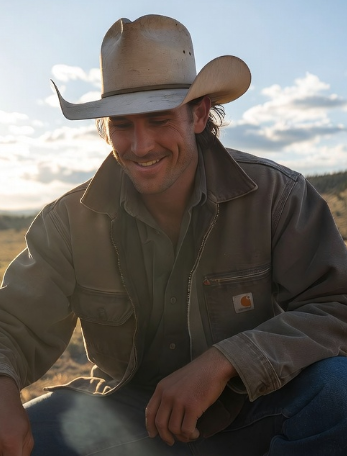
 By
By The bull was there on Tuesday morning. Five-by-five, heavy-bodied, moving across the ridgeline above the creek in the gray light just after seven. I'd been in the field at four-thirty, cold enough that the ground crackled underfoot, and by the time he appeared I'd been still for three hours. The shot was a hundred and eighty yards across the drainage. Clean. The elk was down in under ten seconds.
I sat with him for a while before I started the work. That's part of the practice I've kept since the first elk I took as an adult — just a few minutes, alone, in whatever weather there is, acknowledging what happened and what it cost. It sounds ceremonial but it isn't, exactly. It's more like honesty. You put an animal's life into your food chain and you can choose to be present for that or not. I choose to be.
The quartering and pack-out took the rest of the day and into the evening. I called Cole from the trailhead when I finally got to the truck, hands still cold, deeply tired, happy in the specific way I only get after a successful elk hunt — a tiredness that's earned and a satisfaction that goes all the way down. He asked if I needed help with processing. I said come Thursday.
This is the tenth year I've made the same elk chili recipe. I don't know when exactly I settled on it — it evolved over a few seasons when I was first back at the ranch, before sobriety, when cooking was one of the few things I was doing right — and at some point I stopped adjusting it because it was right. Dried ancho and guajillo chilis, toasted and rehydrated. Garlic, cumin, Mexican oregano. Chunks of elk shoulder rather than ground meat. Long slow braise. No beans. The kind of chili that takes a full day and rewards the patience.
I made the first pot of the season on Saturday, the day after Cole came to help with the butcher. We ate it at the kitchen table, the three of us — Cole, Patrick, me — and nobody said much because the chili didn't require commentary. Patrick had his second bowl without asking permission, which is how I knew it was good.
The chili fed us well that Saturday, but the braising method I’ve been refining for ten years traces straight back to the same dried-chili foundation that makes birria what it is — ancho, guajillo, long heat, patience. After a week that started at four-thirty in the cold and ended with Cole and Patrick at my kitchen table saying nothing because nothing needed to be said, this is the recipe I keep coming back to when I want to honor the process: low and slow, no shortcuts, worth every hour it asks of you.
Birria Tacos (Quesotacos)
Prep Time: 30 minutes | Cook Time: 3 hours 30 minutes | Total Time: 4 hours | Servings: 6–8
Ingredients
- 3 lbs beef chuck roast or bone-in short ribs (elk shoulder works beautifully here)
- 4 dried guajillo chilis, stemmed and seeded
- 2 dried ancho chilis, stemmed and seeded
- 2 dried chiles de arbol (adjust for heat)
- 4 cloves garlic, peeled
- 1 medium white onion, halved (half for the braise, half diced for serving)
- 2 Roma tomatoes, halved
- 3 cups beef broth (or venison/game stock)
- 1 tsp ground cumin
- 1 tsp Mexican oregano
- 1/2 tsp smoked paprika
- 1/4 tsp ground cloves
- 1/4 tsp ground cinnamon
- 1 1/2 tsp kosher salt, plus more to taste
- 1/2 tsp black pepper
- 2 tbsp apple cider vinegar
- 2 tbsp neutral oil
- 16 small corn tortillas
- 2 cups shredded Oaxaca cheese (or low-moisture mozzarella)
- Fresh cilantro, roughly chopped, for serving
- Lime wedges, for serving
Instructions
- Toast the dried chilis. In a dry skillet over medium heat, press the guajillo, ancho, and chile de arbol chilis flat and toast for 30 to 45 seconds per side until fragrant and slightly darkened. Do not burn them. Transfer to a bowl, cover with boiling water, and soak for 20 minutes until softened.
- Build the consomé base. In the same skillet, char the halved onion and tomato halves cut-side down over medium-high heat until deeply browned, about 5 minutes. Transfer to a blender. Drain the rehydrated chilis and add them to the blender along with the garlic, cumin, Mexican oregano, smoked paprika, cloves, cinnamon, vinegar, 1 tsp salt, and 1 cup of the beef broth. Blend until completely smooth, about 1 minute.
- Sear the meat. Pat the meat dry and season generously with the remaining salt and black pepper. Heat the oil in a large Dutch oven or heavy-bottomed pot over medium-high heat. Sear the meat in batches until deep brown on all sides, 3 to 4 minutes per side. Do not crowd the pot.
- Braise low and slow. Pour the blended chili consomé over the seared meat. Add the remaining 2 cups of broth — the liquid should come about halfway up the meat. Bring to a simmer, then reduce heat to low, cover tightly, and braise for 3 to 3 1/2 hours, turning the meat once halfway through, until it yields completely to a fork. Skim fat from the surface of the consomé and reserve it in a small bowl.
- Shred the meat. Transfer the meat to a cutting board and shred it with two forks, discarding any bones. Return the shredded meat to the pot and stir it into the consomé. Taste and adjust salt.
- Make the quesotacos. Heat a skillet or griddle over medium-high heat. Using tongs, dip a corn tortilla briefly into the consomé to coat both sides. Lay it in the skillet, add a generous pinch of cheese to one half, and a spoonful of shredded meat on top of the cheese. Fold the tortilla in half and cook 1 to 2 minutes per side until the cheese is melted and the tortilla is crispy and brick-red. Work in batches, keeping finished tacos warm.
- Serve. Ladle the remaining consomé into small bowls for dipping. Serve tacos with diced white onion, fresh cilantro, and lime wedges alongside.
Nutrition (per serving)
Calories: 510 | Protein: 36g | Fat: 26g | Carbs: 30g | Fiber: 4g | Sodium: 670mg