
 By
By Year three begins six weeks after Alejandro's death and two months before Luis Jr.'s graduation, and the timing feels like God is testing my capacity for holding contradictory emotions: grief and pride, loss and growth, a father freshly buried and a son about to launch. I am large enough to hold it. I have been holding contradictory things since I was fifteen years old and my brother was shot and I became the adult in a house of children. The holding is the skill. The skill is all I have.
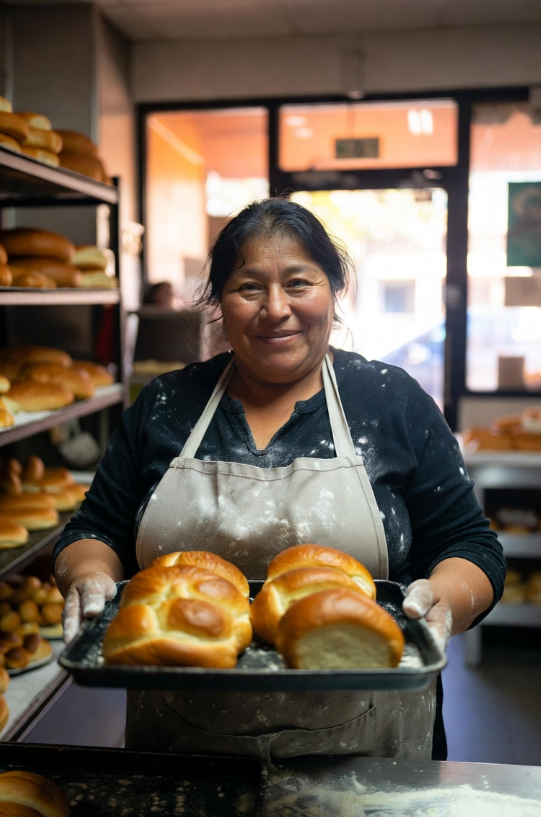
The bakery is entering its spring rhythm. Easter is in two weeks. Capirotada orders are coming in — fourteen this year, up from twelve. The conchas are steady. Sofia's chocolate conchas have become a permanent menu item, which Sofia treats as a vindication and I treat as inevitable, because Sofia's ideas are always inevitable — they arrive as suggestions and become facts. She is twelve (thirteen in July) and she has the momentum of a freight train and the precision of a Swiss watch and I have stopped pretending that the bakery is mine. The bakery is ours. Mine and Sofia's. The present and the future sharing a kitchen.
Luis Jr. is counting down. Sixty-three days until graduation. Ninety-one days until he reports to Fort Sill. He has a calendar on his bedroom wall with X's through the days, the way prisoners mark time, which is ironic because he is not escaping — he is running toward something. He is running toward the Army the way I ran toward the bridge, with fear and purpose and the absolute certainty that staying is worse than going. I understand the running. I have always understood the running. I just didn't think I'd be the thing someone was running from.
He is not running from me. I know this. He is running toward himself, toward the man he is becoming, toward a version of Luis Jr. that can only exist on the other side of basic training and deployment and the particular crucible that the military uses to turn boys into men. I know this. But the knowing doesn't stop the ache, and the ache is the same ache Rosa felt when I left Anapra, and the recognition of the ache — the hereditary nature of it, mother to daughter, repeated across a generation — is almost worse than the ache itself.
I made Rosa's capirotada. Third year running. The recipe is mine now — not mine in the sense that I invented it but mine in the sense that I have made it enough times that my hands know it without the notebook, the way a pianist knows a concerto without the sheet music. The hands remember. The piloncillo dissolves at the right temperature. The bread tears at the right thickness. The cheese melts at the right moment. I don't think about it. I just make it. And the making is the honoring, and the honoring is the grief, and the grief is the love, and the love is the capirotada, and the capirotada is Rosa, and the circle is complete.
The capirotada orders are in, the piloncillo is measured, and Easter is two weeks out — but before the bread pudding comes the beginning of the season that calls it into being. Shrove Tuesday has always been the bakery’s quiet exhale before Lent starts: simple pancakes, nothing elaborate, just eggs and flour and the understanding that indulgence is brief and waiting is long. This year, with Alejandro gone and Luis Jr. counting down his days, I wanted something that required both hands and no grief — just batter, just heat, just the clean repetition of making something that feeds people. The recipe below is what we make when the season turns.
Best Pancake Recipes for Shrove Tuesday
Prep Time: 10 minutes | Cook Time: 20 minutes | Total Time: 30 minutes | Servings: 4 (about 8 pancakes)
Ingredients
- 1 cup all-purpose flour
- 2 large eggs
- 1 1/4 cups whole milk
- 2 tablespoons unsalted butter, melted, plus more for the pan
- 1 tablespoon granulated sugar
- 1/4 teaspoon fine salt
- 1/2 teaspoon vanilla extract
- Fresh lemon juice, for serving
- Powdered sugar, for serving
- Optional toppings: maple syrup, fresh berries, whipped cream
Instructions
- Make the batter. In a large bowl, whisk together the flour, sugar, and salt. Make a well in the center and add the eggs, then pour in the milk gradually while whisking to avoid lumps. Stir in the melted butter and vanilla until the batter is smooth and pourable — it should be thinner than American-style pancake batter.
- Rest the batter. Let the batter rest at room temperature for 10 minutes. This allows the flour to fully hydrate and produces a more tender, even pancake.
- Heat the pan. Warm a 9- or 10-inch nonstick skillet or crepe pan over medium heat. Add a small pat of butter and swirl to coat. The butter should foam and then settle — this is the right temperature.
- Cook the pancakes. Pour about 1/4 cup of batter into the center of the pan and immediately tilt and swirl the pan to spread it into a thin, even round. Cook for 1 to 2 minutes until the edges look dry and the underside is lightly golden. Flip with a spatula (or your wrist, if you’re showing off) and cook another 30 to 45 seconds. Transfer to a plate and repeat with remaining batter, adding a fresh pat of butter between each pancake.
- Serve immediately. Stack the pancakes or fold them into quarters. Squeeze fresh lemon juice over the top and dust generously with powdered sugar for the traditional Shrove Tuesday finish. Set out toppings and let everyone build their own.
Nutrition (per serving)
Calories: 245 | Protein: 8g | Fat: 9g | Carbs: 32g | Fiber: 1g | Sodium: 205mg