
 By
By The hay harvest has started. We contract most of the haying out to a neighbor who has the swather and the baler — a man named Holton who does three or four ranches in the valley every summer — but I run the raking and the stacking myself. The raking is a two-day job, going over all the windrows to fluff them for drying, and the stacking is the hard part: loading the bales onto the flatbed, hauling to the hay shed, stacking them tight enough that they'll breathe correctly and won't heat up in the stack.
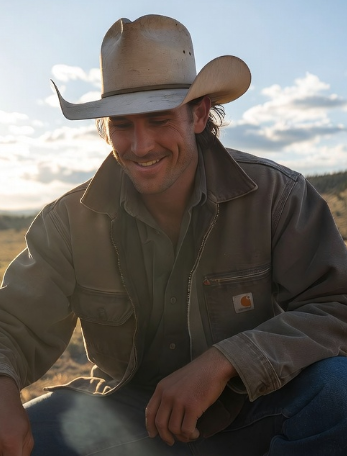
I stacked hay for four days this week. Seven hundred bales. My back and shoulders know about it. Patrick came out to the shed each afternoon to inspect the stack, which he always does, looking for the signs of improper stacking that he taught me to avoid when I was twelve: the bales that aren't tight, the channels where moisture can collect, the corners that aren't tied off. He said Wednesday that the stacking looked good. Two words. Forty years of expertise reduced to two words. I'll take them.
I've been writing more regularly for the blog and it's starting to feel less like something I do when I can't sleep and more like something I actually do, on a schedule, intentionally. Twice a week I sit at the kitchen table after dinner and write a piece. Some of them are recipes, some are technique pieces, some are more like reflections. The reflections get the most responses. People connect to the context more than the instructions. I'm careful about how much context I give. I'm not ready to write the full story. I might never be. But I can write around its edges.
Burritos for dinner Thursday from leftover hay-stacking week beef — rice and beans and shredded beef in flour tortillas. Simple food for hard work days.
Thursday’s burritos were the meal the whole week was building toward without my knowing it — the kind of dinner that makes sense only after you’ve earned it. I’d put the beef in the slow cooker before heading out to the shed that morning, and by the time I got back in, stiff-shouldered and satisfied by Patrick’s two words, it was done: fall-apart carnitas, ready to be pulled and wrapped with rice and beans into something that didn’t require me to think. If you’re coming off a stretch of hard days, this is the recipe you want waiting for you.
Beef Carnitas
Prep Time: 15 min | Cook Time: 8 hrs | Total Time: 8 hrs 15 min | Servings: 6
Ingredients
- 2 1/2 lbs beef chuck roast, trimmed
- 1 teaspoon salt
- 1/2 teaspoon black pepper
- 1 teaspoon ground cumin
- 1 teaspoon chili powder
- 1/2 teaspoon smoked paprika
- 1/2 teaspoon garlic powder
- 1/4 teaspoon dried oregano
- 1 medium onion, roughly chopped
- 4 cloves garlic, smashed
- 1 can (4 oz) diced green chiles
- 1/2 cup beef broth
- Juice of 1 lime
- Flour tortillas, cooked rice, and black beans, for serving
Instructions
- Season the beef. Pat the chuck roast dry with paper towels. In a small bowl, combine salt, pepper, cumin, chili powder, smoked paprika, garlic powder, and oregano. Rub the spice mixture evenly over all sides of the beef.
- Layer the slow cooker. Scatter the chopped onion and smashed garlic across the bottom of a 6-quart slow cooker. Place the seasoned roast on top, then pour the diced green chiles and beef broth around it.
- Cook low and slow. Cover and cook on LOW for 8 hours, or on HIGH for 4 to 5 hours, until the beef is very tender and pulls apart easily with a fork.
- Shred and finish. Transfer the beef to a cutting board and shred with two forks, discarding any large pieces of fat. Return the shredded meat to the slow cooker and stir to coat with the juices. Squeeze lime juice over the top and stir again.
- Optional: crisp the carnitas. Spread the shredded beef in a single layer on a foil-lined baking sheet and broil for 3 to 5 minutes until the edges are lightly crisped and caramelized. Watch closely.
- Serve. Pile the beef into warm flour tortillas with cooked rice and black beans. Add any desired toppings — shredded cheese, sour cream, salsa, or sliced avocado.
Nutrition (per serving)
Calories: 340 | Protein: 38g | Fat: 16g | Carbs: 6g | Fiber: 1g | Sodium: 520mg