
 By
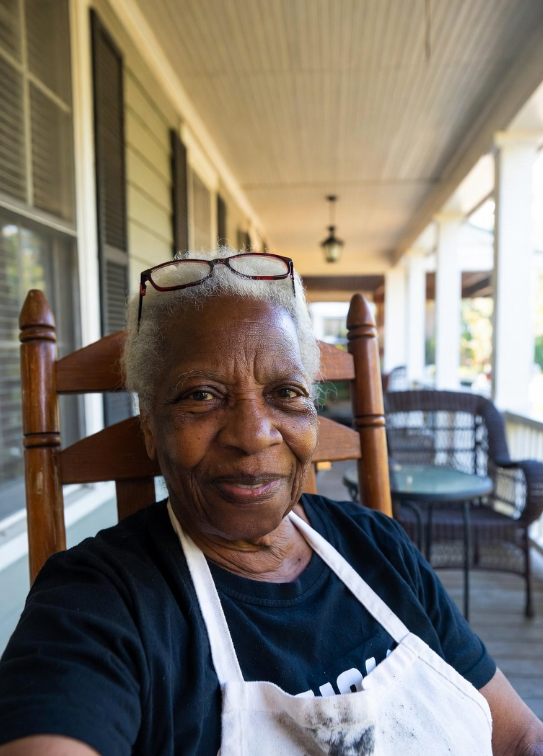
By October arrived and the garden is winding down. The tomatoes are giving their last — a few stragglers, still sweet but smaller, the plants looking tired and brown at the edges. The peppers are done. The okra is finished. But the collard greens I planted in August are coming in strong, and the turnip greens are up, and the rosemary bush doesn't care what season it is. The garden doesn't die in October here — it changes. It shifts from summer vegetables to cool-weather greens, from tomatoes and okra to collards and turnips. The garden is always teaching me something, and this month the lesson is: the end of one thing is the beginning of another.
I made turnip greens this week. Now, collard greens get all the attention in the Lowcountry, and they deserve it, but turnip greens are the quiet cousin who nobody invites to the party but who shows up anyway and steals the show. They're more bitter than collards — a sharp, peppery bite that cuts through the richness of the pot liquor. I cook them the same way: smoked turkey neck, onion, a little vinegar, three hours. You eat the greens with cornbread and you drink the pot liquor like broth, because that liquid is where all the flavor went, and throwing it away is a sin I will not commit.
Kayla called Wednesday night. She's struggling with microbiology and she sounded small, the way she used to sound when she was little and had a bad dream. I said, "Baby, you are the smartest girl I know and you are going to pass that class." She said, "What if I don't?" I said, "Then you'll take it again, and you'll pass it then, and nobody will remember or care except you, and you'll have learned it twice, which makes you twice as smart." I don't know if that's how science works, but it's how grandmother logic works, and grandmother logic has a higher success rate.
Saturday was Denise's birthday. She turned thirty-two. I made her red velvet cake — three layers, cream cheese frosting, the recipe I've used since Earl Jr.'s sixth birthday in 1983. Red velvet is a Southern cake, and there are people who will argue about whether it's supposed to be made with cocoa or beets or food coloring, and I am not one of those people because I use all three. A little cocoa for flavor, a little beet juice for moisture, and enough red food coloring to dye a tablecloth. I don't apologize for the food coloring. Denise loves a red cake, and a mother makes what her child loves.
Robert gave Denise earrings. Andre made her a card with a drawing of the family that had everyone with enormous heads and tiny legs. Monique wrote her a poem about mothers, careful cursive on lined paper, and Denise read it and cried, and I stood in the kitchen doorway watching my baby girl be a mother and I thought: this is the cycle. We feed them. We love them. They grow up and feed and love their own. And the table gets longer.
Now go on and feed somebody.
After a day like that—all that fullness, all those tears, Monique’s careful cursive and Andre’s enormous heads—I wasn’t going to stand at the stove for two hours. But I still wanted to feed people, because that’s what I know how to do. The Beef and Kale Skillet is what I made that evening: simple, hearty, the kind of thing that says I love you without making a production of it. Here’s how it goes.
Beef and Kale Skillet
Prep Time: 10 minutes | Cook Time: 25 minutes | Total Time: 35 minutes | Servings: 4–6
Ingredients
- 1 lb ground beef (80/20)
- 1 large bunch kale (about 4 cups), stems removed and leaves roughly chopped
- 1 medium yellow onion, diced
- 3 cloves garlic, minced
- 1 can (14.5 oz) diced tomatoes, with juices
- 1 cup beef broth
- 1 tsp smoked paprika
- 1/2 tsp crushed red pepper flakes
- 1 tsp apple cider vinegar
- 2 tbsp olive oil
- Salt and black pepper to taste
Instructions
- Brown the beef. Heat a large cast iron skillet or heavy skillet over medium-high heat. Add the ground beef and cook, breaking it up as you go, until browned and cooked through, about 7–8 minutes. Drain excess fat and set beef aside.
- Soften the aromatics. In the same skillet, add the olive oil over medium heat. Add the diced onion and cook until softened and translucent, about 5 minutes. Add the garlic and cook 1 minute more, stirring so it doesn’t burn.
- Build the base. Return the beef to the skillet. Stir in the smoked paprika and red pepper flakes. Pour in the diced tomatoes with their juices and the beef broth. Stir everything together and let it come to a gentle simmer.
- Add the greens. Add the chopped kale in two or three batches, stirring each addition down into the liquid. Don’t worry — it will wilt. Cover the skillet and cook 8–10 minutes, stirring once or twice, until the kale is tender and has soaked up the flavor of the broth.
- Finish and season. Stir in the apple cider vinegar. Taste and adjust salt and pepper. The vinegar does what it always does with greens — it cuts through and brightens everything up. Serve hot, with cornbread if you have it.
Nutrition (per serving)
Calories: 275 | Protein: 21g | Fat: 17g | Carbs: 11g | Fiber: 3g | Sodium: 415mg