
 By
By Last week of September. We drove to Las Cruces for chile-roasting weekend. The annual pilgrimage. The thing I have done since 1985 except for the COVID year, with the family, with the cooler, with the bushels and the drum and the smoke and the smell that makes every cell in my body remember that I am from a place. We left Thursday night after Diego's afternoon film session and drove through the night, with the kids asleep in the back, Lisa next to me with the seat reclined, the radio on a Mexican AM station out of southern Colorado that fades in and out. We arrived in Las Cruces at four in the morning and crashed at Mamá and Papá's. We were up at eight to start the day.
Mamá had ordered the bushels — three of them this year, more than usual, because she said this year was a "big year" and we needed extra chile for the Christmas tamales and for whatever Lisa needed and for whatever I wanted to ship to my staff in Denver. Mamá ordered from the same stand on Highway 28 that she has ordered from for thirty-five years. Don Aurelio. He delivered Friday morning. Three crates of fresh-picked Hatch green chile, the kind with the deep green color and the firm skin and the pleasant, narcotic herbal smell that you can never describe to anyone who has not stood next to a crate of fresh Hatch chile in late September. The smell starts the year over.
I set up the drum on the patio. The drum is a fifty-five-gallon perforated steel cylinder mounted horizontally on a frame, with a hand crank, a propane burner running underneath, and a hopper to load the chiles into. It is a mechanical wonder of low-tech engineering, and Mamá has had it since I was twelve, and it has roasted thousands of pounds of chile over forty years. I lit the burner. The flame caught. I started loading the first crate. Mamá sat in her lawn chair. Papá brought out his coffee. Diego helped me load. Sofia stood near the drum and watched. The twins ran in and out of the yard with the cousins.
The first batch took twenty minutes. The skins blackened and blistered. I rolled them out onto a big metal tray. Mamá moved them into a heavy garbage bag to steam, which loosens the skins and makes them peel-able. After ten minutes in the bag, we dumped the chiles back onto the tray and the family started peeling. Peeling chiles is a job that hurts your hands. Capsaicin gets under your fingernails. By the end of the day everyone's hands burn. You wash them with soap and oil and lemon juice and they still burn. The burning is the toll. The toll is the thing that makes the chile feel earned.
Mamá peeled with the speed and precision of a woman who has been peeling chiles for sixty years. Lisa peeled with the focused diligence of a woman who learned to peel chiles in her thirties from Mamá and who is not as fast but who is just as careful. Diego peeled. Sofia peeled. The twins, ten years old, were drafted into the assembly line. Marco lasted forty minutes before he asked if he could go play. Elena lasted ninety minutes and finished her first crate before she went to play.
Mamá and I worked the drum together. She sat. I cranked. We talked. About my brother Miguel and his grandchildren. About my sister Patricia and her husband's knee surgery. About Gabby. About Marisol and Alex, who came by Friday afternoon for a few hours. About Papá, who is eighty, and whose decline is real, but who at this moment was sitting on the back porch in his recliner with a cup of black coffee and was tracking the conversation. Mamá told me he was forgetting more things this year. She told me she had taken his keys away in August because he had gotten lost driving home from the store. She told me with the matter-of-fact tone of a woman who has been managing the people she loves for fifty years and who knew that the management was just going to keep getting harder and that there was no point in pretending otherwise.
Friday evening Papá came outside. He stood next to the drum for about five minutes with his hand on my shoulder. He did not say much. He looked at the chile. He looked at the smoke. He looked at the kids running around the yard. He said, "Carlos." I said, "Yeah, Papá." He said, "Good chile this year." I said, "Yes, sir." He said, "You are doing it right." I said, "I learned from Mamá." He said, "Yes, you did." He squeezed my shoulder. He went back inside. I cranked the drum. I did not cry. I did, briefly. Mamá did not say anything. She handed me a glass of water without comment.
By Saturday night we had finished. Three crates. Forty-eight pounds of roasted chile. Bagged in Ziplocs. Labeled with the date and the heat level. Mamá kept a third. I took two-thirds back to Denver in the cooler, including separate bags for Tony Davis, Mike Reyes, the equipment guy, the trainer, three of the booster moms, and one for Hayley's parents. The chile network spreads like a river through the year. I sleep better when I know the chile is in the right freezers.
Sunday morning we went to Mass. Father Domingo said something in his homily about how we are all stewards of the things that came before us — the land, the recipes, the prayers, the family stories — and our job is to receive them and to pass them on. I do not think Father Domingo had any idea how directly he was speaking to me. Or maybe he knew. He has been a priest for forty years. He probably knew. I sat in the pew with Lisa and the kids and I thought about the drum, and the chile, and Mamá in the lawn chair, and Papá on the back porch. The roads of the Medinas in this town go back four hundred years. The chile goes back longer. We are stewards. We are not owners. The job is to keep the drum turning. The road bends. Feed your people. The game is won at the table.
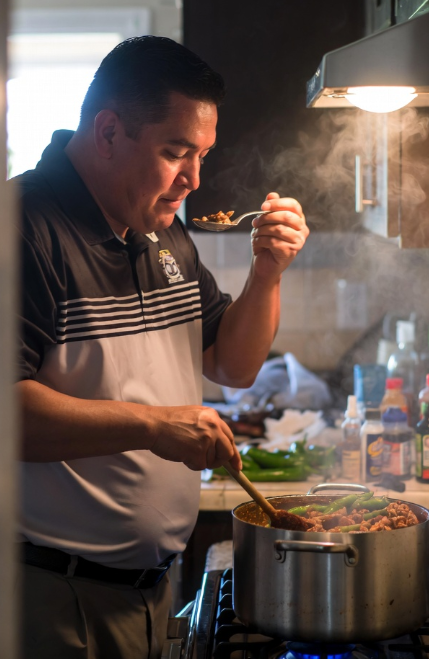
When I got back to Denver with the cooler and the bags labeled by heat level and the knowledge that the right freezers had what they needed, I wanted to cook something for the people who were going to receive that chile—something that matched the seriousness of the weekend, something worth gathering around. These Balsamic Glazed Beef Skewers became the answer: the kind of dish you make when you have been reminded that feeding people is not a small thing. Mamá kept the drum turning for forty years. The least I can do is fire up the grill.
Balsamic Glazed Beef Skewers
Prep Time: 20 minutes + 2 hours marinating | Cook Time: 12 minutes | Total Time: 2 hours 32 minutes | Servings: 6
Ingredients
- 2 lbs beef sirloin, cut into 1 1/2-inch cubes
- 1/3 cup balsamic vinegar
- 3 tablespoons olive oil
- 2 tablespoons soy sauce
- 2 tablespoons honey
- 4 cloves garlic, minced
- 1 teaspoon fresh rosemary, finely chopped
- 1/2 teaspoon smoked paprika
- 1/2 teaspoon black pepper
- 1/2 teaspoon kosher salt
- 1 red bell pepper, cut into 1 1/2-inch pieces
- 1 yellow bell pepper, cut into 1 1/2-inch pieces
- 1 red onion, cut into 1 1/2-inch wedges
- Metal or soaked wooden skewers
Instructions
- Make the marinade. In a medium bowl, whisk together balsamic vinegar, olive oil, soy sauce, honey, garlic, rosemary, smoked paprika, salt, and pepper until well combined.
- Marinate the beef. Add the beef cubes to the marinade, toss to coat, cover, and refrigerate for at least 2 hours or overnight. The longer it sits, the deeper the glaze will penetrate.
- Prepare the grill. Preheat a gas or charcoal grill to medium-high heat, about 400°F. Lightly oil the grates.
- Thread the skewers. Remove beef from the marinade, reserving the liquid. Thread beef, bell peppers, and onion onto skewers in alternating pieces, leaving a small gap between each so they cook evenly.
- Reduce the glaze. Pour the reserved marinade into a small saucepan and bring to a boil over medium heat. Simmer 4–5 minutes until slightly thickened. Set aside for basting.
- Grill the skewers. Place skewers on the hot grill and cook 10–12 minutes total, turning every 2–3 minutes and brushing with reduced glaze in the last 4 minutes, until beef reaches desired doneness (130°F for medium-rare, 145°F for medium).
- Rest and serve. Remove skewers from the grill and let rest 3 minutes before serving. Brush with any remaining glaze just before plating.
Nutrition (per serving)
Calories: 320 | Protein: 34g | Fat: 14g | Carbs: 12g | Fiber: 1g | Sodium: 430mg