
 By
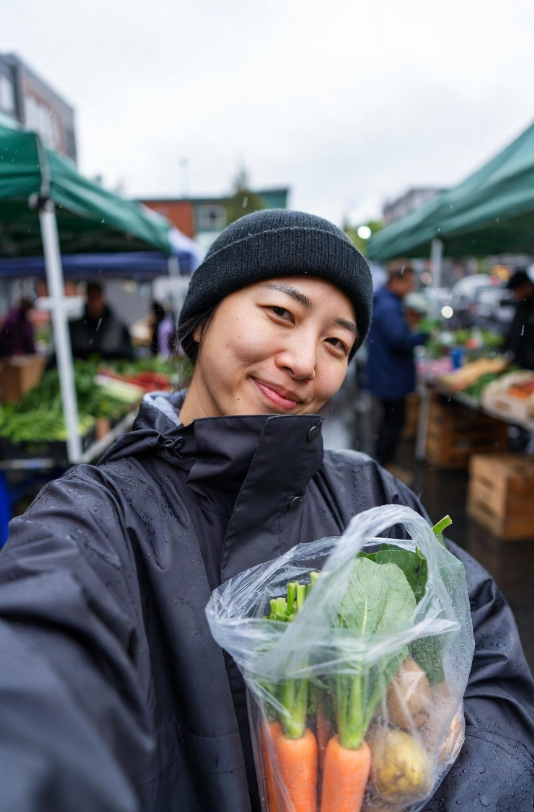
By The rain is serious now. Seattle October rain — not the gentle mist of spring but the committed, sideways, you-are-going-to-be-wet rain that separates the tourists from the residents. I don't mind it. I grew up in it. David used to say, "Seattleites don't tan — we rust," and I always laughed, and I still laugh, because it's true and because David's jokes are gentle and consistent and one of the things I love most about him.
This week in therapy, Dr. Yoon gave me homework. She asked me to write a letter — not to send, just to write — to my birth mother. The prompt: "Tell her who you are." Not who you were told to be. Not who you performed for David and Karen. Who you actually are. I said I'd do it. I went home and sat at my desk for an hour and wrote nothing. The cursor blinked. The apartment was quiet. The rain hit the windows. I couldn't start because I didn't know who I actually am, and that was the whole point — that was why Dr. Yoon gave me the assignment.
I started with the cooking. "Dear... (I don't know what to call you. Mother? That word belongs to Karen. Birth mother? That's clinical. Woman who gave birth to me? That's awkward. I'll just start.) I am twenty-three years old and I live in Seattle. I am a software engineer. I make kimchi. I make it with gochugaru and napa cabbage and fish sauce and my hands turn red and I don't wear gloves because I want to feel it. My kimchi is getting better. I wonder if it tastes like yours."
That unlocked something. I wrote for two hours. I told her about Karen and David. About Kevin. About the split-level in Bellevue and the golden retriever and the pot roast. About the kids who asked where I was "really from." About college and the kimchi jjigae that made me cry. About Amazon and the condo and the silence and the rice cooker and the day I stood outside a Korean restaurant for three weeks before going in. I told her I'm learning Korean. I told her I go to therapy. I told her I'm angry — actually wrote the word angry — and that the anger is new and necessary and directed not at her but at the situation, at the circumstances, at the world that made her give up a baby and made me grow up without my food and my language and my face reflected in my parents' faces.
I told her about the kimchi. I told her I imagine her hands look like mine. I told her I eat kimchi jjigae on Tuesdays and doenjang jjigae on Thursdays and rice every day, always rice, because rice is the foundation and I'm building a foundation from ingredients because nobody gave me the cultural one I was supposed to have. I told her I'm not angry at her. I told her I understand, or I'm trying to understand. I told her I don't know if I'll ever meet her but I think about her every time I cook Korean food, which means I think about her almost every day now, which is more than I thought about her for the first twenty-two years of my life, and I'm sorry about that — the not-thinking — but I'm here now. I'm thinking now. I'm cooking now. I'm becoming Korean now, late, imperfectly, with YouTube tutorials and a therapist and hands that are learning what they should have known from the beginning.
I didn't cook much this week. The letter took everything. I ate kimchi and rice and leftover japchae and didn't have the energy for anything new. Sometimes the cooking is active — experimenting, learning, building — and sometimes it's passive — sustaining, comforting, maintaining. This was a maintaining week. The letter was the work. The food was just fuel. And that's okay. Not every week is a cooking week. Not every bowl of rice needs to be a meditation on identity. Sometimes rice is just rice and you eat it and go to bed and the rain is on the windows and the letter is in a folder on your desktop, unsent and unprecedented and the most honest thing you've ever written.
But when the week was over and the letter was still sitting there, unsent, I wanted to make something that didn’t require me to be inventive or brave — just patient. Stock felt right: something foundational, something that simmers quietly while you sit nearby and don’t have to perform anything. It’s the kind of cooking that maintains without demanding, which is exactly what I needed after a week of being wrung out. Here’s how I made it.
Asian Chicken Stock — The Foundation You Build Yourself
Prep Time: 15 min | Cook Time: 2 hrs | Total Time: 2 hrs 15 min | Servings: 8 cups
Ingredients
- 3 lbs chicken bones or a whole cut-up chicken (backs, necks, and carcasses work well)
- 12 cups cold water
- 1 (3-inch) piece fresh ginger, unpeeled, sliced into coins
- 6 scallions, root ends trimmed, halved crosswise
- 6 garlic cloves, smashed and unpeeled
- 1 small onion, quartered
- 2 tablespoons soy sauce
- 1 teaspoon whole black peppercorns
- 1 teaspoon sesame oil (added off-heat)
- Salt to taste
Instructions
- Blanch the bones. Place chicken bones in a large stockpot and cover with cold water. Bring to a boil over high heat and cook for 5 minutes. Drain and rinse the bones and pot thoroughly under cold water. This step removes impurities and keeps your stock clean and clear.
- Build the base. Return the blanched bones to the clean pot. Add the 12 cups of fresh cold water, ginger, scallions, garlic, and onion. Bring to a boil over medium-high heat.
- Simmer low and slow. Once boiling, reduce heat to the lowest setting that maintains a gentle, lazy simmer — barely a bubble. Add the soy sauce and peppercorns. Do not cover fully; leave the lid slightly ajar. Simmer for 1 hour 45 minutes to 2 hours.
- Skim as needed. In the first 20 minutes, use a ladle or fine-mesh spoon to skim off any foam or fat that rises to the surface. After that, it will mostly take care of itself.
- Strain and finish. Pour the stock through a fine-mesh strainer into a large bowl or second pot, pressing lightly on the solids. Discard the solids. Stir in the sesame oil. Taste and adjust salt.
- Cool and store. Let the stock cool to room temperature, then refrigerate uncovered until cold. Skim off any solidified fat from the surface before using. Store refrigerated for up to 5 days or freeze in 2-cup portions for up to 3 months.
- Use it. Ladle into a pot with kimchi, tofu, and pork for kimchi jjigae. Stir it into a rice cooker in place of plain water. Pour it over leftover rice with a soft egg and call it a Tuesday. This is the thing underneath everything else.
Nutrition (per serving)
Calories: 45 | Protein: 6g | Fat: 2g | Carbs: 1g | Fiber: 0g | Sodium: 280mg