
 By
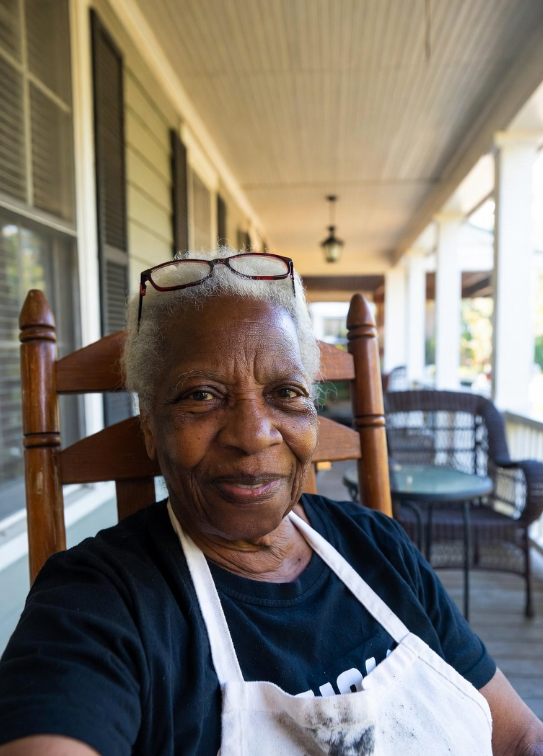
By Three weeks. Michael Devon Brooks is due in three weeks. Twenty-one days. The countdown is real, the nursery is ready, the freezer is full, and I am sitting in my kitchen at five a.m. because I cannot sleep because a baby is coming — not MY baby, but a baby that carries my blood and my son's name and my mother's heritage and my husband's steadiness, and that baby is three weeks from arriving in a world that doesn't know yet how lucky it's about to be.
The bag is packed. Not the hospital bag — Kayla packed that weeks ago, with the efficiency of a charge nurse who has seen enough unprepared parents to know exactly what you need and exactly what you don't. I mean MY bag. The grandmother bag. The bag that contains: a change of clothes (because hospitals are long and uncomfortable), snacks (because hospital cafeterias are crimes against food), my journal (because I am going to write down the moment I meet this child and I want the words to be immediate, not remembered), and a container of shrimp and grits (because the first meal Kayla eats after having this baby will be made by my hands, in my kitchen, the way the first meal should always be made: with intention).
Devon is nervous. He calls me every other day now, not for medical advice — he knows better than to call a sixty-nine-year-old grandmother for medical advice, that's what the obstetrician is for — but for reassurance. "Granny Dot, are we ready?" he asks. And I say what I said to Kayla when she first told me they were trying: "Nobody is ready, baby. You just decide and then you become ready." He exhales. The exhale is the sound of a good man accepting what he cannot control. The exhale is the first breath of fatherhood.
I've been cooking. Of course I've been cooking. The freezer meals for Kayla are done — twenty-eight containers, labeled, dated, with reheating instructions written on masking tape in my handwriting. Collard greens. Mac and cheese. Chicken and dumplings. Red rice. Oxtails. Chicken broth. Everything a new mother needs to survive the first month, everything a grandmother can give when she can't be there every minute, everything the food can carry when the arms can't reach.
Made chicken broth tonight. Just broth. The foundation. The thing that holds everything else together. Chicken, water, onion, carrot, celery, salt, time. Time is the ingredient that nobody writes down and everybody needs. Time makes the broth. Time makes the grandmother. Time makes the baby. Time makes everything that matters.
Now go on and feed somebody.
The broth is already in the freezer, labeled in my handwriting next to the collard greens and the oxtails — that’s the foundation, and the foundation is done. But a new baby means a celebration meal is coming too, and celebration meals in this family have always meant something whole, something glazed, something that looks like you meant it. I’ve been thinking about these Apricot-Glazed Cornish Hens since Devon exhaled on the phone — that exhale that told me he was ready, even if he doesn’t know it yet. Sweet and savory and finished with heat, the kind of thing you set on the table and everybody goes quiet for a second before they reach. That’s the meal I’m cooking the week Michael Devon Brooks comes home.
Apricot-Glazed Cornish Hens
Prep Time: 15 min | Cook Time: 1 hr | Total Time: 1 hr 15 min | Servings: 4
Ingredients
- 2 Cornish game hens (about 1 1/2 lbs each), patted dry
- 1/2 cup apricot preserves
- 2 tablespoons soy sauce
- 1 tablespoon Dijon mustard
- 2 cloves garlic, minced
- 1 tablespoon olive oil
- 1 teaspoon fresh thyme leaves
- 1/2 teaspoon black pepper
- 3/4 teaspoon kosher salt
- Fresh rosemary sprigs, for garnish (optional)
Instructions
- Preheat and prep. Heat oven to 375°F. Place a wire rack inside a rimmed baking sheet and set aside. Pat both hens completely dry with paper towels — dry skin is what gives you that lacquered, golden finish.
- Make the glaze. In a small saucepan over medium-low heat, stir together the apricot preserves, soy sauce, Dijon mustard, and minced garlic. Warm for 3–4 minutes until the preserves melt and the glaze becomes smooth and glossy. Remove from heat and divide in half.
- Season the hens. Rub the outside of each hen with olive oil, then season generously with salt, pepper, and thyme. Tuck the wings behind the back so they don’t burn.
- First glaze and roast. Brush each hen with half of the apricot glaze, coating the breast, thighs, and legs. Place breast-side up on the rack and roast for 40 minutes.
- Second glaze. Pull the hens from the oven and brush on the remaining glaze. Return to the oven and roast another 15 minutes.
- Caramelize and finish. Increase oven temperature to 425°F and roast a final 8–10 minutes, until the skin is deep amber, caramelized, and an instant-read thermometer inserted into the thickest part of the thigh reads 165°F.
- Rest before serving. Remove from the oven and let the hens rest on the rack for 10 minutes before halving or plating. Garnish with fresh rosemary sprigs if you want it to look like the occasion it is.
Nutrition (per serving)
Calories: 430 | Protein: 37g | Fat: 19g | Carbs: 24g | Fiber: 0g | Sodium: 610mg