I baked at 6 AM because the house was too quiet and the oven is the surest way I know to make a house feel inhabited. The oven generates heat, smell, the small ticks of metal expanding, the predictable rise of dough on the counter, the timer I can hear from three rooms away. The oven is, in some real sense, my roommate. I have not told this to my children. They would gently suggest something. The oven and I prefer no suggestions.
Erik came over Sunday. He chopped wood for me without being asked — the pile by the back door was getting low, and Erik had noticed, and Erik had brought his ax, and Erik had spent forty-five minutes splitting and stacking and not making a single comment about how the wood needed to be done. He drank coffee. He left. The whole visit was forty-five minutes. It was perfect. Erik is a perfect brother in the specific way of Scandinavian brothers — silent, useful, present.
Mamma called Tuesday. Her voice was small but her mind was sharp. She wanted to talk about Pappa, of all people. About the time he fixed her bicycle in 1962. About how he always said "there" when he had finished a job, the same way every time, the small declarative finality. She had not thought of this in years, she said. The memory came to her in the kitchen, while she was peeling an apple. I listened. I did not interrupt. The memory was unprovoked and total. The memory is everything.
I cooked Cream of mushroom soup this week. Real mushrooms — cremini, shiitake, dried porcini reconstituted. Sautéed in butter with shallot and thyme, then deglazed with sherry, then chicken stock, simmered, then cream, then blended half-smooth. The soup is the color of wet bark. The flavor is the woods in November.
The Damiano Center on Thursday. Gerald told me a long story about a bus accident he had survived in 1988 in Duluth. He had not told me before. He has been telling me more stories lately. I am the audience he has been gathering, slowly, over years. I listen. I do not interrupt. The stories are the gift he is giving.
Pappa would have liked this week. The fish were biting. The weather was clear. The Vikings won. He would have approved of all three. Pappa was a man of small approvals — he did not say much, but he made a small grunt of acknowledgment when something was right, and the grunt was the highest praise he gave. I miss the grunt. I miss being given the grunt.
It is enough. Paul is not here. Mamma is not here. Pappa is not here. Erik is not here. They are all here in the kitchen, in the smell, in the taste, in the wooden spoon and the bread pans and the marble slab. The dead are not where the body went. The dead are in the kitchen.
I keep a small notebook on the kitchen counter — green spiral-bound, from the drugstore. I write in it most days. The notebook holds the things I do not want to forget — Erik's stories about Pappa, Karin's notes about Mormor, Sophie's first words about her babies, the recipes I have changed slightly and want to remember in their changed form. The notebook is a small museum. The museum will go to Anna eventually, and then to Sophie, and then to Sophie's daughter Ingrid, and then onward.
It is enough.
It was Mamma’s apple that stayed with me longest this week—not the soup, not the bread, but the image of her standing at her counter peeling an apple while a 1962 memory arrived unbidden and whole. I wanted to make something that honored that moment without making it heavy, something bright and crisp that still carried the woodsy, autumnal weight of the week. Apple Pecan Salad was exactly right: the sweetness of the apple, the earthy crunch of the pecans, the way it holds a little sharpness underneath—it is a small, honest thing, which is what this week asked for.
Apple Pecan Salad
Prep Time: 15 min | Cook Time: 0 min | Total Time: 15 min | Servings: 4
Ingredients
- 6 cups mixed salad greens (such as romaine, arugula, or spring mix)
- 2 medium crisp apples (such as Honeycrisp or Fuji), cored and thinly sliced
- 3/4 cup pecan halves, toasted
- 1/3 cup dried cranberries
- 1/4 cup thinly sliced red onion
- 1/2 cup crumbled gorgonzola or blue cheese
- Dressing:
- 3 tablespoons apple cider vinegar
- 2 tablespoons honey
- 1 teaspoon Dijon mustard
- 1/4 teaspoon salt
- 1/4 teaspoon black pepper
- 1/3 cup olive oil
Instructions
- Toast the pecans. Place pecan halves in a dry skillet over medium heat. Stir frequently for 3–4 minutes until fragrant and lightly browned. Remove from heat and let cool.
- Make the dressing. In a small bowl or jar, whisk together the apple cider vinegar, honey, Dijon mustard, salt, and pepper. Slowly drizzle in the olive oil while whisking until the dressing is emulsified and smooth. Taste and adjust seasoning.
- Slice the apples. Core the apples and cut into thin half-moon slices. If preparing ahead, toss slices lightly in a little lemon juice to prevent browning.
- Assemble the salad. Spread the greens across a large serving bowl or platter. Arrange the apple slices evenly over the greens. Scatter the toasted pecans, dried cranberries, and red onion over the top.
- Add the cheese. Crumble the gorgonzola or blue cheese evenly over the salad.
- Dress and serve. Drizzle dressing over the salad just before serving. Toss gently if desired, or serve with dressing on the side. Serve immediately.
Nutrition (per serving)
Calories: 380 | Protein: 6g | Fat: 28g | Carbs: 30g | Fiber: 4g | Sodium: 310mg
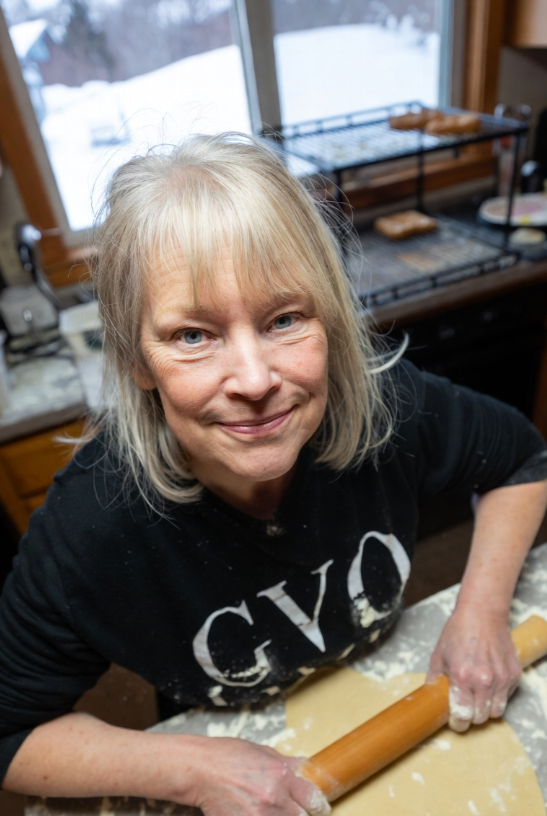
About the cook who shared this
Linda Johansson
Week 305 of Linda’s 30-year story
· Duluth, Minnesota
Linda is a sixty-three-year-old retired nurse from Duluth, Minnesota, living alone in the house where she raised her children and said goodbye to her husband. She lost Paul to ALS in 2020 after two years of watching the kindest man she'd ever known lose everything but his dignity. She cooks Scandinavian comfort food and Minnesota hotdish and the pot roast Paul loved, and she sets two places at the table out of habit because it makes her feel less alone. Every recipe she writes is a person she's loved.
