
 By
By Mi hija se casó. My daughter got married.
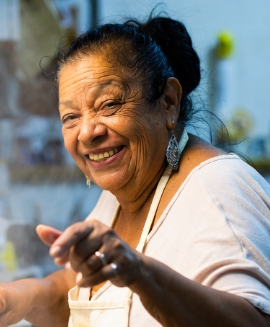
Rosa María Delgado-Ortiz married Carlos Antonio Medina on Saturday, October 19th, in Hartford, Connecticut, in a church that smelled like flowers and sounded like the future and felt like the culmination of every Sunday dinner I have ever cooked, every plate I have ever served, every prayer I have ever whispered into the steam rising from a pot of rice. My daughter got married. My daughter. The one who lined up her dolls and lectured them about fractions. The one who teaches third-graders with the authority of a woman who learned authority from watching me run a hospital kitchen. My Rosa.
The ceremony was bilingual — English and Spanish, because we are bilingual people and our love is bilingual and God, if God is paying attention, speaks both. The priest read from Corinthians. Rosa's vows were in English. Carlos's were in Spanish, which he practiced for three months because Carlos is from the Bronx and his Spanish is Bronx Spanish, which is a different dialect, and Rosa coached him until the accent was right, which tells you everything about their marriage: she will teach him, he will learn, and the effort is the love.
I cooked. I cooked everything. The pernil was — and I say this with the objectivity of a woman who has made pernil for forty years — transcendent. The skin crackled. The meat fell from the bone. The garlic had done its work over five days of marination and the result was a pork shoulder that tasted like Puerto Rico distilled into protein, like Bayamón in January when the air smells like roasting meat from every house on the block. Eighty people ate my food. Eighty people ate arroz con gandules and tostones and habichuelas and ensalada de coditos and David's tres leches and my flan, and every plate came back empty, and every empty plate was a love letter returned.
David's groom's cake — the chocolate, rum, espresso creation with guava cream — was extraordinary. I told him it was good. He knew what good means. Jenny's mother Diane brought the chicken marsala, and it sat on the table next to my arroz con gandules, and both were eaten, and the table held both, the way the family holds both — gringa and boricua, English and Spanish, marsala and gandules.
Eduardo walked Rosa down the aisle and said nothing because Eduardo says everything with his face. I sat in the front pew and wept from the processional to the recessional and made no effort to pretend otherwise. Mami was there, in the front row, in a wheelchair, wearing the blue dress she wore to my wedding in 1988. She looked at Rosa and said, loudly, to no one in particular, She looks like me. She was right. Rosa looks exactly like her. The mother-daughter dance made everyone cry. I danced with Eduardo afterward and he held me close and I said, We did it. We raised her. She's married. He said, She's happy. I said, That's the same thing. He didn't argue. He never argues when I'm right.
Between the pernil and the flan and David’s magnificent chocolate rum cake, my hands were full and my heart was fuller — but when people ask me what they can bring to a table like the one we built for Rosa and Carlos, I always say: bring something sweet and small and shareable, something that travels from hand to hand across a room full of people who love each other. Alfajores are exactly that. They are the cookie of celebrations, of Latin kitchens, of grandmothers pressing dulce de leche between two tender shortbread rounds and handing them to grandchildren — and after a wedding day that was, in every way, about the sweetness two families can make together, this is the recipe I want to leave you with.
TRANSITION_STARTAlfajores Cookies
Prep Time: 25 minutes | Cook Time: 12 minutes | Total Time: 37 minutes (plus 30 minutes chilling) | Servings: 24 cookies
Ingredients
- 1 cup (2 sticks) unsalted butter, softened
- 1/2 cup powdered sugar, plus more for dusting
- 1 teaspoon vanilla extract
- 1 teaspoon lemon zest
- 1 1/2 cups all-purpose flour
- 3/4 cup cornstarch
- 1/4 teaspoon fine sea salt
- 1 cup dulce de leche (store-bought or homemade)
- 1/2 cup shredded sweetened coconut (optional, for rolling edges)
Instructions
- Cream the butter. In a large bowl, beat the softened butter and powdered sugar together with a hand or stand mixer on medium speed until pale and fluffy, about 3 minutes. Add the vanilla extract and lemon zest and beat until just combined.
- Mix the dough. In a separate bowl, whisk together the flour, cornstarch, and salt. Add the dry ingredients to the butter mixture in two additions, mixing on low speed until a soft dough comes together. Do not overmix.
- Chill. Shape the dough into a flat disk, wrap in plastic wrap, and refrigerate for at least 30 minutes. This step is important — it keeps the cookies tender and prevents spreading.
- Preheat and roll. Preheat your oven to 350°F (175°C) and line two baking sheets with parchment paper. On a lightly floured surface, roll the dough out to about 1/4-inch thickness.
- Cut the rounds. Using a 1 1/2- to 2-inch round cookie cutter, cut out rounds and place them about 1 inch apart on the prepared baking sheets. Gather and re-roll scraps as needed.
- Bake. Bake for 10–12 minutes, until the bottoms are just barely golden and the tops remain pale. Do not overbake — these cookies should be soft and delicate. Let cool on the pan for 5 minutes, then transfer to a wire rack to cool completely.
- Fill and sandwich. Spread about 1 teaspoon of dulce de leche on the flat side of one cookie. Press a second cookie gently on top, flat side down, to form a sandwich. Repeat with remaining cookies.
- Finish. Roll the exposed edges of each sandwich in shredded coconut if using, then dust the tops generously with powdered sugar. Serve at room temperature. Store in an airtight container for up to 5 days.
Nutrition (per serving)
Calories: 148 | Protein: 1g | Fat: 8g | Carbs: 18g | Fiber: 0g | Sodium: 45mg