
 By
By Summer 2025. Training camp is five weeks away. I've been running this program for seven seasons now and the summer preparation has the quality of something deeply practiced — not automatic, but earned. I know what the first week of camp reveals. I know which practices in July predict which games in October. The knowledge is in the bones now. This is what longevity in one place gives you that you cannot acquire any other way.
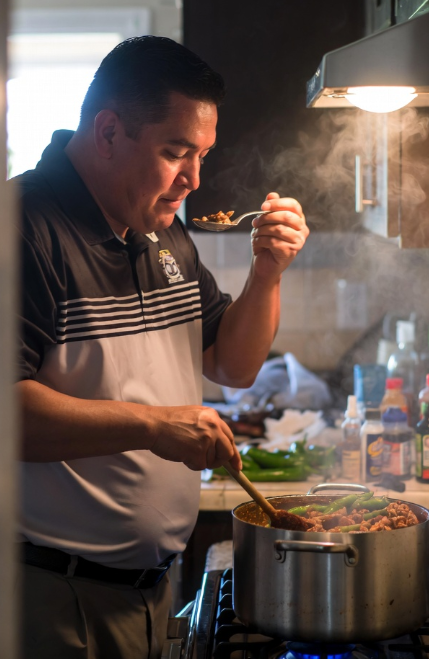
Diego is home for three weeks before college camp starts. He's bigger than when he left — four months of college training visible in the shoulders, the movement. But he's still the person who makes coffee in the mornings and sits at the kitchen table with his phone on silent and his attention on the room. He helped me with the ninth chile roasting this year. He ran the propane and I watched. I felt exactly what I felt when he started taking over the tamale folding: I built this with him and now he can do it without me, which is the only successful outcome of the building.
We talked about Hector this summer. Not the prognosis — we don't talk about the prognosis — but about what Hector means. I told Diego what I've been thinking about: that Hector taught me to coach by coaching me as a player, and that what Hector gave me is inside every player I've ever coached. The chain is longer than the individual links. Diego listened to all of it. He said, "I want to see him before I go back." We drove down to Las Cruces for two days. Diego cooked for his grandfather. He made the things he'd learned here, in this kitchen. Hector ate slowly and completely and said, "Now that's something." It was everything.
When Diego cooked for Hector in Las Cruces, he didn’t reach for anything unfamiliar — he made what he’d learned here, in our kitchen, the way we’d made it together. Fajitas felt right: simple enough to carry across a long drive, bold enough to say something. Hector ate every last bite. I’ve been making this air-fryer version ever since we got home, because some meals don’t need a reason beyond the fact that they worked.
Air-Fryer Chicken Fajitas
Prep Time: 10 min | Cook Time: 18 min | Total Time: 28 min | Servings: 4
Ingredients
- 1 1/2 lbs boneless, skinless chicken breasts, sliced into thin strips
- 1 red bell pepper, sliced
- 1 green bell pepper, sliced
- 1 yellow onion, sliced
- 2 tablespoons olive oil
- 1 teaspoon chili powder
- 1 teaspoon cumin
- 1/2 teaspoon smoked paprika
- 1/2 teaspoon garlic powder
- 1/2 teaspoon onion powder
- 1/4 teaspoon cayenne pepper (optional)
- 3/4 teaspoon kosher salt
- 1/4 teaspoon black pepper
- 8 small flour or corn tortillas, warmed
- Optional toppings: sour cream, salsa, guacamole, shredded cheese, lime wedges, fresh cilantro
Instructions
- Preheat. Preheat your air fryer to 400°F for 3 minutes.
- Season. In a large bowl, combine the chicken strips, sliced peppers, and onion. Drizzle with olive oil, then add chili powder, cumin, smoked paprika, garlic powder, onion powder, cayenne (if using), salt, and black pepper. Toss well to coat everything evenly.
- Cook the chicken and vegetables. Working in batches if needed, spread the chicken and vegetable mixture in a single layer in the air fryer basket. Cook at 400°F for 14–18 minutes, shaking the basket halfway through, until the chicken is cooked through and the edges of the peppers and onions are slightly charred.
- Warm the tortillas. While the last batch finishes, warm the tortillas directly on a gas burner over medium flame for 20–30 seconds per side, or wrap in a damp paper towel and microwave for 45 seconds.
- Assemble and serve. Fill each tortilla with the chicken and vegetable mixture. Top with sour cream, salsa, guacamole, shredded cheese, a squeeze of lime, and fresh cilantro as desired. Serve immediately.
Nutrition (per serving)
Calories: 390 | Protein: 38g | Fat: 11g | Carbs: 32g | Fiber: 3g | Sodium: 540mg