
 By
By The oven made a sound on Tuesday that I did not like.
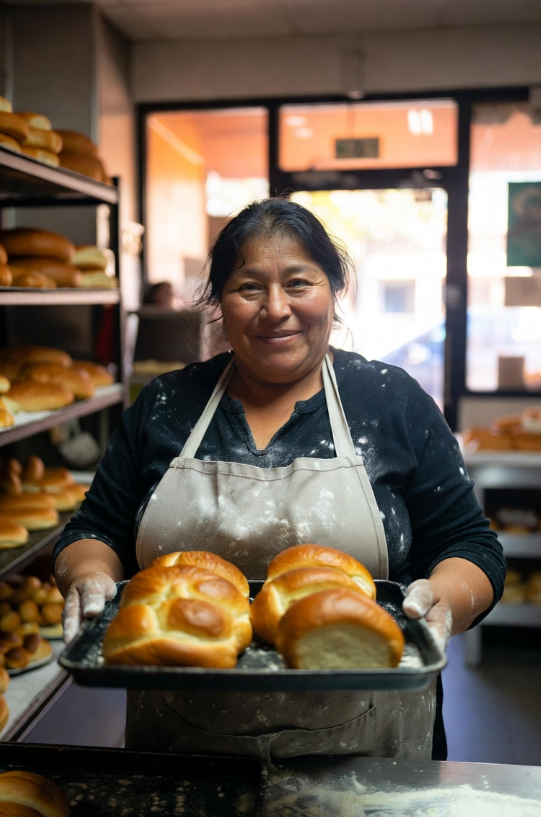
I want you to understand: this is not a dramatic story. There was no fire, no smoke, no explosion. There was just a wheeze — a small, tired sound, the kind a machine makes when it has been working since before sunrise for more days than anyone has counted, and it wants you to know, quietly, the way machines communicate when they are too polite to scream, that it is thinking about giving up. I was pulling a sheet of bolillos at five in the morning when I heard it. Sofia was still asleep. Luis was still asleep. The whole street was still asleep. It was just me and the oven and that sound, and I stood there with oven mitts on my hands and felt the specific cold fear that comes from knowing that everything — the conchas, the polvorones, the business loan I am still paying back, the name on the door — runs through a machine that is wheezing at me in the dark.
I called Roberto on Tuesday afternoon. Roberto fixes restaurant equipment out of his truck and charges less than the big companies because he does not have the overhead of the big companies, only the overhead of a man who knows what things are worth and charges accordingly. He said he could come Thursday. I said Thursday was fine. I hung up and looked at the business account on my phone and the number was enough, the way everything in my life is enough: barely, exactly, not one dollar more than it needs to be.
Luis said don’t worry.
Friend, I have been married to this man for sixteen years and I love him with everything I have, but “don’t worry” is not a financial strategy. Don’t worry does not fix ovens. Don’t worry does not make the car stop shaking over forty miles an hour. Don’t worry does not explain to Camila why she cannot have new shoes this week even though her feet have apparently decided to grow without asking anyone’s permission. I smiled at him the way a woman smiles at a man she loves when he says something that is sweet and also useless, and then I went back to counting what we had.
Roberto came Thursday. He fixed it. Three hundred and forty dollars, which I did not have but paid anyway, because the alternative is a bakery with no oven, which is just an empty building with “Panadería Rosa” written on the door in letters that cost money and now mean nothing. He said the oven has another year in it, maybe two. I said a prayer for two. I am lighting candles for appliances now. This is what small business ownership does to a person’s spiritual life.
But I am getting ahead of myself, because the oven story belongs to Thursday, and what I want to tell you about happened on Wednesday, in between the worry and the relief, in the ordinary middle of a hard week.
Isabella brought home her report card.
She put it on the kitchen table while I was washing dishes, just set it down without saying anything, and then stood near the refrigerator with her arms crossed and her chin up, trying very hard to look like she didn’t care what I thought. She is thirteen, my Isabella, and she has her father’s patience and my stubbornness and a mind that moves so fast I sometimes watch her solve a problem and think: where did you come from? Not as a question but as a prayer. Where did this girl come from?
All A’s. Every class. I dried my hands and signed the report card and put it on the refrigerator, up high, next to Camila’s drawing of the bakery — a pink building with what I believe are supposed to be conchas floating around it like planets — and next to Diego’s drawing of boxes with wheels that he calls a blueprint and I call a dream and both of us are right. I didn’t make a big speech. In this family, we don’t make speeches. The refrigerator said enough.
And Sofia — my Sofia, eleven years old and already standing in the bakery doorway on Saturdays with her arms crossed watching my hands the way I used to stand in the kitchen in Anapra watching Rosa’s hands — Sofia asked me this week if she could learn to make conchas.
I said yes, come, I will teach you.
I stood behind her and guided her hands through the cross-hatch cuts in the sugar topping, the little pattern that gives conchas their name, their shell shape, their whole identity. Her hands were clumsy at first, the way all hands are clumsy at first, because the dough is soft and the cuts have to be confident or they drag, and confidence is something you learn by doing and not by watching. But then her hands found the rhythm. And I felt something shift inside me — a gear engaging, a chain connecting, something moving down through time in the direction it is supposed to go. Rosa taught my hands. My hands are teaching Sofia’s. The chain holds.
This is what I was thinking about on Wednesday night when I made dinner.
I will tell you the truth: Wednesday was a long day. The oven had wheezed at me that morning. Roberto was coming tomorrow. The business account number was sitting in my chest like a stone. I had worked since four in the morning, come home, helped Diego with his math homework, signed three permission slips I don’t remember for trips I can’t remember, found Camila’s missing shoe behind the washing machine — how, sweetheart, how did it get there, what journey did this shoe take — and it was six o’clock and five people needed to eat and I had chicken thighs in the refrigerator and rice in the pantry and whatever was left of my energy, which was not much but was enough.
There is a recipe I make on nights like this. My mother called it arroz con pollo, because that is what it is — rice with chicken — but what makes it her recipe and not just any recipe is the sofrito she built underneath it. Onion and garlic first, always, until the onion goes translucent and soft and the garlic starts to smell like something sacred. Then tomato, crushed or fresh depending on what you have. Then cumin, then oregano, then a little salt, and you let it all cook down together until it becomes something more than the sum of its parts — a base, a foundation, the flavor everything else is built on.
Rosa never measured anything. I have measured it now, for you, because I know how it feels to stand in a kitchen trying to remember your mother’s hands and not being sure you’re getting it right. I have measured it so you can have a number to hold onto until your hands learn the feeling on their own.
I browned the chicken. I built the sofrito. I added the rice dry so it could toast a little, turn golden, take on the nutty depth that is the difference between Mexican rice and every other rice in the world. Then the broth, then the chicken back on top, then the lid on, then the waiting — twenty minutes, no peeking, because rice does not like to be watched and neither do most things that are doing their best work in the quiet.
When I took the lid off, the kitchen smelled like my mother’s kitchen in Anapra. Not exactly — it never smells exactly like that, because Rosa’s kitchen had a particular smell that was Rosa’s kitchen and nowhere else, a smell made up of forty years of cooking in the same walls. But close. Close enough that I had to stop for a moment with the lid in my hand and just breathe.
The kids ate it in front of the television because it was Wednesday and I was too tired to enforce the table rule. Luis ate his standing in the kitchen next to me, and we didn’t talk, and that was fine. After sixteen years, silence between two people who love each other is not empty. It is full of everything that doesn’t need to be said. The oven might be dying. Roberto is coming tomorrow. Three hundred and forty dollars. Don’t worry. I know. I know. I know.
Roberto fixed the oven. The chain holds. Sofia’s hands are learning. Isabella’s report card is on the refrigerator. Camila’s shoe has been recovered from wherever it escaped to.
We are fine, friend. We are always, barely, exactly fine.
Here is the recipe. Make it on a Wednesday. Make it on any night when you need the stove to be kinder to you than the world has been. It will not let you down.
On nights like that Wednesday—when the oven is suspect and the budget is real and silence is the kindest thing you and your husband have to offer each other—you need a recipe that asks almost nothing of you and still delivers something that feels like care. This is that recipe. One pan, humble ingredients, twenty minutes of mostly waiting while it does the work, and at the end of it your family is fed and you are still standing.
The 20-Minute Mexican Chicken and Rice
Prep Time: 5 minutes | Cook Time: 25 minutes | Total Time: 30 minutes | Servings: 6
Ingredients
- 2 lbs bone-in, skin-on chicken thighs (about 5–6 pieces)
- 1 1/2 teaspoons kosher salt, divided
- 1 teaspoon black pepper, divided
- 1 teaspoon garlic powder
- 2 tablespoons vegetable oil
- 1 medium white onion, diced small
- 4 cloves garlic, minced
- 1 large tomato, seeded and diced (or 1/2 cup canned crushed tomatoes)
- 1 1/2 cups long-grain white rice
- 1 teaspoon ground cumin
- 1/2 teaspoon dried oregano (Mexican oregano if you have it)
- 2 1/2 cups chicken broth, low-sodium
- 1/2 cup frozen peas (optional, for color)
- Fresh cilantro and lime wedges, for serving
Instructions
- Season the chicken. Pat the chicken thighs dry with a paper towel — this matters, because wet chicken does not brown, it steams. Season both sides with 1 teaspoon of the salt, 1/2 teaspoon of the pepper, and all of the garlic powder.
- Brown the chicken. Heat the oil in a large, heavy-bottomed skillet or Dutch oven over medium-high heat until shimmering. Add the chicken skin-side down and cook without moving it for 5 minutes, until the skin is golden and releases easily from the pan. Flip and cook 3 minutes more. Remove chicken to a plate. It does not need to be cooked through yet — it will finish in the rice.
- Build the sofrito. Pour off all but about 1 tablespoon of the fat in the pan. Reduce heat to medium. Add the onion and cook, stirring, for 3 to 4 minutes until softened and starting to go translucent at the edges. Add the garlic and cook 1 minute more, until fragrant. Add the tomato and cook another 2 minutes, pressing it gently with your spoon, until it breaks down and the mixture looks like a paste. Add the cumin, oregano, and the remaining 1/2 teaspoon salt and 1/2 teaspoon pepper. Stir to combine.
- Toast the rice. Add the dry rice to the pan and stir it into the sofrito. Cook for 2 minutes, stirring frequently, until the rice turns slightly golden and smells nutty. This step is not optional. This is what makes the rice taste like something.
- Add the broth and chicken. Pour in the chicken broth and stir once to combine. Nestle the browned chicken thighs on top of the rice, skin-side up. Bring to a boil, then reduce heat to low, cover tightly, and cook for 20 minutes. Do not lift the lid. The rice is working and does not need your supervision.
- Rest and finish. After 20 minutes, check that the liquid is absorbed and the rice is tender. If there is still a little liquid, cover and cook 3 minutes more. Scatter the frozen peas over the top, replace the lid for 2 minutes to warm them through. Remove from heat and let rest 5 minutes before serving.
- Serve. Bring the whole pan to the table if you want — it is that kind of dinner. Scatter fresh cilantro over everything. Put lime wedges on the side. Let everyone serve themselves. This is family food. It does not need to be pretty. It just needs to be good, and it will be.
Nutrition (per serving)
Calories: 420 | Protein: 31g | Fat: 14g | Carbs: 42g | Fiber: 2g | Sodium: 510mg