
 By
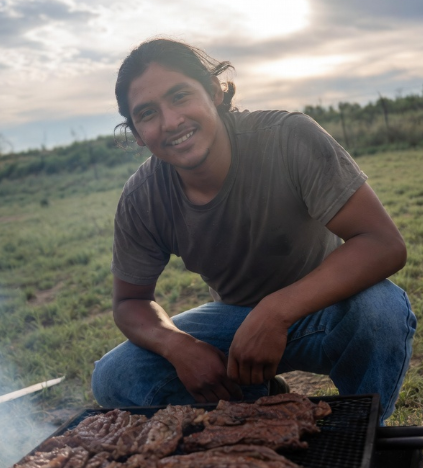
By River committed to OSU in April. He did it with the same quietness he does everything — filled out the form, sent the deposit, called me to say it was done. I asked how he felt. He said good. Certain. I asked what he was most looking forward to and he thought for a moment and said the soil science sequence, specifically the practicum component where students work with actual land for a semester. He wants to understand at a molecular level what he's been tasting in the food for seventeen years.
Caleb and I talked about it over dinner a few nights later — I'd told him and we'd both been sitting with it, the way you sit with big changes that are entirely good but still require adjustment. Caleb said: "He's the first one to go and come back before he goes." He meant that River has already made the commitment to return. He's not leaving for an unknown future. He's leaving on a specific trajectory that has this land at the end of it. Caleb understood that because he'd done the opposite — left without knowing where he was going, spent years finding out, came back. He said he hoped River's version was easier. I said it probably would be. He said that was good. His voice was steady.
I made a pot of venison stew that evening to mark nothing in particular except that River was staying for dinner and the spring was cold and everything called for something slow and rich and warm. River ate two bowls and helped clean up and left around nine. I stood on the porch and watched his truck's taillights disappear down the drive and felt the specific joy of being fifty-one years old and watching someone you love drive toward a good future of his own making.
That venison stew I made that evening was as close as I come to ceremony — no announcement, no candles, just meat and root vegetables and time on the stove while River sat at the table and we talked about soil pH. When I make something like this roasted beef tenderloin, it comes from the same instinct: the occasion doesn’t need to be named to deserve something rich and careful. This is the recipe I reach for when the feeling is too large and too quiet for anything else — when what’s called for is simply a good piece of meat, cooked well, shared with people you’re proud of.
Roasted Beef Tenderloin
Prep Time: 20 minutes | Cook Time: 45 minutes | Total Time: 1 hour 5 minutes | Servings: 6
Ingredients
- 1 whole beef tenderloin (about 2 1/2 to 3 lbs), trimmed and tied
- 2 tablespoons olive oil
- 1 1/2 teaspoons kosher salt
- 1 teaspoon freshly ground black pepper
- 1 teaspoon garlic powder
- 1 teaspoon fresh thyme leaves (or 1/2 teaspoon dried)
- 1 teaspoon fresh rosemary, finely chopped
- 3 cloves garlic, minced
- 2 tablespoons unsalted butter
- 1/2 cup beef broth (for pan drippings sauce)
- 1 tablespoon Dijon mustard (optional, for crust)
Instructions
- Bring to room temperature. Remove the beef tenderloin from the refrigerator 45 minutes before cooking. This ensures even cooking throughout. Pat completely dry with paper towels.
- Preheat and prepare. Preheat your oven to 425°F. Line a rimmed baking sheet or roasting pan with a rack. In a small bowl, combine olive oil, salt, pepper, garlic powder, thyme, rosemary, and minced garlic into a paste.
- Season the roast. If using, brush the tenderloin with Dijon mustard first, then rub the herb paste evenly over the entire surface of the meat, pressing it in gently.
- Sear for crust. Heat an oven-safe skillet over high heat until very hot. Add a thin coat of oil and sear the tenderloin on all sides, about 2 minutes per side, until a deep brown crust forms. This step is essential for flavor.
- Roast to temperature. Transfer the seared tenderloin to the prepared rack. Roast at 425°F for 20–25 minutes for medium-rare (internal temperature 130—135°F), or 30–35 minutes for medium (140—145°F). Use an instant-read thermometer — don’t rely on time alone.
- Rest the meat. Transfer the tenderloin to a cutting board and tent loosely with foil. Let rest for 10 minutes. The temperature will rise another 5 degrees during this time. Do not skip this step.
- Make a quick pan sauce. Place the roasting pan over medium heat. Add beef broth and scrape up any browned bits. Stir in butter and reduce by half, about 3 minutes. Season to taste with salt and pepper.
- Slice and serve. Remove the kitchen twine, then slice the tenderloin into 1-inch medallions. Arrange on a platter and drizzle with pan sauce. Serve immediately.
Nutrition (per serving)
Calories: 380 | Protein: 42g | Fat: 22g | Carbs: 1g | Fiber: 0g | Sodium: 490mg