Peter did not call. I called him. He picked up on the third try. He sounded thin — the way he has sounded for months now, the way Pappa used to sound. I told him about the meatballs I was making. He said he wished he was here. I said come for Christmas. He said he would try. I did not push. I did not lecture. I said I loved him. I hung up the phone and I stood at the kitchen sink for a long minute looking at the lake.
Sophie texted a photo of Mira eating cereal. Mira's face was covered in milk. The photo was lit from the side by morning light and the smile in it was uninhibited and full and I could not stop looking at it. I printed the photo. I taped it to the fridge. I have a system on the fridge now: a column for each grandchild, a column for each great-grandchild, photos rotated weekly. The fridge is the gallery. The gallery is the proof.
Peter called from Chicago. He sounded thinner than last week. He said work was fine. I do not believe him. He said his apartment was fine. I do not believe him either. He asked about the dog. He asked about the lake. He told me he loved me. I told him I loved him too. I told him about the bread I was baking. He said he could almost smell it through the phone. We hung up. I stood at the sink for a long minute. I did not know what else to do.
Thanksgiving is approaching. The brining starts on Tuesday. The pies start on Wednesday. The kitchen begins its annual reorganization for the bird — turkey out of the freezer to the cooler in the garage, fridge cleared for the brine cooler, the big roasting pan brought up from the basement, the carving knife sharpened, the gravy boat located (last seen on the top shelf of the pantry, where it lives all year except this one week). The kids are all coming. The house is going to be full. I am ready.
I cooked Turkey wild rice soup this week. Made from the carcass on the Friday after Thanksgiving. Eight quarts. Half to the freezer. Half to Damiano. The post-Thanksgiving ritual.
Damiano Thursday. A teenage boy came in alone. He was hungry. He did not want to make eye contact. I served him soup. I did not make small talk. He ate two bowls. He left. The not-asking was the gift. The not-asking is sometimes the right form of attention. The teenagers know.
The kitchen is the reliquary. I have used this word in the blog before. I am using it again because it is the right word. A reliquary is the container that holds the bones of the saints. The kitchen holds the bones of my saints — Pappa, Lars, Mamma, Paul, Erik, the first Sven, the second Sven. The bones are not literal bones. The bones are the marble slab and the bread pans and the glasses on the shelf and the wooden spoon worn smooth by Mamma's hand. The kitchen holds them. The kitchen is what holds them.
It is enough. It has to be. And on a morning like this, with the lake doing what the lake does and the dog at my feet and the bread on the counter and the kitchen warm enough to live in, it is. It is enough.
The soup was made and portioned and the freezer door was closed, and still the kitchen wanted more. It always does, this time of year — the light through the window changing angle, the cold settling into the garage, the body asking for something dense and spiced and rooted in the ground. Pumpkin falafel is what answered. It is not a Scandinavian thing; it is simply an autumn thing, and the kitchen does not always need a reason beyond that.
Pumpkin Falafel
Prep Time: 20 min | Cook Time: 25 min | Total Time: 45 min | Servings: 4 (about 16 falafel)
Ingredients
- 1 can (15 oz) chickpeas, drained, rinsed, and patted dry
- 3/4 cup pumpkin puree (not pie filling)
- 3 cloves garlic, roughly chopped
- 1/4 cup fresh flat-leaf parsley, packed
- 1 teaspoon ground cumin
- 1 teaspoon ground coriander
- 1/2 teaspoon smoked paprika
- 1/4 teaspoon cayenne pepper
- 1/2 teaspoon fine sea salt
- 1/4 teaspoon black pepper
- 1/3 cup chickpea flour (or all-purpose flour)
- 2 tablespoons olive oil, for pan-frying
- Tahini sauce, warm pita, and sliced cucumber to serve
Instructions
- Dry the chickpeas. Spread the drained chickpeas on a clean kitchen towel and press gently to remove as much moisture as possible. This step keeps the falafel from being dense or falling apart.
- Pulse the base. In a food processor, combine the chickpeas, pumpkin puree, garlic, and parsley. Pulse 10–12 times until the mixture is coarsely combined — you want texture, not a smooth paste.
- Season and bind. Transfer the mixture to a large bowl. Add the cumin, coriander, smoked paprika, cayenne, salt, pepper, and chickpea flour. Stir until fully incorporated. The mixture should hold its shape when pressed; if it feels too wet, add flour one tablespoon at a time.
- Chill the mixture. Cover the bowl and refrigerate for at least 20 minutes. This firms the mixture and makes shaping much easier.
- Shape the falafel. Using a heaping tablespoon or a small cookie scoop, portion the mixture and shape each piece into a ball or a slightly flattened disc, about 1 1/2 inches across. You should get roughly 16 pieces.
- Pan-fry until golden. Warm the olive oil in a large skillet over medium heat. Working in batches to avoid crowding, cook the falafel 3–4 minutes per side until deep golden brown and crisp. Adjust the heat as needed — they should sizzle steadily, not burn.
- Rest and serve. Transfer the cooked falafel to a paper-towel-lined plate and rest for 2–3 minutes. Serve warm in pita with tahini sauce, cucumber slices, and any pickled vegetables you have on hand.
Nutrition (per serving)
Calories: 285 | Protein: 11g | Fat: 10g | Carbs: 38g | Fiber: 8g | Sodium: 390mg
About the cook who shared this
Linda Johansson
Week 398 of Linda’s 30-year story
· Duluth, Minnesota
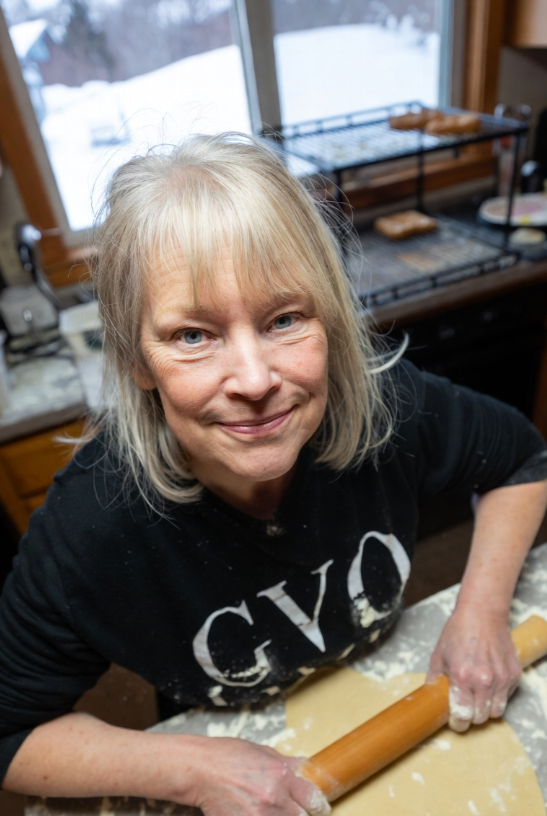
Linda is a sixty-three-year-old retired nurse from Duluth, Minnesota, living alone in the house where she raised her children and said goodbye to her husband. She lost Paul to ALS in 2020 after two years of watching the kindest man she'd ever known lose everything but his dignity. She cooks Scandinavian comfort food and Minnesota hotdish and the pot roast Paul loved, and she sets two places at the table out of habit because it makes her feel less alone. Every recipe she writes is a person she's loved.
